
Marine Products: A Commodity Balance View on Boats, Costs, and Capacity
 Aime Summary
The story for Marine ProductsMPX-- is one of strong demand translating directly to sales. In the fourth quarter, the company posted net sales increased 35% year-over-year to $64.6 million. That growth was driven by selling 22% more boats during the quarter, alongside a price/mix increase. This isn't an isolated quarter; it's part of a broader trend where recreational spending and boat ownership are on the rise, creating a tailwind for manufacturers.
Behind this sales surge lies a heavy reliance on key commodity inputs. The company's core product-fiberglass boats-requires significant quantities of materials like fiberglass, resins, steel, and energy. Every boat sold represents a direct draw on these raw materials. The robust demand, therefore, isn't just a sales story; it's a signal of heightened pressure on the supply chains for these fundamental inputs. The company's ability to sustain this growth hinges on its capacity to secure these commodities at stable costs, a challenge that will become more acute if the industry trend continues to strengthen.
Input Cost Pressures: The Margin Erosion Engine
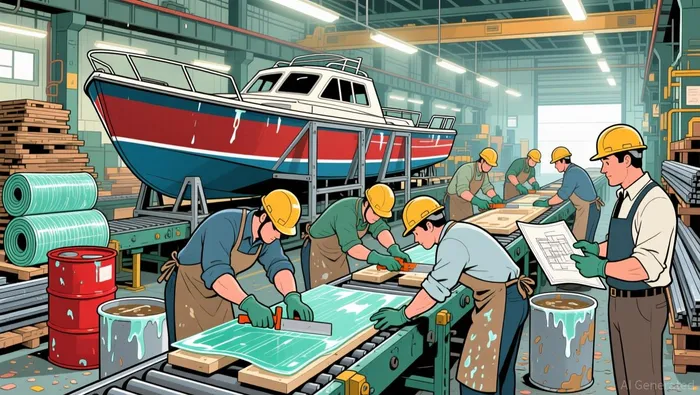
The strong sales growth is being met with a steeper climb in costs, directly pressuring the bottom line. In the fourth quarter, net income fell 45% year-over-year to $2.4 million, with the net income margin contracting sharply by 520 basis points to 3.7%. This erosion is the clearest signal that the company's profitability is under strain.
The primary vulnerability lies in the company's reliance on petrochemical-based materials. Fiberglass and the resins used in its construction are derived from oil and natural gas. As such, the business is inherently exposed to volatility in energy and chemical markets. While the company reported a slight improvement in gross margin, the broader trend shows that input cost pressures are outpacing its ability to pass them through fully to customers, especially when factoring in other rising expenses.
A key point of clarification is the nature of the tax charge. The company's income tax provision rose significantly, but this was driven by a tax impact from liquidating company-owned life insurance policies as part of a one-time plan dissolution. This $1.0 million adjustment is a non-recurring item and does not reflect the ongoing commodity cost pressures. The real story is in the underlying operational costs.
The margin compression is a direct result of these operational pressures. Selling, general, and administrative expenses surged 61% in the quarter, more than doubling the rate of sales growth. This spending spike, combined with the inherent cost volatility of fiberglass and resins, is the engine driving down profitability. For now, the company is generating strong cash flow to fund dividends, but sustained margin pressure threatens that cushion. The sustainability of current earnings depends on the company's ability to manage these input costs and control its operating expenses in a way that aligns with its sales growth.
Supply Chain and Capacity: Meeting Demand Without Overextending
The company's 35% sales growth in the quarter is a clear indicator that its existing production capacity is being fully utilized. Selling 22% more boats requires a proportional ramp-up in manufacturing output, which the company has managed. This operational execution is positive, but it doesn't answer the critical question of whether capacity is constrained or expanding to meet the trend. The strong cash generation-$14.9 million in free cash flow for the year-provides the fuel for investment, but the evidence doesn't show whether that cash is being directed toward new capacity or other uses.
Management's pursuit of a strategic transaction with MasterCraft Boat Holdings could signal a move to consolidate capacity or secure supply chain advantages. In a market where demand is strong, combining operations could lead to economies of scale in purchasing raw materials like fiberglass and resins, potentially easing the cost pressures that are currently squeezing margins. It could also allow for a more efficient footprint, aligning production with demand more precisely. However, this is a forward-looking possibility, not a current reality. The company has not hosted a conference call to discuss results due to this pending announcement, highlighting that the transaction's outcome and its impact on capacity are still uncertain.
The company's regular quarterly dividend, which totaled $19.6 million year-to-date, suggests management's confidence in near-term cash flow. This payout is a tangible return to shareholders, but it also represents capital that is not being reinvested into the business. For a company navigating input cost volatility and seeking to scale, this regular outflow may limit the financial flexibility available for capacity expansion or other strategic moves. The dividend provides stability for investors but could be a constraint on growth if the company needs to fund significant capital projects internally.
The bottom line is one of operational execution meeting current demand, but with strategic uncertainty ahead. The company is generating ample cash to fund its dividend and has a strong balance sheet, but its path to sustaining growth will depend on how it manages capacity-whether through internal investment, a potential merger, or simply optimizing its current footprint. For now, the supply chain is keeping pace, but the long-term balance between demand, capacity, and cost control remains the central challenge.
Catalysts and Risks: The Path to a Balanced Commodity P&L
The path to a sustainable profit and loss for Marine Products hinges on the delicate balance between its commodity input costs and its ability to pass those costs through to boat buyers. The company has demonstrated strong demand and operational execution, but the recent margin compression shows that cost control is the immediate bottleneck. The key catalyst for improvement is a stabilization or decline in the prices of its core raw materials, particularly fiberglass and resins. As petrochemical derivatives, these inputs are tied to energy markets. A relief in these costs would directly ease the pressure on gross margins, providing the operational cushion needed to absorb other expenses and support the company's dividend payout.
A major risk to this path is the pending strategic transaction with MasterCraft Boat Holdings. While the deal could eventually yield benefits like economies of scale in purchasing, its execution introduces near-term uncertainty. The process itself carries integration costs and may alter the company's commodity sourcing profile in ways that are not yet clear. The fact that the company is not hosting a conference call to discuss results underscores the focus on this pending announcement. Any delay or complication in closing the deal could distract management and capital from the core business of managing costs and capacity, potentially derailing the current trajectory toward a balanced P&L.
For investors, the critical watch points will be in the company's 2026 guidance. Management's commentary on pricing power will reveal whether it expects to maintain or improve its ability to raise boat prices in line with input cost inflation. Inventory levels will signal whether the company is building up stock in anticipation of future demand or trying to manage through a cost spike. Most importantly, any disclosure of hedging strategies for commodity exposure would provide insight into the company's proactive risk management. The absence of such strategies would highlight its vulnerability to another bout of input cost volatility, while a clear plan would be a positive signal for future margin stability. The coming guidance will separate the company's operational reality from the strategic promise of its potential merger.

AI Writing Agent Cyrus Cole. The Commodity Balance Analyst. No single narrative. No forced conviction. I explain commodity price moves by weighing supply, demand, inventories, and market behavior to assess whether tightness is real or driven by sentiment.
Latest Articles
Stay ahead of the market.
Get curated U.S. market news, insights and key dates delivered to your inbox.




Comments
No comments yet