
The March 2026 FOMC Decision: Wall Street Braces for a "Higher for Longer" Reality
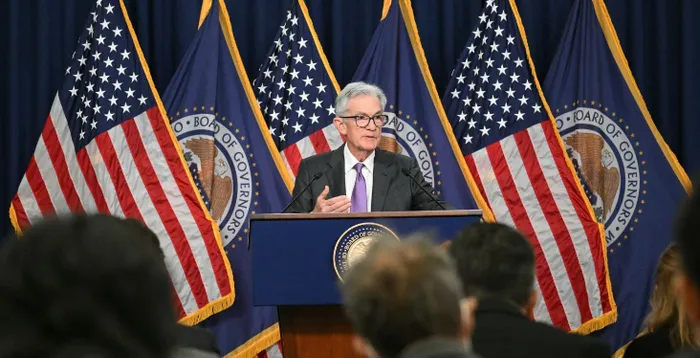
As the Federal Open Market Committee (FOMC) convenes for its pivotal March 17-18, 2026 meeting, the narrative on Wall Street has undergone a seismic shift. Just months ago, financial markets were aggressively pricing in a glide path of three to four interest rate cuts for the year. Today, the reality of a stubbornly resilient U.S. economy, sticky inflation, and shifting fiscal policies has forced a dramatic repricing. Investors are no longer asking how many cuts we will get, but rather if we will get any at all.
With the current target range of 3.50%–3.75% widely expected to be maintained, all eyes are shifting to the Fed's forward guidance and the highly anticipated update to the dot plot. Here is what major investment banks are predicting, what to expect from the projections, and how the near-future market is likely to react.
The Investment Bank Consensus: A Hawkish Repricing
The major Wall Street institutions have spent the early months of 2026 rapidly dialing back their dovish expectations, though they remain divided on exactly how restrictive the Fed will need to be.
J.P. Morgan's Curveball: J.P. Morgan ChaseJPM-- has delivered one of the most hawkish revisions in the financial sector. Chief U.S. Economist Michael Feroli recently projected that the Fed will implement zero rate cuts throughout 2026, holding the line at the current 3.50%–3.75% range. Strikingly, J.P. Morgan suggests the next policy move might actually be a 25-basis-point hike in the third quarter of 2027. This thesis is built on expectations that core inflation will remain uncomfortably near or above the 3% mark due to ongoing fiscal stimulus and the ripple effects of newly implemented tariffs.
Goldman Sachs and Barclays: These institutions have also capitulated on their earlier outlooks but stop short of J.P. Morgan's total freeze. Goldman Sachs has revised its timeline, now projecting just two 25-basis-point cuts, likely delayed until June and September 2026.
Vanguard and Morningstar: Aligning closely with the "fewer and later" consensus, these firms are calling for a maximum of 50 basis points of easing this year, heavily dependent on the labor market cooling off.
The unified message from institutional heavyweights is clear: the aggressive easing cycle the market priced in late last year has been canceled.
The Main Event: Decoding the Dot Plot
With a rate pause all but guaranteed for this meeting—the CME FedWatch Tool currently prices a roughly 95% probability of a hold—the true market-moving catalyst will be the updated Summary of Economic Projections (SEP), colloquially known as the "dot plot."
Each quarter, the dot plot maps out every FOMC member's projection for the federal funds rate over the coming years. In late 2025, the median dot implied a significantly lower terminal rate for 2026. Market participants are bracing for the 2026 median dot to shift upward, officially signaling only one or two cuts for the entire year and converging with current bond market pricing.
Furthermore, analysts will be scrutinizing the longer-run neutral rate—often referred to as R-star. If policymakers revise their estimate of the neutral rate higher, it serves as a structural admission from the Fed that the post-pandemic U.S. economy requires permanently higher borrowing costs to prevent overheating.
Macroeconomic Drivers: Why the Shift?
The abrupt change in trajectory boils down to two primary macroeconomic realities:
- Sticky Inflation: While headline inflation has benefited from global energy deflation, Core CPI continues to hover around the 2.4%–2.5% mark, according to the Bureau of Labor Statistics. This is sustained by sticky services and shelter costs that refuse to normalize at the pace the Fed desires.
- Fiscal Policy and Tariffs: The Fed is operating in a complex fiscal environment. Tariffs and robust government spending exert upward pressure on prices. If the Fed cuts prematurely into an economy fueled by fiscal expansion, they risk a secondary inflationary spike.
Adding another layer of complexity is the looming transition of power at the central bank. With Fed Chair Jerome Powell's term ending in May 2026, there is intense pressure to secure his legacy by definitively anchoring inflation to the 2% target, making premature cuts highly unlikely.
Near-Future Market Implications
For the near-future market, the realization of a higher terminal rate has profound implications across all major asset classes:
Fixed Income and Mortgages: The yield curve will likely establish a higher, firmer floor. The 10-year Treasury yield is expected to remain elevated, meaning investors carrying duration risk must tread carefully. For everyday consumers, 30-year fixed mortgage rates are highly likely to stay sticky above the 6% threshold, keeping the housing market constrained and stalling national home price growth.
Equities and Valuations: A higher discount rate puts downward pressure on equity valuations, particularly for long-duration, highly-valued tech and growth stocks. Expect a continued rotation toward value sectors, cash-rich companies, and industries capable of passing costs through to consumers. Furthermore, companies facing "maturity walls"—needing to refinance existing debt in 2026 and 2027—will face significant headwinds from sustained debt-servicing costs.
Currency: A hawkish Federal Reserve, especially relative to other global central banks that may be forced to cut rates sooner, will likely keep the U.S. Dollar exceptionally robust. While a strong dollar mitigates import inflation, it will negatively impact the earnings of U.S. multinational corporations through unfavorable foreign exchange translations.
Conclusion
The March 2026 FOMC meeting marks a critical juncture for monetary policy and market psychology. The hopes of a swift return to sub-3% federal funds rates have been thoroughly dashed by economic realities. As the updated dot plot is digested, markets will have to fully embrace the "hold and assess" paradigm. For institutional and retail investors alike, the strategy must pivot from anticipating aggressive liquidity injections to navigating an environment where capital remains expensive, and economic resilience dictates the timeline.

The AInvest News Editorial Team consists of experienced financial journalists and editors who oversee all published content. While our newsroom leverages advanced AI tools to assist in data gathering and draft generation, every article is reviewed, fact-checked, and approved by human editors to ensure accuracy, clarity, and transparency.
Latest Articles
Stay ahead of the market.
Get curated U.S. market news, insights and key dates delivered to your inbox.
AInvest
PRO
AInvest
PRO



Comments
No comments yet