
Marathon CEO Proposes U.S. Mine Bitcoin for Strategic Reserve
Marathon Digital Holdings (MARA) CEO Fred Thiel has proposed an innovative strategy for the U.S. government to build its strategic Bitcoin reserve: domestic Bitcoin mining. Thiel presented this idea during a panel discussion at the Bitcoin 2025 conference in Las Vegas. He suggested that the U.S. could leverage its excess hydroenergy resources to mine Bitcoin, aligning with the "budget-neutral" acquisition strategy outlined in the executive order signed by Donald Trump in March.
Thiel emphasized the importance of acquiring Bitcoin for the strategic reserve, stating that the U.S. government's commitment to establishing such a reserve is meaningless without concrete actions to fill it. He highlighted that the reserve is intended to hold all Bitcoin seized by the government in civil and criminal forfeitures, estimated to be around 200,000 bitcoins. However, many industry experts and government officials, including Senator Cynthia Lummis, view this as just the initial step and advocate for more substantial acquisitions in the future.
Lummis reintroduced the BITCOIN Act of 2025, which aims to formalize Trump's plans for a strategic Bitcoin reserve. Under this legislation, after transferring the government's existing Bitcoin holdings into the reserve, the U.S. would gradually convert a portion of its gold certificates into Bitcoin over the next two to five years. Lummis believes that the U.S. has sufficient underperforming assets to acquire five percent of the world's Bitcoin without incurring additional costs. However, she acknowledged that progress on this legislation may be slow due to the complexity of stablecoin and market structure regulations currently being addressed by Congress.
Thiel's proposal to mine Bitcoin for the strategic reserve is a groundbreaking approach that could have far-reaching implications for the U.S. economy and its global standing. By mining its own Bitcoin, the U.S. could reduce its dependence on foreign sources, bolster its economic sovereignty, and position itself as a leader in the global Bitcoin mining industry. This move could attract investment and drive technological innovation in the sector.
The strategic reserve, traditionally composed of gold and other precious metals, serves as a safeguard against economic uncertainties. Incorporating Bitcoin into this reserve could provide a hedge against inflation and currency devaluation, given Bitcoin's finite supply and decentralized nature. Thiel's proposal aligns with the growing trend of institutional adoption of Bitcoin, as more governments and corporations recognize its value as a store of wealth and a medium of exchange.
However, implementing this strategy would require overcoming several challenges, including regulatory hurdles, environmental concerns related to Bitcoin mining, and the need for robust infrastructure to support large-scale mining operations. Thiel's expertise in Bitcoin mining and his leadership at MARA HoldingsMARA-- position him as a key advocate for these changes and a navigator of the complexities involved.
In summary, Fred Thiel's call for the U.S. to start mining Bitcoin to fill its strategic reserve represents a forward-thinking approach to national asset management. By embracing Bitcoin, the U.S. could enhance its economic resilience and technological leadership, while also addressing the evolving landscape of digital currencies. 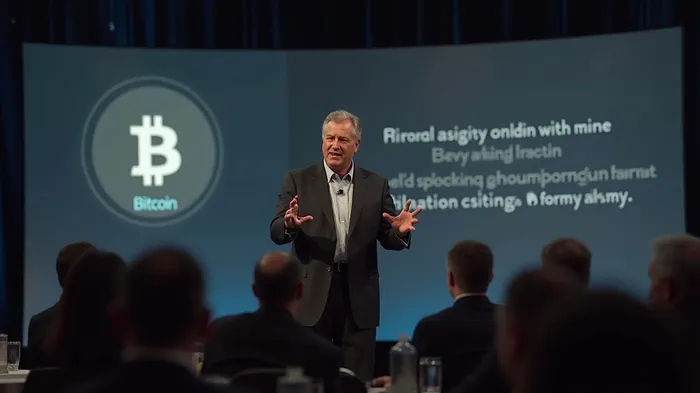

Stay ahead of the market.
Get curated U.S. market news, insights and key dates delivered to your inbox.




Comments
No comments yet