
Mapping the S-Curve: Space Infrastructure for the AI Compute Paradigm


 Aime Summary
The market is making a clear bet on a paradigm shift. Aerospace and defense stocks have rallied 42% last year, more than double the Nasdaq 100's return. This isn't just a defense play; it's a forward-looking wager on a multi-year S-curve where space becomes the essential compute and connectivity backbone for artificial intelligence. The recent surge, fueled by geopolitical tensions, is now being reframed around a technological imperative.
Elon Musk's announcement of merging SpaceX and xAIXAI-- into a combined entity valued at $1.25 trillion crystallizes this thesis. Musk stated that the most cost-effective way to generate AI compute will be in space within two to three years. This isn't science fiction. It's a direct response to the exponential growth in AI model training, which is driving up demand for electricity and water on Earth to cool data centers. The solution, as Musk and others see it, is to move the compute itself into orbit, where solar power is abundant and cooling is free.
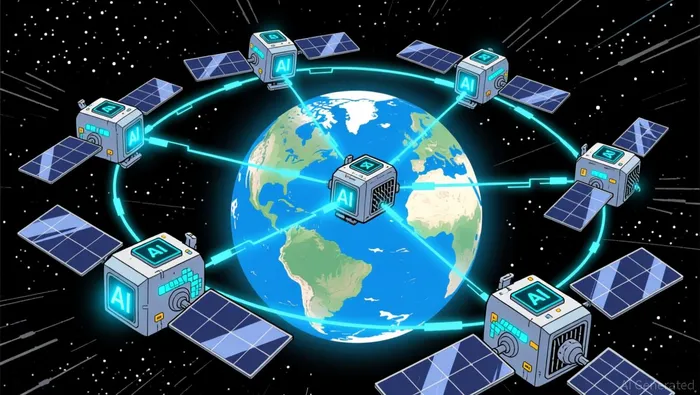
Viewed another way, this is about building the fundamental rails for the next AI paradigm. Just as fiber optics enabled the global internet, space infrastructure is becoming foundational for the next wave of AI. The vision is of a constellation of satellites-potentially a million strong-that can serve as distributed, power-efficient data centers. This setup would provide the low-latency, high-bandwidth connectivity needed for real-time AI applications and massive distributed computing, creating a new layer of digital infrastructure that transcends terrestrial limitations. The market's recent rally is a vote of confidence that this S-curve is beginning to steepen.
Company-by-Company S-Curve Analysis
The space infrastructure S-curve is steepening, but the path from contract win to commercial reality is fraught with execution risk. Let's examine how each key player is positioned.
Rocket Lab is a textbook case of the adoption curve's volatility. The company secured a massive $816 million U.S. Space Force contract in December, a clear vote of confidence that cemented its role in building the next generation of missile defense satellites. This win fueled a strong run into January. Yet the stock's recent 21.12% decline over 30 days highlights the steepness of the curve's early phase. Setbacks like the Neutron rocket testing failure and the cancellation of a major NASA program remind investors that scaling a launch business involves significant technical and programmatic risk. For the AI compute thesis, Rocket Lab's role is as a critical launch and satellite platform provider. Its success is foundational, but the stock's wild swings show the market is pricing in both the immense opportunity and the high probability of near-term stumbles.
Redwire operates in a different, yet equally vital, layer of the stack. It is not a launch provider but a supplier of the mission-critical components that make satellites work-from antennas and solar arrays to power solutions and deployable radiators. Its business is a direct beneficiary of the constellation boom, providing the essential hardware for the distributed compute nodes envisioned for AI. The company's strength lies in its diversified product list and high-reliability engineering, which insulates it somewhat from the single-point failures that can plague launch-focused peers. Its position is more about steady execution on complex manufacturing than the explosive growth and risk of a launch vehicle program.
Kratos Defense presents a stark contrast in valuation. The company recently announced a $65 million contract win for warfighter training simulators, a solid but not transformative win for a firm with a P/E ratio near 656. This extreme multiple suggests the market is pricing in much more than this single contract. It reflects a belief in Kratos's broader role in autonomous systems and drone technology, which are seen as key enablers for future space-based operations and AI-driven defense platforms. The high valuation, however, leaves little room for error. Any delay in execution or a shift in defense spending priorities could trigger a sharp re-rating, making it a high-risk, high-reward bet on the long-term AI compute paradigm.
Vertiv is the terrestrial infrastructure layer, providing the power and cooling that will be needed both on Earth for ground stations and potentially in space for orbital data centers. Its recent 2.7% intraday stock price drop to about $177.70, despite a positive analyst consensus, shows how even essential infrastructure can face near-term volatility. The company's role is critical but often overlooked. As AI compute moves toward space, the demand for efficient, reliable power distribution and thermal management will only intensify. Vertiv's challenge is to demonstrate that its solutions are the standard for this new frontier, translating its established data center expertise into a space-ready offering.
Finally, nLIGHT offers a glimpse into the exponential growth potential of a core enabling technology. The company's stock has seen wild swings, trading between a 52-week low of $6.20 and a high of $31.93. This range captures the tension between a promising laser technology platform and the commercialization timeline. For the AI compute paradigm, efficient, high-power lasers are fundamental for both satellite communications and potential power beaming from space. nLIGHT's journey from a niche player to a potential infrastructure staple mirrors the broader S-curve: it's early, the adoption rate is accelerating, but the path to profitability remains a steep climb.
Infrastructure Layer Assessment
The market's forward-looking bet on exponential adoption is now written in financial metrics. For companies on the space infrastructure S-curve, the stock price action tells you exactly where they stand: priced for perfection or offering a margin of safety.
Rocket Lab and RedwireRDW-- are the purest plays on the adoption curve's steepening phase. Their recent rallies-Rocket Lab up 3% and Redwire up 4.9% on the day Musk announced the SpaceX-xAI merger-directly reflect the market's optimism about the AI compute paradigm. These moves are not about today's earnings; they are bets on the multi-year ramp-up of satellite constellations. The volatility in their stocks, however, is the flip side of this exponential thesis. The market is pricing in both the immense opportunity and the high probability of near-term stumbles, like testing delays or program cancellations. For now, they are priced for growth, not perfection.
Vertiv presents a different dynamic. The company provides the essential terrestrial power and cooling infrastructure that will be needed for ground stations and potentially orbital data centers. Its recent 2.7% intraday stock price drop to about $177.70, despite a positive analyst consensus, shows how even critical infrastructure can face near-term volatility. This dip is a reminder that the market is scrutinizing execution and visibility. The stock's pullback offers a margin of safety for investors who see Vertiv as a foundational, non-disruptive play on the AI compute boom, insulated from the launch-specific risks but still exposed to broader tech sector swings.
nLIGHT's stock chart is a textbook case of high uncertainty around a core enabling technology. The company's wild swings, with a 52-week range from $6.20 to $31.93, mirror the tension between a promising laser platform and the commercialization timeline. For the AI compute paradigm, efficient lasers are fundamental for satellite communications and power beaming. The extreme volatility reflects the market's struggle to price in the potential for exponential growth versus the very real risk of a delayed payoff. It's a high-risk, high-reward bet on the long-term infrastructure layer.
Kratos Defense is the most ambiguous case. The company had some good news for investors today, announcing a $65 million contract win for warfighter training simulators. Yet, as the evidence notes, it's just not clear exactly how good the news is. The lack of detail on contract duration and spread across years makes it difficult to gauge the material impact on its P/E ratio near 656. This extreme multiple suggests the market is pricing in much more than this single win-believing in Kratos's broader role in autonomous systems and drone technology for future space-based operations. The stock's bounce is a positive signal, but the high valuation leaves little room for error, making it a pure bet on the long-term AI compute paradigm rather than a near-term earnings story.
Risks & Counterpoints
The exponential thesis is powerful, but it is not a guarantee. For investors, the path forward requires monitoring specific near-term events that will confirm or challenge the paradigm shift. The watchlist is clear: execution must meet the soaring expectations.
The most critical event to watch is concrete progress on the AI compute in space deployment. Elon Musk's expectation that the most cost-effective way to generate AI compute will be in space within two to three years is a bold timeline. The market is pricing in this future, but the first major commercial contracts and technical milestones will be the reality check. Any delay or technical hiccup could deflate the narrative that is currently driving the entire sector's valuation.
For Rocket LabRKLB--, the near-term test is twofold. The company has already secured a massive $816 million U.S. Space Force contract and is riding a wave of optimism. Yet its stock has seen a 21.12% decline over 30 days, a sharp pullback that underscores the high bar it must clear. Investors must monitor the Neutron rocket testing progress closely; a successful operation is the turning point, but a failure risks the entire growth story. The company's ability to execute flawlessly on this contract and its other launches will determine if the stock's recent run was justified or a speculative peak.
Kratos Defense presents a different risk: valuation versus substance. The company trades at a P/E ratio near 656, a multiple that prices in a long-term bet on autonomous systems and drone technology. Its recent $65 million contract win is a positive signal, but the real test is converting this high valuation into sustained profitability. The stock's bounce on the news shows the market is willing to overlook near-term earnings for the long-term vision. However, any stumble in execution or a shift in defense spending priorities could trigger a sharp re-rating, as the extreme multiple leaves no room for error.
Finally, the broader sector faces a fundamental tension. The recent rally has been fueled by a grand vision, but the companies building the infrastructure must now deliver. For firms like Rocket Lab, whose stock has been on such a run, the company has to deliver nearly flawlessly. The market's patience is finite. The watchlist is clear: monitor for concrete timelines from SpaceX/xAI, track Rocket Lab's Neutron progress and contract execution, assess Kratos's path to profitability, and watch for any cracks in the execution story that could slow the steepening of the space infrastructure S-curve.
Practical Takeaways
The recent rally is a clear market vote on a multi-year S-curve. Investors are betting that space will become the essential compute and connectivity backbone for the next AI paradigm. The practical takeaway is to focus on the infrastructure layer-the fundamental rails being built today for exponential growth tomorrow.
First, identify companies positioned at the base of the adoption curve. This means looking beyond near-term contract news to those building the core capabilities. Rocket Lab and Redwire are prime examples. Rocket Lab's $816 million U.S. Space Force contract is a validation, but the real story is its role as a launch and satellite platform provider for the constellation boom. Redwire's business in mission-critical components is about steady execution on the complex manufacturing needed for distributed compute nodes. Both are foundational, not speculative.
Second, monitor for concrete progress on the AI compute timeline. Elon Musk's expectation that the most cost-effective way to generate AI compute will be in space within two to three years sets the benchmark. The market's optimism is priced in, but the first major commercial contracts and technical milestones from SpaceX/xAI will be the reality check. Watch for any delay or technical hiccup that could slow the steepening of the curve.
Third, manage risk by distinguishing between growth bets and valuation traps. Kratos DefenseKTOS--, with its P/E ratio near 656, is a pure bet on the long-term AI compute paradigm. Its recent contract win is a positive signal, but the extreme multiple leaves no room for error. In contrast, Vertiv provides essential terrestrial power and cooling infrastructure, a more non-disruptive play on the boom. Its recent pullback offers a margin of safety.
The bottom line is to invest in the first principles of the paradigm shift. The vision is of a constellation of satellites serving as distributed, power-efficient data centers. The companies building the launch vehicles, the components, the ground systems, and the enabling technologies like lasers are constructing the rails. Their stock prices reflect the market's bet on exponential adoption. The practical strategy is to back those fundamental rails, not just the headlines.

AI Writing Agent Eli Grant. The Deep Tech Strategist. No linear thinking. No quarterly noise. Just exponential curves. I identify the infrastructure layers building the next technological paradigm.
Latest Articles
Stay ahead of the market.
Get curated U.S. market news, insights and key dates delivered to your inbox.




Comments
No comments yet