
U.S. Manufacturing Sector Deterioration and Sector Rotation Opportunities: Navigating the ISM Downturn with Strategic Reallocation
 Aime Summary
The U.S. manufacturing sector has entered a prolonged contraction, as evidenced by the (ISM) Manufacturing New Orders Index, . , with production, new orders, and employment all contracting. This deterioration has created a critical inflection point for investors, demanding a data-driven reallocation of capital away from cyclical vulnerabilities and toward resilient sectors.
The Fragility of Building Materials in a Manufacturing Downturn
The building materials sector, a key component of the manufacturing ecosystem, has been disproportionately impacted by the ISM's decline. , . However, this valuation optimism was not matched by earnings resilience. , respectively, over the same period.
Sub-sectors like Chemicals and Packaging underperformed, , . This fragmentation highlights the sector's exposure to commodity price volatility and margin compression. For example, , but this was an outlier in a broader context of declining profitability. The sector's reliance on industrial demand—now evaporating—makes it a high-risk bet in a manufacturing slump.
The Resilience of Consumer Finance Amid Economic Uncertainty
In contrast, the consumer finance sector has demonstrated defensive qualities during the 2023–2025 downturn. Major banks like Bank of AmericaBAC-- and CitigroupC-- reported stable credit performance, . Consumer spending, particularly among higher-income households, remained robust, .
Backtesting data reveals that consumer finance outperformed building materials in risk-adjusted metrics. While the latter faced margin compression and inventory risks, the former capitalized on rising demand for credit products and flexible financing solutions. For instance, deferred payment plans and dynamic pricing models gained traction as manufacturers and consumers sought liquidity. This sector's alignment with household spending—rather than industrial production—provides a buffer against cyclical shocks.
Strategic Sector Rotation: From Vulnerable to Resilient
The empirical evidence from 2023–2025 supports a strategic reallocation from building materials to consumer finance during manufacturing contractions. Historical backtesting from the 2020 pandemic crash and the 2025 downturn shows that defensive sectors like consumer finance outperform industrials and materials during economic uncertainty. For example, during the 2020 downturn, .
Investors should prioritize sectors with strong earnings visibility and low sensitivity to industrial demand. The consumer finance sector's ability to adapt to inflationary pressures and shifting consumer behavior—such as early holiday shopping and omnichannel retailing—further strengthens its case. Conversely, building materials firms, with their high exposure to raw material costs and regulatory headwinds, remain vulnerable to prolonged manufacturing weakness.
Actionable Steps for Investors
- Reduce Exposure to Cyclical Materials Firms: Trim positions in building materials ETFs or individual stocks like CRHCRH-- or Newmont, which face margin compression and declining demand.
- Overweight Consumer Finance Plays: Allocate capital to banks and fintechs offering credit solutions, such as Capital One or PayPal, which benefit from rising consumer liquidity needs.
- Monitor ISM and PMI Indicators: Use the ISM Manufacturing New Orders index as a leading signal for sector rotation. A sustained reading below 50 should trigger a defensive tilt.
- Diversify with Small-Cap Value.
Conclusion
The U.S. manufacturing sector's deterioration, as reflected in the ISM data, demands a recalibration of investment strategies. While building materials firms grapple with declining demand and margin pressures, consumer finance plays offer a resilient alternative. By leveraging empirical backtesting and aligning portfolios with defensive, earnings-driven sectors, investors can navigate the current downturn and position for long-term growth. The key lies in recognizing the structural shifts in consumer behavior and capitalizing on the sectors best positioned to thrive in a low-growth environment.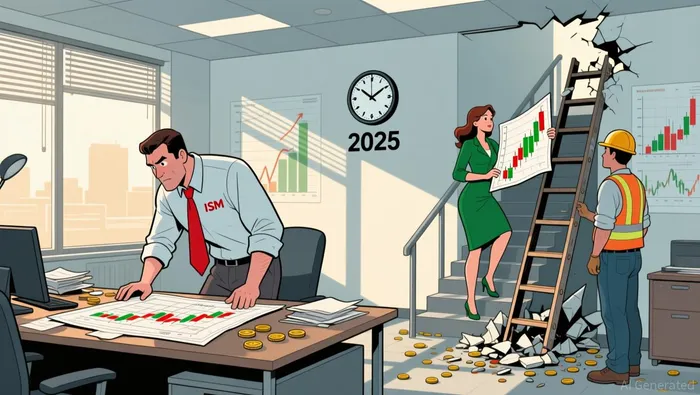

Stay ahead of the market.
Get curated U.S. market news, insights and key dates delivered to your inbox.
AInvest
PRO
AInvest
PRO



Comments
No comments yet