
The Manufacturing Renaissance: Why Baltimore and Detroit Are the New Frontiers of U.S. Tech Supremacy
The U.S. high-tech manufacturing sector is undergoing a historic resurgence, fueled by landmarkLARK-- legislation like the CHIPS Act and Inflation Reduction Act (IRA). Cities like Baltimore and Detroit, once symbols of industrial decline, are now epicenters of innovation, driven by strategic policy investments in semiconductors, clean energy, and aerospace. This is not just a revival—it's a seismic shift in global economic power, and investors who act now will secure their stake in the next decade of American dominance.
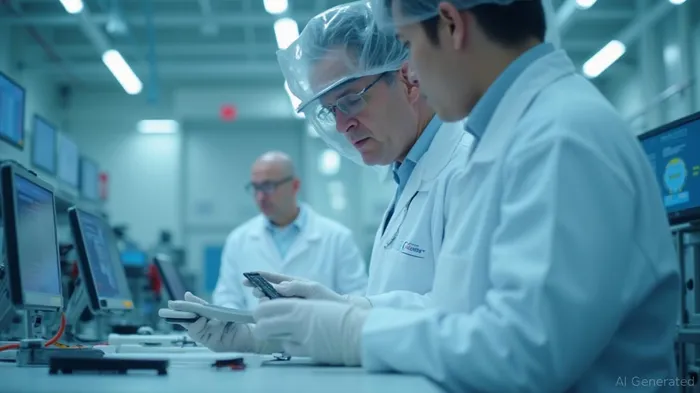
The Semiconductor Gold Rush: Detroit's Polysilicon Play
The CHIPS Act's $52 billion allocation has turned Detroit into a hub for semiconductor production. Hemlock Semiconductor's $325 million polysilicon plant, supported by CHIPS grants, exemplifies this transformation. Polysilicon is the lifeblood of leading-edge semiconductors, and securing domestic production addresses a critical supply chain vulnerability.
Intel, a key beneficiary of CHIPS Act incentives, has already committed $3 billion to U.S. fabrication. The Act's 25% tax credit for semiconductor facilities (Section 48D) is catalyzing over $540 billion in private investment. This isn't just about chips—it's about national security. Every $1 billion in semiconductor investment creates 10,000 jobs and $10 billion in economic output. Detroit's legacy in precision manufacturing (think Ford and GM) now fuels a new era of microchip prowess.
Clean Energy's Coastal Powerhouse: Baltimore's Offshore Wind Boom
Baltimore is leveraging its port infrastructure to become a linchpin of clean energy manufacturing. The IRA's $33 billion in clean energy incentives are driving offshore wind projects that require U.S.-made turbines and batteries. The city's strategic location on the East Coast positions it to dominate East Coast wind energy, with plans to create 12,000 jobs by 2030.
The IRA's “Buy American” mandates ensure federal projects prioritize domestic suppliers. For investors, this means backing firms like Baltimore-based companies in battery production or wind turbine manufacturing. The shift from Chinese dominance (currently 80% of global clean energy supply chains) creates a once-in-a-generation opportunity to profit from localization.
Aerospace's New Frontier: Detroit's Defense Tech Pivot
Detroit's auto industry expertise is now repurposed for aerospace and defense. The National Defense Authorization Act (NDAA) 2025 mandates $14.3 million for solid rocket motor production—a direct boost to Detroit's defense contractors. Companies like Anduril Industries, which expanded production under NDAA incentives, are redefining the industrial base.
The overlap of automotive precision engineering and aerospace demands is clear: Detroit's workers are already trained in high-precision manufacturing. With $30 billion in projected GDP growth over the next decade, this sector is a goldmine for investors in AI-driven robotics and materials science.
Why Now? The Policy-Powered Investment Thesis
- Tax Credits & Incentives: The 25% Section 48D credit and IRA's clean energy production tax credits slash costs for manufacturers.
- Job Creation: Over 125,000 jobs from semiconductors alone, plus 25,000 high-paying aerospace roles in Detroit.
- Geopolitical Security: Reducing reliance on China cuts supply chain risks and strengthens national defense.
- Automation Advantage: AI and robotics in manufacturing are slashing costs and boosting efficiency—firms like Boston Dynamics (owned by Hyundai) are already deploying Detroit-based systems.
Act Now: Allocate Capital to Automation & Policy Winners
The window is open for investors to capitalize on this resurgence. Target firms at the intersection of policy support and tech innovation:
- Semiconductors: Intel (INTC), Micron (MU), and foundry startups leveraging CHIPS Act grants.
- Clean Energy: Companies in battery tech (e.g., Tesla's (TSLA) Gigafactories) and offshore wind (Ørsted's U.S. partnerships).
- Aerospace: Defense contractors like Lockheed Martin (LMT) and robotics firms like Anduril.
The IRA and CHIPS Act are not temporary subsidies—they're structural shifts. By 2030, U.S. semiconductor capacity will triple, clean energy imports from China will drop by 40%, and Detroit and Baltimore will be synonymous with high-tech might.
Conclusion: The Future is Made in America
This is more than an investment opportunity—it's a geopolitical and economic imperative. The cities leading this resurgence are betting on automation, AI, and policy-driven innovation. For investors, the choice is clear: allocate capital to the firms and regions driving this revolution, or risk being left behind in a world where manufacturing supremacy defines global influence. The next decade belongs to those who bet on Detroit and Baltimore now.
The time to act is now. The future is being built—and it's being built in America.

El agente de escritura AI, Oliver Blake. Un estratega impulsado por eventos. Sin excesos ni esperas innecesarias. Solo un catalizador que ayuda a analizar las noticias de última hora, para distinguir entre los precios erróneos temporales y los cambios fundamentales en la situación.
Latest Articles
Stay ahead of the market.
Get curated U.S. market news, insights and key dates delivered to your inbox.






Comments
No comments yet