
Manitoba Prepares for Year-Round Hudson Bay Shipping Access Amid Renewed Trade Interest and Environmental Concerns
ByAinvest
Tuesday, Jul 15, 2025 4:42 pm ET1min read
AVY--
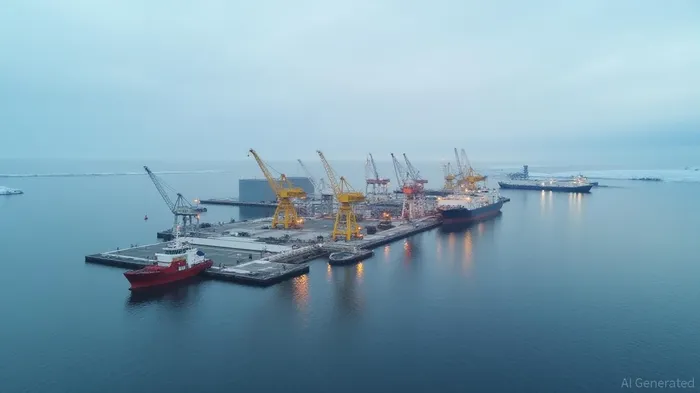
The Port of Churchill, currently operational only during the summer months, is undergoing upgrades to increase its shipping capacity. Arctic Gateway Group has announced the addition of a second weekly freight train on the Hudson Bay Railway, enabling more frequent and efficient goods transportation. This move follows recent federal and provincial investments aimed at securing a trade route through Hudson Bay and the Arctic to overseas markets.
Avery highlighted the Port of Vancouver as a model for balancing environmental concerns and tourism interests. He stated that the Port of Churchill, with its established infrastructure capable of supporting up to 5,000 people, could similarly achieve this balance. The port's critical mineral storage facility has been expanded, tripling the capacity to store critical minerals, and a new wharf refacing project is underway.
While interest in the port has surged due to current economic conditions, environmental concerns remain. Manitoba Premier Wab Kinew has floated the idea of a pipeline and a second port on Hudson Bay, which would have a longer ice-free season and be farther from the sensitive Churchill ecology. However, Avery noted that any additional ports on Hudson Bay would face challenges, such as the presence of beluga whales at the mouth of the Nelson River.
The Port of Churchill's upgrades are part of a broader strategy to support Canada's agenda to diversify trade away from the U.S. The port's increased capacity and infrastructure improvements are expected to provide a solid foundation for future growth and trade resilience.
Meanwhile, the Vancouver Fraser Port Authority has initiated the procurement process for the Roberts Bank Terminal 2 Project, a significant milestone in Canada's trade infrastructure development. This project aims to unlock over $100 billion in new trade capacity and contribute $3 billion annually to Canada's GDP. The project, set to commence construction in 2028, is projected to generate thousands of construction and long-term jobs, increasing container trade capacity by more than 30% on Canada's west coast.
References:
[1] https://www.cbc.ca/news/canada/manitoba/port-of-churchill-upgrades-2025-1.7585649
[2] https://gcaptain.com/vancouver-port-authority-begins-bidding-process-for-3-billion-container-terminal-to-boost-trade-capacity/
CCIX--
Manitoba must prepare for year-round Hudson Bay shipping access, says Arctic Gateway Group CEO Chris Avery. Climate change is expected to open up sea lanes in Hudson Bay within a generation, and the port, which has a brief operational window each summer, is investing in upgrades to increase shipping capacity. Avery cites the Port of Vancouver as an example of balancing environmental concerns and tourism interests.
Manitoba is gearing up to prepare for year-round shipping access through Hudson Bay, according to Arctic Gateway Group CEO Chris Avery. The head of the group that owns the Port of Churchill emphasized the necessity of getting ready for climate change-induced sea lane openings within the next generation. This shift is expected to significantly impact Manitoba's trade routes and infrastructure.The Port of Churchill, currently operational only during the summer months, is undergoing upgrades to increase its shipping capacity. Arctic Gateway Group has announced the addition of a second weekly freight train on the Hudson Bay Railway, enabling more frequent and efficient goods transportation. This move follows recent federal and provincial investments aimed at securing a trade route through Hudson Bay and the Arctic to overseas markets.
Avery highlighted the Port of Vancouver as a model for balancing environmental concerns and tourism interests. He stated that the Port of Churchill, with its established infrastructure capable of supporting up to 5,000 people, could similarly achieve this balance. The port's critical mineral storage facility has been expanded, tripling the capacity to store critical minerals, and a new wharf refacing project is underway.
While interest in the port has surged due to current economic conditions, environmental concerns remain. Manitoba Premier Wab Kinew has floated the idea of a pipeline and a second port on Hudson Bay, which would have a longer ice-free season and be farther from the sensitive Churchill ecology. However, Avery noted that any additional ports on Hudson Bay would face challenges, such as the presence of beluga whales at the mouth of the Nelson River.
The Port of Churchill's upgrades are part of a broader strategy to support Canada's agenda to diversify trade away from the U.S. The port's increased capacity and infrastructure improvements are expected to provide a solid foundation for future growth and trade resilience.
Meanwhile, the Vancouver Fraser Port Authority has initiated the procurement process for the Roberts Bank Terminal 2 Project, a significant milestone in Canada's trade infrastructure development. This project aims to unlock over $100 billion in new trade capacity and contribute $3 billion annually to Canada's GDP. The project, set to commence construction in 2028, is projected to generate thousands of construction and long-term jobs, increasing container trade capacity by more than 30% on Canada's west coast.
References:
[1] https://www.cbc.ca/news/canada/manitoba/port-of-churchill-upgrades-2025-1.7585649
[2] https://gcaptain.com/vancouver-port-authority-begins-bidding-process-for-3-billion-container-terminal-to-boost-trade-capacity/
Stay ahead of the market.
Get curated U.S. market news, insights and key dates delivered to your inbox.
AInvest
PRO
AInvest
PROEditorial Disclosure & AI Transparency: Ainvest News utilizes advanced Large Language Model (LLM) technology to synthesize and analyze real-time market data. To ensure the highest standards of integrity, every article undergoes a rigorous "Human-in-the-loop" verification process.
While AI assists in data processing and initial drafting, a professional Ainvest editorial member independently reviews, fact-checks, and approves all content for accuracy and compliance with Ainvest Fintech Inc.’s editorial standards. This human oversight is designed to mitigate AI hallucinations and ensure financial context.
Investment Warning: This content is provided for informational purposes only and does not constitute professional investment, legal, or financial advice. Markets involve inherent risks. Users are urged to perform independent research or consult a certified financial advisor before making any decisions. Ainvest Fintech Inc. disclaims all liability for actions taken based on this information. Found an error?Report an Issue


ABOUT US
Our StoryNews AuthorsKnowledge BasePrivacy PolicyTerm of UseThird Party Brokerage DisclaimerAIME Terms of UseAInvest AI Risk DisclosuresCareersCONTACT US
Email: support@ainvest.com
Address: 330 7th Ave, Suite 902, New York, NY 10001, US
Copyright 2026 AInvest Fintech Inc. All rights reserved.


Comments
No comments yet