
Manhattan Jury Concludes Mixed Verdict in Tornado Cash Co-Founder's Trial
 Aime Summary
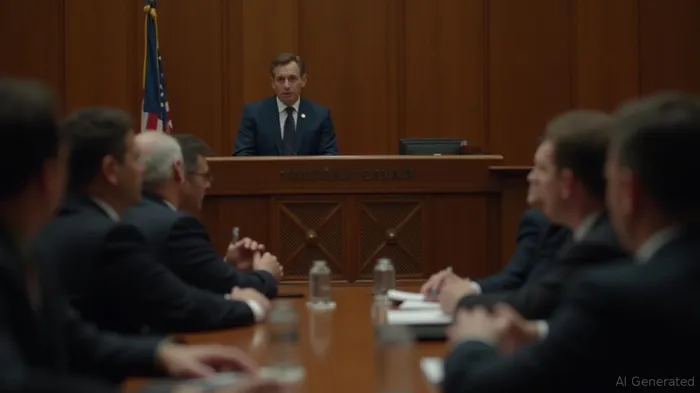
A Manhattan jury delivered a mixed verdict in the criminal trial of Roman Storm, co-founder of the Tornado Cash protocol, finding him guilty on one charge but deadlocked on others. Storm was convicted of conspiracy to operate an unlicensed money transmittal business, a felony that carries a maximum five-year prison sentence. However, jurors could not reach agreement on related charges of conspiracy to commit money laundering and conspiracy to violate U.S. sanctions against North Korea [1].
The case centered on whether Storm retained sufficient control over Tornado Cash to prevent its misuse by criminals. Prosecutors argued that he had the authority and responsibility to implement safeguards after being warned about the protocol's potential for abuse, including its use in laundering funds linked to sanctioned entities. Federal agents, IRS officials, and cybersecurity experts testified in support of this claim [1].
Storm’s defense team countered that Tornado Cash functioned as a fully decentralized platform, beyond the control of any single individual. They called on expert witnesses, including Ethereum core developer Preston Van Loon and Matthew Edman of NAXO, who emphasized that once the protocol was deployed on the blockchain, its operation was autonomous and uncontrolled by its creators [1].
The trial, which took place in the U.S. District Court for the Southern District of New York, was part of a broader government effort to hold individuals accountable for the misuse of cryptocurrency tools. Storm, who pleaded not guilty and remained free on bail, has consistently maintained his innocence. His case has drawn significant attention from the crypto community, with his legal defense fund receiving more than $4 million in donations, including contributions from Ethereum co-founder Vitalik Buterin and Paradigm’s Matt Huang [1].
Judge Katherine Failla, overseeing the case, noted the context of recent high-profile crypto-related convictions, including those of FTX’s Sam Bankman-Fried and former OpenSea executive Nathaniel Chastain. These cases have highlighted the judiciary’s willingness to impose prison sentences in complex financial crimes involving digital assets [1].
While sentencing has not yet been scheduled, the outcome of Storm’s case could have significant legal implications for developers of decentralized financial tools. It raises critical questions about the extent of liability for creators of open-source protocols and whether intent or technical control should be considered in determining culpability [1].
Sources:
[1] https://coinmarketcap.com/community/articles/68946c2d507aff34f6dedf98/

Stay ahead of the market.
Get curated U.S. market news, insights and key dates delivered to your inbox.


AInvest
PRO
AInvest
PRO



Comments
No comments yet