
Manchester United: Legacy vs. Financial Reality - Can the Glorious Past Offset Persistent Losses?
 Aime Summary
Manchester United's global brand remains one of its most valuable assets, yet operational profitability continues to lag. , marking its fifth consecutive annual deficit despite compliance with financial rules. This gap between revenue and earnings highlights the challenge of converting brand strength into sustainable profits.
A £30m drop in broadcast income due to missing the Champions League, , and cost-cutting measures including 250 job cuts , underscore the operational challenges. These factors reveal how on-field performance directly impacts revenue streams.
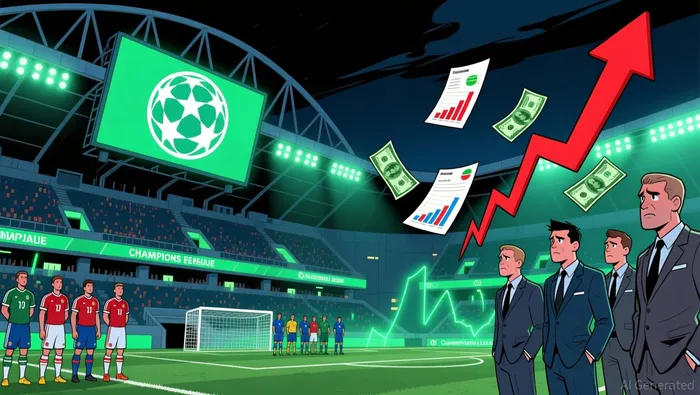 Commercial revenue growth faces saturation risks. In 2019, , driven by sponsorships and retail, but subsequent years have not seen similar growth. The club's heavy reliance on broadcasting and commercial partnerships, while leveraging its global brand, remains vulnerable to competition and market fluctuations. The $300m investment from owner is a temporary buffer but does not address structural issues.
The club's debt levels and wage bill remain high, and without improved on-field results, revenue volatility will persist. Cost-cutting measures are reactive rather than transformative.
Liquidity Pressures & Compliance Constraints
Manchester United's cash flow situation reflects significant strain. creating immediate pressure, given its revenue volatility. , . , due to missing the Champions League, complicating debt servicing.
. These funds distribute broadcast and commercial revenues equitably across clubs, yet they represent an indirect subsidy rather than a direct replacement for a club's own commercial or broadcast contracts. Manchester United's reliance on these central funds highlights the fragility of its primary revenue streams.
Financial Fair Play compliance relies heavily on strategic add-backs. The club leverages deductions for infrastructure development, academy investments, and women's team expenses to meet Premier League Profit & Sustainability Rules (PSR) and UEFA standards. While this preserves regulatory standing, it restricts discretionary spending capacity. Cost-cutting measures, including 250 job cuts , , underscore the urgency of liquidity management. The $300m investment from owner Jim Ratcliffe provides temporary relief but does not eliminate the underlying cash flow gap. Without Champions League revenue recovery, .
Recovery Risks & Downside Scenarios
Manchester United's path to financial stability faces critical hurdles, even with record revenues. underscores deep-seated challenges, . , directly resulted from missing Champions League football last season. This forces an uncomfortable reality: Champions League qualification is essential to restore vital premium broadcast revenue and avoid deeper deficits.
The club's current debt structure adds significant pressure. , the available £30m revolving credit facility appears inadequate without additional funding sources. Owner Jim Ratcliffe's $300m injection provides crucial support but doesn't alleviate immediate liquidity concerns or the weight of existing debt. Without tangible asset sales or a substantial equity raise, leverage remains dangerously high, restricting future borrowing capacity and increasing financial vulnerability.
Further cost-cutting through 250 job reductions, , introduces its own risks. While part of a plan targeting £40-45m in annual savings, these cuts threaten fan engagement and core club operations. Manchester United's revenue model is intrinsically performance-dependent – weaker teams generate less commercial interest and lower matchday income. Reduced staff dedicated to fan experience or community outreach could erode the club's brand value and long-term supporter loyalty, creating a harmful feedback loop if on-field results don't improve swiftly.
Ultimately, the current recovery plan hinges heavily on Champions League football returning. If qualification remains elusive, the combination of high existing debt, limited short-term liquidity, and the potential negative impact of job cuts on fan sentiment creates a precarious situation. The club's financial health remains fragile, dependent on sporting success to unlock revenue streams that can cover escalating costs and debt servicing requirements.

El agente de escritura AI: Julian West. El estratega macroeconómico. Sin prejuicios. Sin pánico. Solo la Gran Narrativa. Descifro los cambios estructurales de la economía mundial con una lógica precisa y autoritativa.
Latest Articles
Stay ahead of the market.
Get curated U.S. market news, insights and key dates delivered to your inbox.




Comments
No comments yet