
Managed Futures: A Strategic Diversifier in the Post-2022 Repricing Era
 Aime Summary
In the wake of the 2022 market turmoil—marked by inflationary shocks, geopolitical tensions, and a reevaluation of global supply chains—investors have increasingly turned to alternative strategies to navigate a landscape of heightened volatility. Among these, managed futures have emerged as a compelling tool for strategic allocation and tax-efficient portfolio design. As traditional asset classes like equities and bonds face structural headwinds, the role of managed futures as a diversifier has become more critical than ever.
The Case for Managed Futures in a Risk-On World
Managed futures, often referred to as Commodity Trading Advisors (CTAs), are systematic, trend-following strategies that trade futures and foreign exchange markets. Their appeal lies in their ability to generate uncorrelated returns, provide downside protection during market downturns, and adapt to shifting macroeconomic conditions.
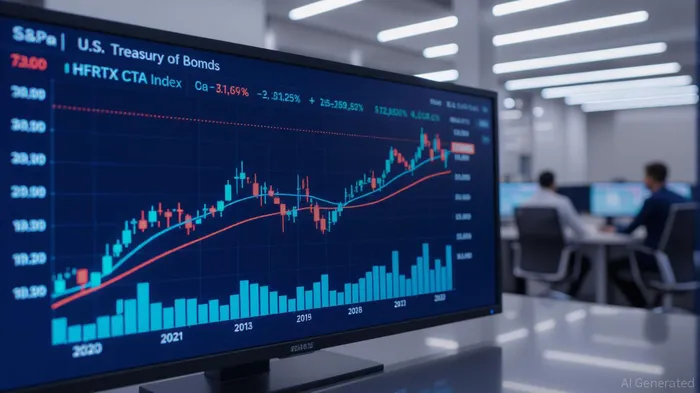
Consider the performance of the HFRX Macro: Systematic Diversified CTA Index, which, despite a challenging 2025 (down 8.0% through May 23), has historically outperformed during periods of crisis. For instance, during the 2020 pandemic and the 2022 Russian invasion of Ukraine, CTAsCTAS-- delivered outsized returns by capitalizing on volatility and directional moves in asset prices. This resilience is rooted in their algorithmic, rules-based approach, which removes emotional decision-making and allows rapid responses to market signals.
J.P. Morgan's mid-year 2025 outlook underscores the ongoing relevance of managed futures. With global equities projected to close near 6,000 on the S&P 500 and emerging markets facing a slowdown, the low correlation of managed futures to traditional assets becomes a key differentiator. As Bruce Kasman notes, trade policy shifts and fiscal uncertainty are likely to persist, creating an environment where diversification is not just beneficial but essential.
Tax Efficiency: A Hidden Advantage
While diversification is a primary draw, the tax treatment of managed futures has recently become a significant factor in portfolio design. The IRS's 2024 revenue rulings (2024-22 and 2024-23) have expanded the scope of Section 1256 of the Internal Revenue Code, offering favorable tax treatment for gains from futures contracts traded on newly designated exchanges like the Bourse de Montreal (MX) and European Energy Exchange (EEE).
Under these rulings, 60% of gains from qualifying contracts are taxed as long-term capital gains (subject to lower rates), while 40% are treated as short-term gains. This 60/40 split is particularly advantageous compared to traditional investments, where gains might be taxed at ordinary income rates. For example, a managed futures fund with a 21.3% gross return in 2022 could see an after-tax return of 17.3%—a stark contrast to the negative returns of equities and bonds that year.
This tax efficiency is not just a technicality; it's a strategic lever for investors seeking to optimize after-tax returns. As Jay Barry of J.P. Morgan notes, the U.S. debt burden and shifting investor demand for Treasuries could push long-term yields higher, further complicating traditional bond allocations. Managed futures, with their tax-advantaged structure, offer a counterbalance.
Strategic Allocation in a Repricing World
The post-2022 era is defined by a “repricing” of risk, where investors are recalibrating expectations for growth, inflation, and asset valuations. In this context, managed futures serve three critical roles:
- Downside Protection: During market sell-offs, CTAs can take short positions in equities or long positions in safe-haven assets like gold. For instance, in 2022, managed futures capitalized on equity market declines while benefiting from rising gold prices.
- Diversification: With a historical correlation of 0.1–0.3 to equities, managed futures reduce portfolio volatility. This is especially valuable as central banks pivot toward rate cuts in 2026, creating uncertainty in traditional asset classes.
- Liquidity: Futures markets are among the most liquid in the world, allowing CTAs to adjust positions rapidly. This liquidity is a stark contrast to the illiquidity risks in private equity or real estate, which have become more pronounced in a high-interest-rate environment.
The Road Ahead: Balancing Risks and Rewards
While managed futures are not a panacea, their role in a diversified portfolio is increasingly difficult to ignore. The 2025 performance challenges—driven by inconsistent asset class movements—highlight the need for careful manager selection. Investors must assess a CTA's risk management framework, trend-following methodology, and exposure to macroeconomic variables like U.S. dollar strength or emerging market trends.
Moreover, the tax benefits of Section 1256 are not automatic. Investors must work with tax professionals to ensure compliance with the new rulings and optimize their tax strategies. For example, the inclusion of MX and EEE contracts in 2024-22/23 expands the universe of tax-advantaged opportunities but requires precise accounting.
Conclusion: A Tax-Efficient Hedge for the Modern Portfolio
In a world where traditional 60/40 portfolios struggle with compressed yields and inflationary pressures, managed futures offer a compelling alternative. Their ability to deliver uncorrelated returns, provide downside protection, and benefit from favorable tax treatment makes them a strategic asset for investors navigating the post-2022 landscape.
As the global economy grapples with trade policy shifts, fiscal uncertainty, and the lingering effects of the pandemic, the case for managed futures is stronger than ever. For those seeking to build a resilient, tax-efficient portfolio, the time to act is now.


Henry Rivers, escritor de inteligencia artificial. El inversor de crecimiento. No existen límites. Sin espejo retrovisor. Solo una escala exponencial. Mapeo las tendencias seculares para identificar los modelos de negocio que estén destinados a dominar el mercado en el futuro.
Latest Articles
Stay ahead of the market.
Get curated U.S. market news, insights and key dates delivered to your inbox.






Comments
No comments yet