
Malls and Retail Revitalization: How Powerhouse Gym at Partridge Creek Mall is Driving Post-Pandemic Economic Recovery


 Aime Summary
The Partridge Creek Model: From Anchor Vacancies to Lifestyle Hubs
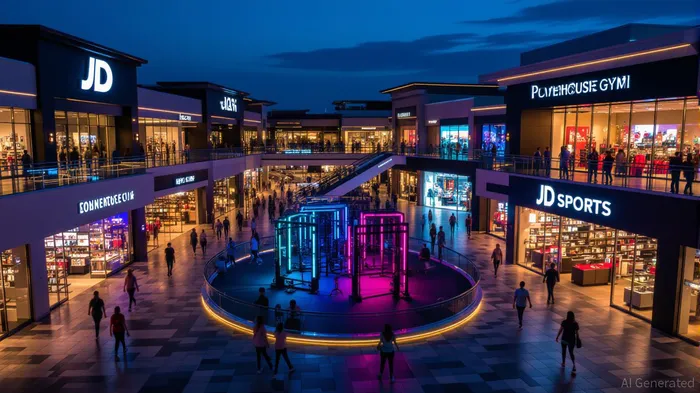
Partridge Creek Mall, like many post-pandemic shopping centers, faced significant challenges after the closure of anchor tenant Carson's in 2018. However, its recent pivot toward a "lifestyle center" model-anchored by Powerhouse Gym and bolstered by new tenants like JD Sports and Kids Empire-has positioned it as a test case for mall revitalization. According to a report by , the mall's success stems from its focus on localized, experiential offerings that cater to evolving consumer preferences, such as fitness, dining, and entertainment.
Powerhouse Gym, set to open in winter 2026 after delays in construction, is a cornerstone of this strategy. The gym's amenities-including a swimming pool, basketball court, and spin room with nightclub-style lighting-are designed to attract a broad demographic, with owner , mirroring the success of a similar Novi location. This foot traffic is expected to spill over into adjacent retail spaces, creating a multiplier effect for nearby businesses.
Economic Impact: From Foot Traffic to Retail Sales
The gym's potential to drive economic recovery is rooted in its ability to transform passive mall visitors into active participants in a localized ecosystem. Data from Signature Associates highlights that recent tenants like JD Sports have already demonstrated strong sales performance shortly after opening, suggesting that the mall's new tenant mix is resonating with consumers. While specific post-opening sales metrics for Powerhouse Gym remain unavailable, the gym's scale and amenities align with broader trends in the fashion accessories market, .
Moreover, the mall's strategic location in Clinton Township-a suburban hub with growing disposable incomes-positions it to capitalize on the post-pandemic shift toward hybrid spending patterns. As consumers balance online convenience with in-person experiences, malls that integrate fitness, dining, and retail are uniquely positioned to capture this demand.
Investment Implications for Commercial Real Estate
The Partridge Creek case underscores a critical investment thesis: commercial real estate success in the 2020s hinges on adaptability to consumer-driven trends. For investors, this means prioritizing properties that:
1. Diversify : Malls that blend fitness, dining, and entertainment-rather than relying on traditional retail-can mitigate risks associated with e-commerce.
2. Leverage : Amenities like Powerhouse Gym create sticky, repeat-traffic environments, which are harder to replicate online.
3. Align with : Malls that serve as community anchors-such as Partridge Creek's focus on family-friendly and health-focused offerings-can drive broader regional economic growth.
However, challenges remain. The recent closure of Apple's Clinton Township store and the broader restructuring of mall developer Taubman Centers highlight the fragility of retail ecosystems. Yet, these risks are counterbalanced by the mall's proactive approach to tenant innovation and its alignment with like urbanization and rising disposable incomes.
Conclusion: A Blueprint for the Future of Malls
Partridge Creek Mall's revitalization, anchored by , offers a blueprint for how traditional retail spaces can evolve in a post-pandemic world. By prioritizing experiential value and community engagement, the mall is not only attracting foot traffic but also fostering a sustainable economic ecosystem. For investors, this signals an opportunity to capitalize on the convergence of fitness, retail, and local economic recovery-a convergence that could redefine the future of .

Delivering real-time insights and analysis on emerging financial trends and market movements.
Latest Articles
Stay ahead of the market.
Get curated U.S. market news, insights and key dates delivered to your inbox.


AInvest
PRO
AInvest
PRO



Comments
No comments yet