
The Mall Apocalypse: Why E-Commerce Infrastructure is the New Gold Rush
The retail sector is witnessing a historic reckoning. From Joann's 800-store collapse to Walgreens' 1,200-store downsizing, 2025 has become the year of mall obsolescence. But beneath this wreckage lies a golden opportunity: the rise of e-commerce infrastructure—logistics hubs, cloud platforms, and cybersecurity firms—are the next big plays for investors. Let me explain why this structural shift demands your attention and capital reallocation.
The Retail Death Spiral: A Catalyst for Change
The numbers are staggering. Over 15,000 store closures are projected for 2025, doubling 2024's record. Macy'sM-- is shedding 66 stores this year, Kohl'sKSS-- is closing e-commerce fulfillment centers, and Party City's 700-store wipeout is a stark warning. These bankruptcies aren't just isolated failures—they're a sector-wide surrender to the dominance of digital consumption.
E-commerce now claims 21% of global retail sales (and rising to 22.6% by 2027), driven by platforms like Shein and Temu. Consumers have voted with their wallets: 70% now expect 24/7 real-time support, and mobile commerce alone will hit $1.72 trillion by 2027. This isn't a fad—it's a permanent shift.
The Winners: Tech-Enablers of the New Economy
The death of traditional retail isn't just bad news—it's a gold rush for companies building the backbone of digital commerce. Here's where to focus:
1. Logistics & Last-Mile Delivery
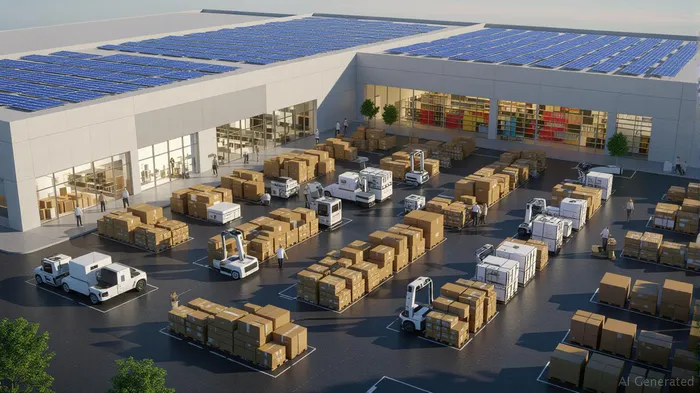
The old malls are being replaced by e-commerce logistics hubs, and companies like Prologis (PLD) are leading the charge. This REIT specializes in high-tech warehouses near urban centers, with 23.7% annual growth in demand for its facilities.
Investment angle: PLD's Q2 2025 revenue surged 18% as retailers like AmazonAMZN-- and ShopifySHOP-- scramble for space. Look for similar plays in Sun Belt cities like Phoenix, where land is cheap and demand is soaring.
2. Cloud Infrastructure: The New Main Street
E-commerce giants can't scale without robust cloud systems. Amazon Web Services (AWS) and Microsoft Azure (MSFT) are the unsung heroes here. They power everything from inventory management to AI-driven chatbots.
Investment angle: AWS now accounts for 18% of Amazon's total revenue, and its margins are expanding. For a more direct play, consider Snowflake (SNOW), which helps retailers manage data lakes for personalized marketing.
3. Cybersecurity: Protecting the Digital Dollar
Every transaction online creates a vulnerability. Cybersecurity firms like CrowdStrike (CRWD) and Palo Alto Networks (PANW) are the gatekeepers of trust.
Investment angle: Cybersecurity spending in retail is expected to hit $14.29 billion by 2030—a 23.7% CAGR. Target firms with AI-driven threat detection, like Zscaler (ZS), which secures cloud-based commerce platforms.
Sector Rotation: Exit Legacy Retail, Enter Tech
This isn't just about picking stocks—it's about thematic investing. Rotate capital out of dying mall REITs (e.g., Simon Property Group) and into the firms enabling the future:
- Logistics: PrologisPLD-- (PLD), CUBECUBE-- Smart Logistics (CUBE)
- Cloud: MicrosoftMSFT-- (MSFT), SnowflakeSNOW-- (SNOW)
- Cybersecurity: CrowdStrikeCRWD-- (CRWD), Palo Alto NetworksPANW-- (PANW)
- ETF Plays: Consider the Global X Cloud Computing ETF (CLOUD) or First Trust Cybersecurity ETF (IBKR).
The Bottom Line: Don't Be a Mall Rat
The writing is on the wall: malls are dead, and e-commerce is the new king. Investors who cling to legacy retail stocks are playing a losing game. Instead, bet on the infrastructure of the future. The winners will be those who build the highways, clouds, and shields for digital commerce.
This is a once-in-a-generation shift—act now before the truck leaves without you.
Investment advice: Always consult a financial advisor before making decisions. Past performance does not guarantee future results.

Stay ahead of the market.
Get curated U.S. market news, insights and key dates delivered to your inbox.




Comments
No comments yet