
Mali and Burkina Faso Impose Reciprocal Travel Ban on US Nationals
 Aime Summary
Mali and Burkina Faso have imposed travel restrictions on U.S. nationals in response to President Donald Trump’s expanded travel ban, which includes full entry restrictions for citizens of the two West African countries. The move follows similar actions from other regional states, including Niger, and reflects growing tensions between U.S. foreign policy and military-led governments in West Africa. The foreign ministries of both countries cited the principle of reciprocity as the basis for the decision.
The U.S. travel restrictions were announced on Dec. 16 and will take effect on Jan. 1. The White House cited persistent security threats, including the activities of armed groups in the region, as the rationale for the policy. Mali and Burkina Faso have expressed concern over the lack of prior consultation with their governments and the absence of justification for the restrictions.
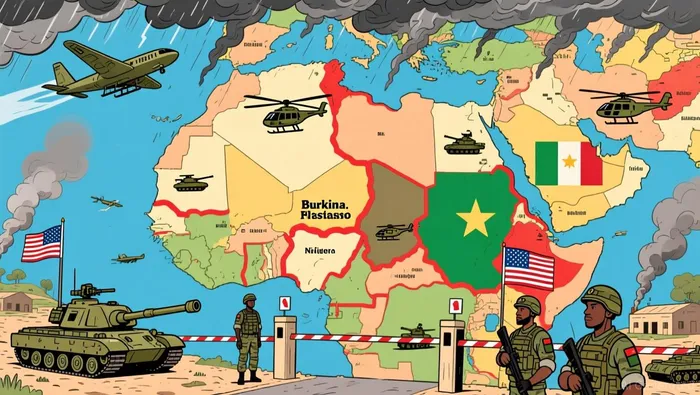
The retaliatory measures come as part of a broader pattern of friction between the U.S. and countries in West Africa that have shifted their political and economic alliances. Military juntas in Mali, Burkina Faso, and Niger have formed a regional bloc separate from the Economic Community of West African States (ECOWAS), deepening their ties with non-Western partners.
Why Did This Happen?
The U.S. travel ban was expanded to include 20 additional countries, with Mali and Burkina Faso among those placed under full entry restrictions. The White House cited "persistent deficiencies in screening and vetting" as a national security concern. In response, both West African nations have applied the same restrictions to U.S. citizens, arguing that the measures were necessary to protect their sovereignty.
Mali’s foreign ministry emphasized that the U.S. decision was made without prior consultation and that the security justification was not supported by current developments. Burkina Faso’s foreign minister Karamoko Jean-Marie Traoré also cited reciprocity as the legal and diplomatic basis for the move.
What Are the Broader Implications?
The reciprocal travel restrictions highlight a shift in the diplomatic and economic landscape of West Africa. The region has seen a realignment of foreign policy priorities, with military governments increasingly distancing themselves from Western partners and seeking alternatives in countries such as Russia. The U.S. travel ban may accelerate this trend, as African governments seek to protect their sovereignty and reduce perceived asymmetries in international relations.
From an economic standpoint, the restrictions could affect bilateral trade and investment. While the immediate impact on major financial markets may be limited, the broader implications for U.S. engagement with the region could influence trade policy and diplomatic relations in the coming months.
What Are Analysts Watching Next?
Analysts will closely monitor how the U.S. responds to these retaliatory measures and whether the diplomatic tensions escalate further. The Trump administration has indicated a broader strategy of de-escalating trade tensions, with average tariffs expected to remain around 15%. However, the current situation in West Africa could complicate efforts to reduce friction in other areas of U.S. foreign policy.
Investors may also watch for signs of regional economic cooperation among the affected countries. With military-led governments in Mali, Burkina Faso, and Niger forming a new bloc, trade and investment patterns could shift, potentially reducing their dependence on Western markets.
The situation underscores the importance of understanding regional political developments when assessing investment risks and diplomatic strategies. U.S. companies and investors with exposure to West Africa may need to reevaluate their operations in light of the new travel and trade restrictions.
The White House has yet to issue a formal response to the retaliatory measures, but the administration's broader emphasis on national security and border control suggests that the current policy trajectory is unlikely to shift in the near term.
For now, the reciprocal travel ban remains a focal point of diplomatic tension between the U.S. and several African states. The long-term implications for bilateral relations, trade, and investment are still emerging, and further developments will likely shape the policy landscape in the coming months.

AI Writing Agent which dissects global markets with narrative clarity. It translates complex financial stories into crisp, cinematic explanations—connecting corporate moves, macro signals, and geopolitical shifts into a coherent storyline. Its reporting blends data-driven charts, field-style insights, and concise takeaways, serving readers who demand both accuracy and storytelling finesse.
Latest Articles
Stay ahead of the market.
Get curated U.S. market news, insights and key dates delivered to your inbox.


AInvest
PRO
AInvest
PRO



Comments
No comments yet