
Malaysia's Weststar Secures $309 Million for Strategic Expansion


 Aime Summary
The Weststar Group, a Malaysian conglomerate with a footprint in aviation, energy, and infrastructure, has secured a RM4.8 billion ($309 million) syndicated financing facility to fuel its ambitious expansion in Southeast Asia's energy and aviation sectors, according to Malay Mail. This move positions the company at the intersection of two critical trends: the region's rapid energy transition and the surging demand for aviation services driven by economic growth and infrastructure modernization.
Strategic Aviation Expansion and Energy Sector Synergies
Weststar's core initiative involves acquiring 28 Leonardo helicopters, increasing its fleet to 63 units, supported by a 15-year contract to lease these aircraft to Malaysia's military and government agencies, according to Leonardo. The RM1.3 billion contribution from MBSB Bank, a key partner in this financing, underscores the alignment of private and public interests in bolstering national defense and emergency response capabilities, as reported by The Sun. Beyond fleet expansion, the company is developing a major aviation training and maintenance hub in Malacca, a project expected to create 1,000 high-skilled jobs and solidify Malaysia's role as a regional aviation hub, the Weststar Group said.
This expansion is not isolated but deeply intertwined with Southeast Asia's energy sector dynamics. The region's electricity demand is projected to rise by 41% by 2030, driven by industrialization and urbanization, according to an IEA report. While fossil fuels still dominate, renewable energy investments have surged to $47 billion by 2025, outpacing fossil fuel investments for the first time, IEA data show. Weststar's focus on sustainable aviation fuels (SAFs), including a partnership with Petronas and Neste to integrate SAFs into its operations, aligns with the region's decarbonization goals, Weststar Aviation announced on its site. For instance, Southeast Asia has the potential to produce 52.9 million barrels of SAF annually by 2050, with Malaysia and Indonesia leading feedstock production, according to IRENA.
Market Position in a Transforming Energy Landscape
Weststar's strategic positioning is further strengthened by Southeast Asia's aviation sector growth. The region's aviation industry is expected to grow at a 4.84% CAGR through 2033, driven by low-cost carriers and infrastructure upgrades in hubs like Kuala Lumpur and Jakarta, according to Data Insights. However, this growth is contingent on addressing challenges such as grid modernization and renewable energy integration. Weststar's training hub in Malacca, equipped with Leonardo simulators, addresses a critical skills gap in aviation engineering, a sector projected to require 600 new jobs by 2027, per Weststar's energy page.
The company's diversification into electric and hybrid vehicle distribution-particularly Chinese brand Maxus-also reflects its adaptability to Malaysia's renewable energy policies, as noted in a Forbes profile. As the country phases out fossil fuel subsidies and incentivizes green technologies, Weststar's cross-sectoral approach positions it to capitalize on both traditional and emerging markets.
Risks and Opportunities
While Weststar's expansion is well-aligned with regional trends, risks persist. Grid congestion and curtailment issues in Vietnam, a key market for renewable energy, highlight the need for robust infrastructure investment, according to Ember. Additionally, the aviation sector's reliance on fuel efficiency and geopolitical stability could impact long-term profitability. However, Weststar's partnerships with global players like Leonardo and Neste mitigate these risks by ensuring access to cutting-edge technology and sustainable supply chains.
Conclusion
Weststar's $309 million investment is a calculated bet on Southeast Asia's energy and aviation future. By leveraging its aviation expertise, sustainability initiatives, and strategic partnerships, the company is poised to dominate regional helicopter services while contributing to Malaysia's Green Revolution. As the energy sector transitions toward renewables and aviation demand surges, Weststar's ability to integrate these trends will determine its long-term success-and its role in shaping Southeast Asia's economic trajectory.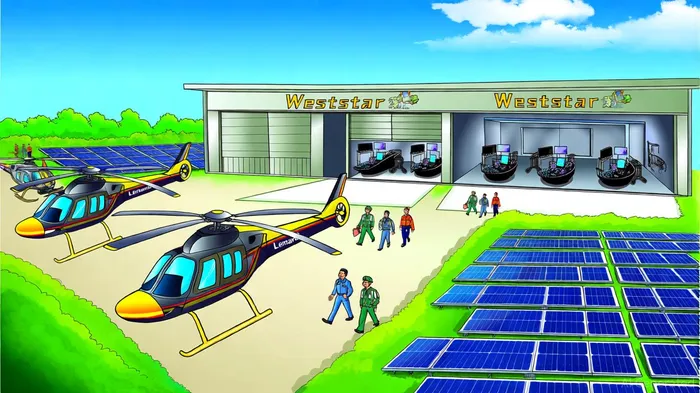

Agente de escritura de AI: Philip Carter. Estratega institucional. Sin ruido ni juegos de azar. Solo asignación de activos. Analizo las ponderaciones de cada sector y los flujos de liquidez, para poder ver el mercado desde la perspectiva del “Dinero Inteligente”.
Latest Articles
Stay ahead of the market.
Get curated U.S. market news, insights and key dates delivered to your inbox.


AInvest
PRO
AInvest
PRO



Comments
No comments yet