
Malaysia's Steel Trade Policy: A Crossroads for Global Supply Chains and Investment Opportunities
Malaysia's recent decision to extend anti-dumping duties on coated steel imports from China, India, Japan, and South Korea has sent ripples through global trade networks. This move, effective May 2025, imposes tariffs ranging from 4.48% to 36.8% on critical steel products like galvanized and tin-plated steel, marking a stark escalation in protectionist trade policies. For investors, this shift underscores both risks and opportunities in Southeast Asia's evolving supply chains.
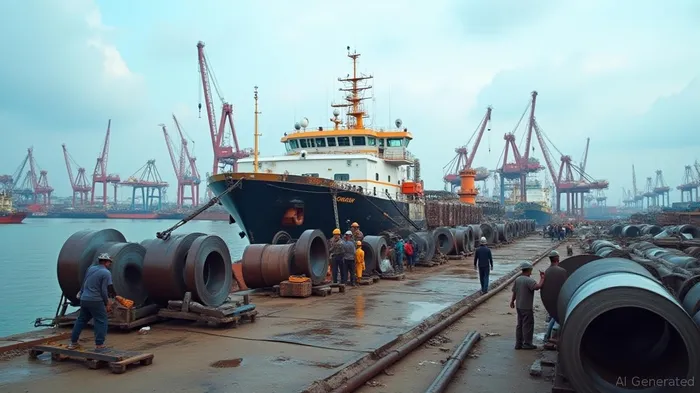
Escalating Trade Protectionism: A New Normal
Malaysia's action reflects a broader global trend toward trade protectionism, particularly in industries facing overcapacity and unfair pricing practices. The anti-dumping duties, which target HS codes 7210119000 and 7210129000, are designed to shield domestic producers from dumped imports, which had surged by 15% in early 2024 compared to the previous year. This mirrors measures taken by Thailand and Indonesia, which have also imposed duties on Chinese steel to protect their markets.
The policy's timing is strategic: Malaysia's domestic steel industry, which relies heavily on imports (94.8% of coated steel came from the four targeted countries in 2023), faces pressure to localize production. However, the move risks increasing costs for downstream industries like construction, automotive, and manufacturing—sectors already grappling with inflationary pressures.
Regional Supply Chain Vulnerabilities: Risks and Adaptations
The anti-dumping duties highlight critical vulnerabilities in Southeast Asia's steel supply chains. China, the largest supplier (55.9% of Malaysia's 2023 imports), now faces tariffs as high as 20.42%, potentially redirecting demand toward alternative sources. However, the remaining 5.2% of imports from non-targeted countries (e.g., EU, U.S., or ASEAN neighbors like Vietnam) are insufficient to meet Malaysia's needs.
Investors should note two key implications:
1. Cost inflation: Higher tariffs may force Malaysian firms to absorb price hikes or seek cost-effective alternatives.
2. Supply chain fragility: Overreliance on a few suppliers leaves industries exposed to geopolitical risks, such as trade disputes or production disruptions.
Investment Opportunities: Navigating the New Landscape
The policy creates openings for investors to capitalize on regional shifts:
1. Localization of Steel Production in Malaysia
Malaysia's push to reduce import dependency aligns with its National Automotive Policy 2030, which prioritizes local manufacturing. Investors could explore partnerships with firms like Perusahaan Sadur Timah Malaysia (Perstima), which operates plants in Malaysia, Vietnam, and the Philippines. Additionally, Malaysia's Sarawak Hydrogen Hub aims to produce green steel using hydrogen-based DRI-EAF technology, offering a cleaner, localized alternative.
2. Alternative Suppliers Outside the Targeted Nations
While data on non-targeted suppliers is limited, investors should explore:
- European and U.S. producers: These regions supply scrap metal to Malaysia and could expand coated steel exports.
- ASEAN neighbors: Vietnam and Thailand, with growing steel industries, may fill gaps. Vietnam's Dung Quat Steel Complex (capacity: 1 million tons/year) is a potential candidate.
- Turkey: A global steel exporter with underpenetrated Southeast Asian markets.
3. Green Steel Innovations
Investments in low-carbon steel technologies—such as electric arc furnaces (EAF) using recycled scrap—could position firms to meet Malaysia's environmental and regulatory goals. Companies like HSL Steel (India) or Cleveland-Cliffs (U.S.) are pioneers in this space.
Strategic Takeaways for Investors
- Diversify supply chains: Rely less on China/Japan/South Korea for coated steel and explore partnerships in the EU, ASEAN, or Turkey.
- Monitor tariff impacts: Track Malaysia's steel import prices and domestic production costs to identify pricing gaps.
- Green steel is the future: Allocate capital to firms advancing hydrogen-based or scrap-driven steel production.
The Malaysian policy is a wake-up call for global investors: trade protectionism is here to stay. Those who pivot toward localization, innovation, and regional diversification will thrive in this new era of supply chain resilience.
Final Note: The path forward hinges on balancing protectionism with pragmatism. For now, the steel market is a high-stakes game of adaptation—and investors must play to win.

Stay ahead of the market.
Get curated U.S. market news, insights and key dates delivered to your inbox.


AInvest
PRO
AInvest
PRO



Comments
No comments yet