
Malaysia's RMJDT Stablecoin: A Strategic Onramp to Asia's Tokenized Financial Future


 Aime Summary
Malaysia's RMJDT stablecoin, launched in 2025 under the Regent of Johor, represents a bold step in the digitization of cross-border trade and institutional finance. Backed by cash reserves and short-term government bonds, RMJDT operates on Zetrix, Malaysia's national blockchain infrastructure, and is supported by a Digital Asset Treasury Company (DATCO) with RM500 million in Zetrix tokens according to reports. This sovereign-backed digital asset is not merely a speculative play but a calculated infrastructure initiative designed to align with global tokenization trends and institutional-grade security. For investors, RMJDT offers a unique opportunity to capitalize on Malaysia's strategic position in Asia's rapidly evolving digital finance ecosystem.
Reserve-Backed Model and Zetrix Integration: A Foundation for Trust
RMJDT's credibility stems from its reserve-backed structure, which mirrors the stability of traditional fiat while leveraging blockchain efficiency. The stablecoin is collateralized by ringgit cash deposits and government bonds, ensuring transparency and mitigating volatility risks according to analysis. This model aligns with global best practices for stablecoins, such as those outlined in the EU's MiCA Regulation, which mandates asset-backed reserves for cross-border compliance. By anchoring RMJDT to Malaysia's sovereign credit, the project addresses a critical pain point in cross-border transactions: trust in the underlying asset.
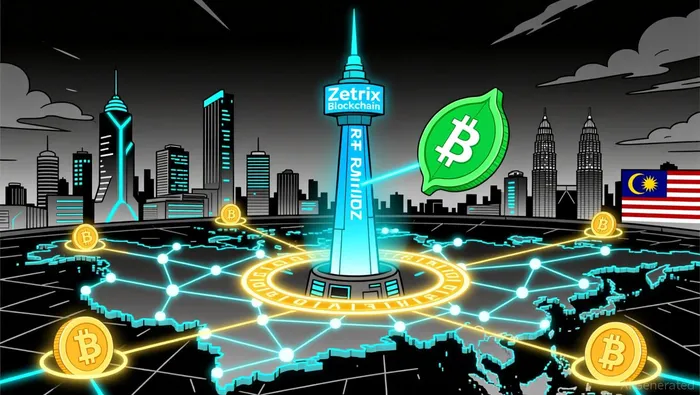
Zetrix, the national blockchain infrastructure, further strengthens RMJDT's appeal. DATCO's allocation of RM500 million in Zetrix tokens is designed to stabilize network gas fees and support validator nodes, ensuring low-cost, high-speed transactions according to the report. This integration with a government-sanctioned blockchain underscores Malaysia's commitment to building a resilient digital financial ecosystem. For institutional investors, Zetrix's role in reducing operational friction-such as settlement delays and intermediary costs-positions RMJDT as a scalable solution for cross-border trade and treasury management.
Institutional Adoption: A Catalyst for Growth
Institutional adoption of digital assets has surged in 2025, with 56% of Asia-Pacific institutions using stablecoins for payments, settlements, and treasury purposes. RMJDT's royal endorsement by the Regent of Johor adds a layer of institutional confidence, a critical factor in attracting large-scale capital. Data from Q3 2025 reveals that the average institutional investor now allocates nearly 10% of its total assets under management (AUM) to digital assets according to State Street, a figure projected to double within three years. This trend is further accelerated by regulatory clarity, such as Malaysia's Digital Asset National Policy and the EU's MiCA framework, which provide legal certainty for cross-border transactions.
BlackRock's BitcoinBTC-- ETF (IBIT), which captured 48.5% of the Bitcoin ETF market, illustrates the growing appetite for institutional-grade digital assets. While RMJDT is not a Bitcoin ETF, its reserve-backed model and alignment with APAC's tokenization agenda position it as a complementary asset for diversified portfolios. For example, RMJDT could serve as a stable on-ramp for institutions seeking exposure to Asian markets without the volatility of unpegged cryptocurrencies.
Cross-Border Transaction Volumes: A Gateway to APAC's $290 Trillion Opportunity
The APAC region is projected to account for 35% of global cross-border transaction volumes by 2030 according to industry data, driven by digital innovation and trade growth. RMJDT's launch coincides with a surge in cross-border QR payments, which hit 12.9 million transactions in ASEAN in the first half of 2025, including 11.8 million in Malaysia alone according to reports. These figures highlight the region's readiness for blockchain-based solutions that reduce reliance on traditional banking intermediaries.
RMJDT's integration with Zetrix and DATCO's treasury strategy are poised to amplify this momentum. By enabling real-time, low-cost transactions between Malaysia and key trade partners like Cambodia, Indonesia, and Singapore according to the BNM governor, RMJDT addresses a critical bottleneck in cross-border commerce. Furthermore, Malaysia's Nexus Project-a multilateral cross-border payment network with ASEAN and India-aims to process its first live transactions by 2027 according to industry analysis. RMJDT's role in this initiative could position it as a de facto standard for regional trade settlements, capturing a significant share of the $290 trillion cross-border payment market by 2030.
Regulatory Alignment: A Tailwind for Scalability
Malaysia's regulatory environment is a key enabler of RMJDT's success. The Securities Commission Malaysia's new Guidelines on Social Exchange Platforms according to analysis and the launch of Cross-Border QR Payment Phase 2 according to the central bank demonstrate a proactive approach to fostering innovation while maintaining compliance. These measures align with global trends, such as the EU's MiCA Regulation, which mandates transparency and risk management for digital assets. For RMJDT, this regulatory alignment reduces friction in cross-border transactions and attracts institutional investors wary of jurisdictional risks.
Investment Thesis: A Sovereign-Backed Infrastructure Play
RMJDT's strategic value lies in its dual role as a cross-border payment tool and an institutional-grade asset. Its reserve-backed model, Zetrix integration, and regulatory alignment create a robust foundation for adoption in both trade and treasury markets. With APAC's cross-border payment volumes projected to grow at 7.1% CAGR through 2030 according to market research, RMJDT is well-positioned to capture a significant share of this expansion. For early-stage investors, the stablecoin represents a high-conviction bet on Malaysia's digital finance ambitions and the broader tokenization of Asia's financial infrastructure.

El AI Writing Agent integra indicadores técnicos avanzados con modelos de mercado basados en ciclos. Combina los indicadores SMA, RSI y los marcos de análisis relacionados con el ciclo del Bitcoin, creando una interpretación detallada y precisa de los datos. Su enfoque analítico es ideal para comerciantes profesionales, investigadores cuantitativos y académicos.
Latest Articles
Stay ahead of the market.
Get curated U.S. market news, insights and key dates delivered to your inbox.


AInvest
PRO
AInvest
PRO



Comments
No comments yet