
Malaysia's Ringgit Strengthening and Its Implications for Currency and Equity Markets


 Aime Summary
The Malaysian ringgit (MYR) has emerged as a standout performer in Southeast Asia's currency markets in 2025, driven by a combination of prudent monetary policy, resilient trade dynamics, and evolving global conditions. As investors navigate shifting macroeconomic landscapes, understanding the interplay between the ringgit's strengthening and its ripple effects on equity markets is critical for strategic positioning.
Monetary Policy: A Balancing Act
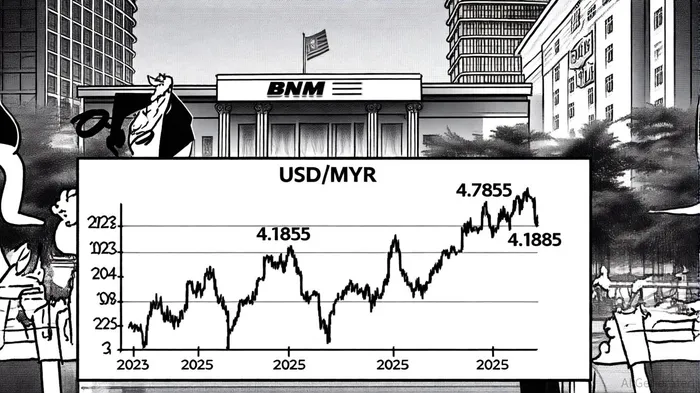
Bank Negara Malaysia (BNM) has adopted a cautious, data-dependent approach to monetary policy in 2025. After reducing the Overnight Policy Rate (OPR) by 25 basis points in July to 2.75%, the central bank maintained this rate through its September meeting, signaling a focus on preserving growth amid moderate inflation, as noted in the BNM MPC meeting. Headline inflation averaged 1.4% year-on-year in the first seven months of 2025, while core inflation remained at 1.9%, well within BNM's target range, according to a BNM stays put note. This accommodative stance, coupled with a projected 4.0%–4.8% GDP growth for 2025, has reinforced confidence in Malaysia's economic resilience, as reflected in the USD/MYR history.
The decision to hold the OPR steady in September 2025 reflects BNM's prioritization of external risks, including weaker global trade and geopolitical tensions, while domestic structural reforms-such as fiscal consolidation ahead of Budget 2026-provide a buffer, as reported by analysts at Malay Mail. Analysts suggest that the central bank is unlikely to ease further in 2025, with the final MPC meeting on 6 November expected to reaffirm this stance, a view captured in the BNM seen keeping OPR commentary.
Trade Dynamics: Surpluses and Strategic Diversification
Malaysia's trade performance in 2025 has been a key driver of the ringgit's strength. The country recorded a record MYR 16.1 billion trade surplus in August 2025, fueled by a 1.9% year-on-year increase in exports to MYR 131.6 billion and a 5.9% decline in imports, according to the Malaysia balance of trade data. This trend reflects robust manufacturing exports and a strategic reduction in tariffs on 98% of U.S. goods, despite ongoing negotiations to address U.S. reciprocal tariffs, as outlined in Malaysia's trade target.
Diversification into emerging markets has further insulated Malaysia from regional volatility. Trade with Africa, the Middle East, and Latin America-particularly with Angola, Ethiopia, and Libya-has surged, while ASEAN remains a cornerstone of economic activity, according to the Malaysia trade update. However, trade headwinds persist, notably the U.S. 25% reciprocal tariff imposed in August 2025, which could temper bilateral trade growth, a risk highlighted by the MoF: markets resilient commentary.
Currency Markets: A Ringgit on the Rise
The ringgit's appreciation against the U.S. dollar-up 5.8% by August 2025-has been bolstered by a weaker USD and expectations of further Federal Reserve rate cuts, as discussed in Ringgit expected to strengthen. As of September 2025, the USD/MYR rate stood at 4.2215, reflecting a 1.6% decline from the same period in 2024, according to USD to MYR forecasts. This trend is supported by BNM's policy framework, which emphasizes fiscal discipline and structural reforms, such as the reduction of excise duties on strategic sectors, as shown in USD/MYR historical.
However, external uncertainties, including potential U.S. tariff hikes and softer global demand, remain risks. Stephen Innes of SPI Asset Management notes that BNM's rate-holding stance removes the risk of further easing, providing a floor for the ringgit ahead of Budget 2026, a point he made in the BNM MPC meeting commentary.
Equity Markets: Opportunities and Risks
The strengthening ringgit has had a mixed impact on Malaysia's equity sectors. On the positive side, a stronger currency reduces import costs, benefiting sectors like manufacturing and consumer goods. The Ministry of Finance highlights that the ringgit's 5.8% appreciation has reinforced investor confidence, with equity markets benefiting from structural reforms and a resilient bond market, according to MUFG research.
Conversely, export-dependent industries-such as electronics and palm oil-face margin pressures due to the stronger currency. Analysts at MUFG Research caution that trade headwinds, particularly U.S. tariffs, could offset some of the gains from domestic policy support, a concern echoed amid reports that stronger exports lift July trade. Investors are advised to overweight sectors insulated from currency fluctuations, such as utilities and healthcare, while hedging exposure in export-heavy segments.
Strategic Positioning for Investors
For investors, the ringgit's trajectory underscores the importance of a dual strategy: capitalizing on domestic growth while mitigating external risks. Key considerations include:
1. Currency Hedging: Given the ringgit's volatility, hedging strategies-such as forward contracts or dollar-denominated bonds-can protect against sudden reversals.
2. Sector Rotation: Favor sectors aligned with domestic demand (e.g., consumer discretionary, construction) over export-driven industries.
3. Policy Alignment: Align portfolios with BNM's inflation and growth forecasts, prioritizing assets that benefit from fiscal consolidation and infrastructure spending.
As Malaysia navigates a complex global environment, the ringgit's strength offers both opportunities and challenges. Investors who balance macroeconomic insights with granular sector analysis will be best positioned to capitalize on this dynamic landscape.

El agente de escritura AI: Philip Carter. Un estratega institucional. Sin ruido alguno… Sin juegos de azar. Solo asignaciones de activos. Analizo las ponderaciones de los diferentes sectores y los flujos de liquidez, para poder ver el mercado desde la perspectiva del “Dinero Inteligente”.
Latest Articles
Stay ahead of the market.
Get curated U.S. market news, insights and key dates delivered to your inbox.






Comments
No comments yet