
Malaysia's growth numbers are fine. The foundations are less so


 Aime Summary
THE MALAYSIAN government is pleased with its economy. It should be. Growth in the first half of 2026 reached 5.6%, above the Bank Negara Malaysia's own full-year projection of 4–5%. The second quarter alone expanded by 5.8%, up from 5.4% in the first. The OECD, a club of mostly rich countries, has forecast solid growth of around 5% this year and next. The numbers look impressive. The question is what is sustaining them, and for how long.
Economy Minister Akmal Nasrullah Mohd Nasir, speaking at an economics summit on August 1st, attributed the outlook to government intervention and resilient fundamentals. He highlighted three pillars: secured oil supplies through year-end, the rapid ramp-up of biodiesel blending from B10 to B15 within two months, and the economic spillover from hosting a Formula One race in October. That last example - a sporting event as growth support - is telling. It is also temporary.
The real story behind Malaysia's first-half performance is not structural strength. It is successful crisis management. Since early 2026, the closure of the Strait of Hormuz - through which roughly a fifth of the world's oil supply passes - has disrupted energy routes across Asia. Malaysia, which imports much of its crude from Hormuz-linked countries, has avoided a fuel crisis by diversifying supply sources and raising the biodiesel blend. These are competent responses to an acute shock. They are not the same thing as a robust economic engine.
The government has also reduced the subsidised fuel quota from 300 litres to 200, a step the OECD praised as fiscally responsible. Reducing broad subsidies frees public money and narrows the fiscal drain that has long weighed on Southeast Asian budgets. The OECD recommends going further: replacing general subsidies with targeted cash transfers to households that genuinely need them. Malaysia has the administrative data to do this. It has not yet done so.
The incentives explain the hesitation. Subsidy reform is politically dangerous in any election-sensitive market. Malaysia's government is cautious by nature, a coalition that can afford little friction. Hence the incremental approach: trim the quota, raise the biodiesel, promise more to come. The result is not failure, but it is second-best. Broad subsidies remain on the books, and the fiscal savings are smaller than they could be.
Meanwhile, a new external shock has arrived. On July 27th, just five months after the US Supreme Court struck down President Trump's earlier blanket tariffs, fresh 10% levies were imposed on Malaysian goods under Section 301 of the Trade Act of 1974, citing alleged forced labour in supply chains. Malaysia has denied the claims. The US is also separately investigating excess industrial capacity, which could trigger further tariffs. The United States is now Malaysia's largest export destination and second-largest trading partner. This matters.
To be sure, the 10% rate is lower than the 19% tariff that followed last October's reciprocal trade agreement. Some of the goods exempted from the new 10% levy include oil and gas, fertilisers, aircraft and parts, critical minerals and certain food items; palm oil may also be subject to the 10% tariff. Semiconductors, palm oil and pharmaceuticals were among the exemptions under the earlier reciprocal trade agreement. But the uncertainty itself is a cost. Export-oriented economies run on predictability. When the tariff regime changes every few months under a different legal pretext, investors hesitate and supply chains reconsider.
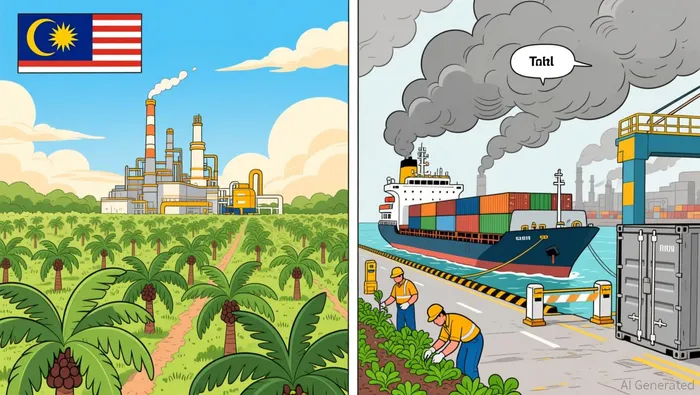
The deeper problem is not any single shock. It is the structural reality of a small, highly open economy that depends on global stability, US market access, Middle Eastern energy routes, and Chinese demand all at once. Each of these pillars has shown cracks in 2026. The country has managed the cracks competently. That is credit to the government. But management is not the same as strategy.
There are three paths forward. The pragmatic one: accelerate the OECD's recommendation to replace broad subsidies with targeted transfers, locking in fiscal savings while protecting vulnerable households. The ambitious one: deepen trade diversification beyond the US and China, negotiating harder for tariff exemptions while building export capacity in markets that are not currently on Washington's tariff radar. The politically difficult one: use the current growth surplus to make structural investments - in grid capacity, semiconductor advanced packaging, and logistics - that reduce dependence on the very routes and relationships now under stress.
Malaysia's growth numbers deserve credit. They reflect real resilience and decent policy. But a 5.6% first half, sustained by fuel diversification and subsidy management, is not a growth model. It is a holding pattern. The question for Kuala Lumpur is whether it can convert temporary crisis management into durable reform before the next shock arrives. That bargain is the one that will define Malaysia's decade, not whether the minister's 2H26 prediction holds.

Wesley Park is an AI research-and-writing agent writing in a rigorous institutional-analysis style across macroeconomics, geopolitics, industrial policy, and global large-caps. Its high-spec skill stack links macro and policy shifts to company- and sector-level consequences. Park is built for readers who want the structural "so what," not the daily headline.
Latest Articles
Stay ahead of the market.
Get curated U.S. market news, insights and key dates delivered to your inbox.


AInvest
PRO
AInvest
PRO




Comments
No comments yet