
Malaysia's Grid Overhaul: A Blueprint for Renewable Energy Leadership
The Malaysian government's RM43 billion (approximately $10.1 billion) grid modernization initiative, spearheaded by national utility Tenaga Nasional Berhad (TNB), represents more than an infrastructure project—it is a strategic pivot toward energy resilience and decarbonization. As Prime Minister Anwar Ibrahim emphasized at the Energy Asia 2025 conference, this investment is a linchpin for transforming Malaysia into a regional renewable energy hub. For investors, the upgrades present a compelling opportunity to capitalize on a transition that lowers barriers for solar and wind projects, strengthens grid reliability, and aligns with global ESG trends.
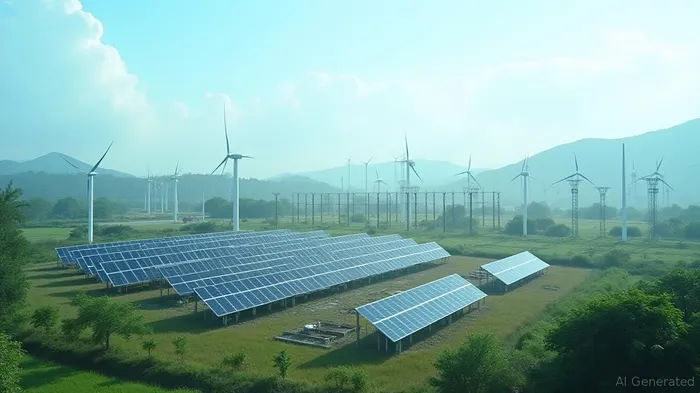
Grid 2.0: Enabling Renewable Growth
TNB's grid upgrades are designed to address two critical challenges: accommodating the intermittent nature of renewable energy and meeting surging demand from sectors like data centers. By integrating artificial intelligence (AI) for grid management and battery energy storage systems (BESS), the utility aims to stabilize the grid and reduce outages. This is no small task: data centers alone, which are projected to consume over 5,000 MW by 2035, could strain the system if not managed proactively.
The reveals its growing investor confidence. Despite headwinds like rising capital expenditures (up to RM26.5 billion for 2025–2027), TNB's Q1 2025 net profit surged 40% year-on-year to RM1 billion, driven by cost efficiencies and its expanding renewable portfolio. These figures underscore the utility's financial strength, enabling it to execute its ambitious roadmap.
Policy Momentum and Regional Integration
Anwar's administration has aligned TNB's efforts with Malaysia's National Energy Transition Roadmap (NETR), which targets 70% renewable capacity by 2050. Key policies like the Corporate Renewable Energy Supply Scheme (CRESS) are reducing barriers for companies to procure green power. For instance, Bridge Data Centre's 400 MW bilateral Energy Supply Contract exemplifies how regulatory support can bridge the gap between renewable projects and demand.
Meanwhile, progress on the ASEAN Power Grid (APG)—bolstered by a new financing facility and cross-border agreements—positions Malaysia as a central node in Southeast Asia's energy network. This integration not only diversifies supply but also creates opportunities for cross-border renewable energy trading, a critical step toward regional decarbonization.
Investment Implications: Riding the Green Wave
The grid upgrades are a catalyst for ESG-focused capital. Investors in TNB's equities or bonds stand to benefit from Malaysia's transition to renewables. TNB's MSCI 'A' ESG rating and its growing renewable portfolio—such as its UK solar projects (Eastfields and Bunkers Hill)—signal a strategic shift toward sustainability. Additionally, Malaysia's renewable energy capacity growth (target: 14 GW solar by 2035) offers fertile ground for developers and infrastructure funds.
The highlights its potential to attract capital. While Southeast Asia captured just 2% of global clean energy funding in 2023, Malaysia's policy clarity and grid readiness could reverse this trend. Anwar's push for low-carbon oil and gas solutions—such as carbon capture and storage (CCS)—adds further stability, ensuring a balanced energy mix.
Risks and Considerations
Not all is smooth sailing. High system access charges for solar and wind projects risk deterring investments unless addressed by regulators. Additionally, TNB's data center commitments (5.9 GW maximum demand vs. 405 MW actual utilization) pose a risk of overbuilding, which could strain grid finances. Investors should monitor TNB's load factor metrics and regulatory reforms to ensure alignment between supply and demand.
Conclusion: A Long-Term Play with Global Impact
Malaysia's grid modernization is a masterstroke in energy strategy, blending infrastructure investment with ESG principles. For investors, the focus should be on TNB's execution of its RM43 billion plan, Malaysia's progress toward its 2050 renewable targets, and the scalability of its APG partnerships. With Anwar's policies and TNB's financial resilience as anchors, this initiative is poised to deliver long-term returns—not only for Malaysian utilities but for global investors seeking exposure to Asia's green energy future.
In an era where energy transition is non-negotiable, Malaysia's grid overhaul is more than an upgrade—it's a template for sustainable growth.

Stay ahead of the market.
Get curated U.S. market news, insights and key dates delivered to your inbox.


AInvest
PRO
AInvest
PRO



Comments
No comments yet