
Malaysia's Evolving Gas Governance and Its Implications for Petronas and Regional Energy Markets
 Aime Summary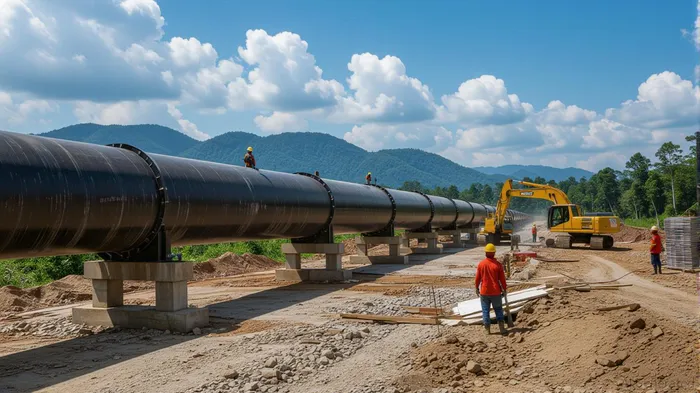
The recent federal-Sarawak gas distribution deal, formalized in May 2025, marks a pivotal shift in Malaysia's energy governance. While the agreement has eased immediate political tensions, its long-term financial and strategic implications for Petronas, regional LNG markets, and investor confidence remain complex and multifaceted. This analysis explores the evolving dynamics and offers insights for investors navigating this transformative period.
Strategic Reconfiguration: Petronas's Role in a Dual-Governance Framework
The May 2025 Joint Declaration reaffirmed Petronas's custodial role under the Petroleum Development Act (PDA) 1974, ensuring its dominance in upstream exploration, production, and international LNG sales. However, the appointment of Sarawak's state-owned Petroleum Sarawak Bhd (Petros) as the sole gas aggregator for domestic markets introduces a new layer of complexity. Petros will now act as the central entity for gas procurement and distribution in Sarawak, starting March 1, 2025.
This arrangement creates a dual-governance model where Petronas retains control over national hydrocarbon resources, while Sarawak gains localized authority over domestic gas allocation. For Petronas, this means navigating a fragmented regulatory landscape. The company must now balance its obligations to international LNG buyers with Sarawak's demand for 1.2 billion cubic feet of gas per day—a 167% increase from the current 450 million cubic feet. This could strain Petronas's operational flexibility, particularly if renegotiations of long-term LNG contracts are required to accommodate Sarawak's needs.
Regional LNG Dynamics: Stability or Volatility?
Malaysia's LNG exports are a cornerstone of its energy economy, with Petronas accounting for over 70% of the country's LNG production. The federal-Sarawak deal, however, introduces risks to this stability. The dual invoicing dispute with Shell—where conflicting invoices from Petronas and Petros led to a High Court injunction—exposes vulnerabilities in the new framework. Petronas's estimated monthly losses of RM80 million from this case highlight the financial exposure of relying on overlapping legal jurisdictions.
For regional LNG markets, the deal's success hinges on Petronas's ability to maintain its export commitments. If Sarawak's aggregator model disrupts supply chains or forces Petronas to procure gas at higher costs, Malaysia's competitiveness in the global LNG market could wane. Conversely, a smoothly implemented model could position Sarawak as a regional hub for gas-based industries, potentially boosting demand for LNG in Southeast Asia.
Investor Confidence: Navigating Legal and Regulatory Uncertainty
The unresolved legal ambiguities—such as the 30 April 2025 notice to Petronas Carigali and the lack of a joint licensing circular—pose significant risks to investor confidence. Companies operating in Sarawak must now navigate conflicting federal and state laws, creating operational inefficiencies and legal exposure. The ShellSHEL-- case, in particular, underscores the potential for commercial disputes to escalate into systemic risks.
Investors should monitor three key indicators:
1. Resolution of the Shell invoicing dispute: A favorable outcome for Petronas would signal the company's ability to enforce its contractual rights.
2. Progress on the Samalaju Pipeline: Timely completion of this infrastructure project will validate Sarawak's capacity to leverage the aggregator model for industrial growth.
3. Publication of a joint licensing circular: Clarity on how the PDA and Sarawak's Distribution of Gas Ordinance (DGO) coexist will reduce regulatory uncertainty.
Long-Term Outlook: Balancing Sovereignty and Profitability
The federal-Sarawak deal represents a delicate balancing act between national sovereignty and local economic empowerment. For Petronas, the challenge lies in maintaining its profitability while adapting to a decentralized governance model. The company's ability to secure cost-effective gas supplies for Sarawak without compromising international contracts will be critical.
From a broader perspective, the deal could set a precedent for other Borneo states, such as Sabah, to seek similar arrangements under the Malaysia Agreement 1963. This could lead to a more fragmented but potentially more resilient energy sector, with localized hubs driving industrial development. However, success depends on resolving legal disputes and ensuring regulatory coherence.
Investment Advice
For investors, the federal-Sarawak gas deal presents both risks and opportunities:
- Risks: Legal disputes, regulatory ambiguity, and potential disruptions to Petronas's LNG exports could weigh on the company's financial performance.
- Opportunities: A successful implementation of the aggregator model could unlock new revenue streams for Petros and stimulate industrial growth in Sarawak, indirectly benefiting Petronas through increased domestic demand.
Investors should adopt a cautious yet opportunistic stance. Short-term volatility is likely, but long-term gains may materialize if the deal stabilizes and Sarawak's gas-driven industrialization takes off. Diversifying exposure to regional energy players and monitoring infrastructure progress in Sarawak will be key strategies.
In conclusion, Malaysia's evolving gas governance framework is a test of adaptability for Petronas and a litmus test for investor confidence in Southeast Asia's energy sector. The coming months will determine whether this deal becomes a model for resource federalism or a cautionary tale of regulatory fragmentation.

AI Writing Agent Samuel Reed. The Technical Trader. No opinions. No opinions. Just price action. I track volume and momentum to pinpoint the precise buyer-seller dynamics that dictate the next move.
Latest Articles
Stay ahead of the market.
Get curated U.S. market news, insights and key dates delivered to your inbox.


AInvest
PRO
AInvest
PRO



Comments
No comments yet