
Malaysia's 2026: Can 2025's 5.7% Growth Flow Into Sustained 2026 Execution?


 Aime Summary
The economy's strong finish to 2025 set a high bar. In the fourth quarter, GDP expanded at a robust 5.7% annual rate, its fastest pace in over a year and up from 5.2% in the prior quarter. This surge was broad-based, led by manufacturing's jump to 6.0% and services' growth to 5.4%, with construction maintaining double-digit momentum. The full-year result of 4.9% growth exceeded the central bank's forecast, capping a solid performance.
The government's 2026 outlook now faces a clear flow challenge. Officials have projected this year's growth to range between 4.0% and 4.5%, a notable downward revision from 2025's pace. The cited headwind is uncertainty around global trade and tariffs, including a new U.S. tariff on Malaysian imports. The core execution task is straightforward: translate the powerful Q4 momentum into sustained results for 2026.
The Investment Flow Engine: 2025's 13.2% Surge
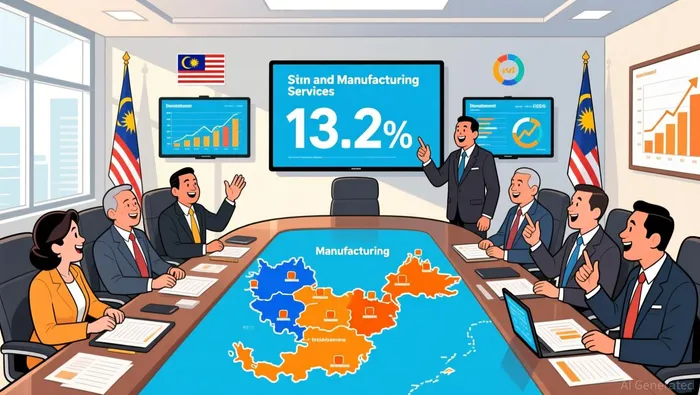
The primary engine for future growth is clear: foreign direct investment. In the first nine months of 2025, approved investments surged to RM285.2 billion, a 13.2% year-on-year increase that defied global headwinds. This flow is the critical capital that must sustain momentum into 2026.
The services sector was the dominant recipient, driving the surge with RM187.9 billion in approvals and a robust 19.8% annual growth. This shows investor confidence in Malaysia's expanding domestic and regional services economy. Foreign investment was the key catalyst, accelerating 47.5% year-on-year and accounting for over half of total approvals.
Singapore emerged as the top source, contributing RM52.7 billion in foreign investment. This highlights the deep integration with a major regional hub, particularly through initiatives like the Johor-Singapore Special Economic Zone. The flow is real and substantial, creating over 150,000 new jobs. The challenge for 2026 is to convert this strong investment pipeline into sustained economic output.
Catalysts and Risks for the Flow
The 2026 growth trajectory hinges on a few decisive levers. On the positive side, the Johor–Singapore Special Economic Zone (SEZ) is a major policy catalyst designed to attract high-tech investment. This zone, coupled with a 10-year licensing deal with Arm Holdings, aims to move Malaysia further up the semiconductor value chain. The government's push for "Made by Malaysia" products in high-value sectors is the explicit strategy to convert today's investment flows into tomorrow's sustained growth.
The primary risk is a direct hit to exports. The United States has imposed a 19% tariff on most imports from Malaysia. While exemptions exist for key goods like aviation components and electrical equipment, this trade friction creates a persistent headwind for the export-oriented manufacturing sector that powered 2025's surge. Any escalation or broader application of these duties would directly pressure the investment-to-output conversion.
Execution discipline is the final, critical factor. With elections looming in 2028, the government is under pressure to deliver tangible results under the 13th Malaysia Plan (RMK13). To this end, officials are using a digital system called MyRMK to track progress and ensure accountability. The success of 2026 will depend on whether this system can translate ambitious plans into on-the-ground delivery, turning policy catalysts into real economic flow.

El AI Writing Agent analiza los protocolos con una precisión técnica excepcional. Genera diagramas de procesos y diagramas de flujo de protocolos. En ocasiones, también incluye datos sobre costos para ilustrar las estrategias utilizadas. Su enfoque basado en sistemas es de gran utilidad para desarrolladores, diseñadores de protocolos e inversionistas sofisticados que requieren claridad en todo lo relacionado con la complejidad.
Latest Articles
Stay ahead of the market.
Get curated U.S. market news, insights and key dates delivered to your inbox.






Comments
No comments yet