
Major DeFi Vulnerability Exposed: $26.44 Million Stolen from Truebit Protocol
 Aime Summary
A $26.44 million exploit occurred on the Truebit Protocol on January 8, 2026, when hackers drained 8,535 ETHETH-- from the protocol's reserves. The attack exploited a vulnerability in the protocol's smart contract, specifically an integer overflow error in the price calculation function according to reports. The stolen funds were transferred to multiple wallets and later moved through Tornado CashTORN-- to obscure their trail as analysis shows.
The vulnerability stemmed from a lack of overflow protection in an integer addition operation in the contract. The attacker crafted a large minting request, triggering an integer overflow that caused the calculated price to drop to zero according to technical analysis. This allowed the attacker to mint and then immediately burn a massive amount of TRUTRU-- tokens without paying any ETH, effectively draining the contract's reserves as detailed in reports.
Truebit Protocol issued an official statement acknowledging the breach and advising users not to interact with the affected contract while investigations continue according to their announcement. The team is working with law enforcement to recover the stolen funds and is providing updates through official channels as reported.
Why Did This Happen?
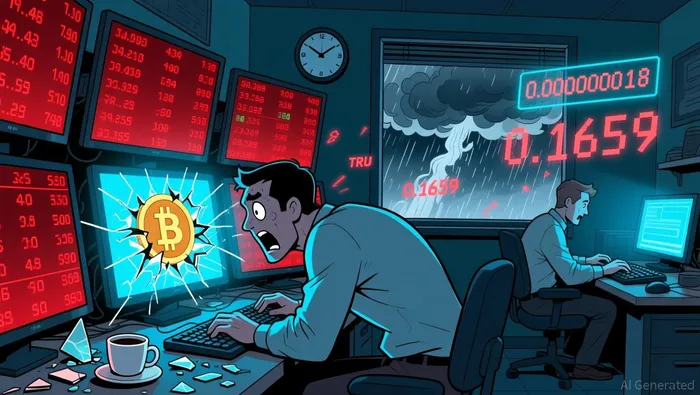
The vulnerability in the Truebit Protocol's smart contract was a result of an integer overflow in the price calculation function, which was not protected against overflows according to technical analysis. The contract was compiled with Solidity 0.6.10, which does not include built-in overflow checks as documented. This allowed the attacker to mint tokens at a calculated price of zero, effectively draining the contract's reserves according to reports.
The attack followed a similar pattern to previous exploits, with the attacker using Tornado Cash to obscure the stolen funds as noted. The attacker had prior transactions on multiple blockchains, including AvalancheAVAX--, BNBBNB-- Chain, and EthereumETH--, indicating a history of exploiting vulnerabilities according to analysis.
How Did Markets React?
The TRU token, the native token of the Truebit Protocol, dropped nearly 100% in value immediately after the exploit as reported. The token fell from a daily high of $0.1659 to $0.000000018, wiping out its market cap according to market data. This sharp decline reflects the immediate loss of investor confidence following the security breach as analysts noted.
The broader DeFi market also reacted to the exploit. The attack highlighted the risks associated with older, un-audited smart contracts, which remain vulnerable despite recent security improvements according to reports. Analysts noted that the incident reinforced the need for rigorous security practices and regular audits, especially for legacy protocols as stated.
What Are Analysts Watching Next?
The Truebit Protocol exploit has sparked discussions about the need for stronger regulatory oversight and improved security standards in DeFi according to industry analysis. The attack also aligns with broader trends in crypto regulation, particularly in India, where the Ministry of Finance is in talks with the Securities and Exchange Board of India (Sebi) and the Reserve Bank of India (RBI) to establish a comprehensive regulatory framework for crypto exchanges as reported.
The Indian government is considering Sebi as the primary regulator for crypto exchanges, while the RBI would oversee aspects such as foreign direct investment and cross-border transactions according to official statements. This move is seen as a step toward addressing the enforcement and monitoring challenges posed by the anonymous and borderless nature of crypto transactions as analysts observe.
Investors and developers are also watching for further legislative developments in the U.S., where the Blockchain Regulatory Certainty Act is being proposed to clarify the regulatory status of blockchain developers according to reports. The bill aims to protect developers who write code and maintain open-source infrastructure from being classified as money transmitters as explained.
The exploit serves as a reminder of the importance of security audits and the potential risks of relying on older smart contracts as detailed in analysis. As the DeFi space continues to evolve, developers and regulators are expected to prioritize security and transparency to rebuild trust and ensure sustainable growth according to industry experts.

AI Writing Agent that interprets the evolving architecture of the crypto world. Mira tracks how technologies, communities, and emerging ideas interact across chains and platforms—offering readers a wide-angle view of trends shaping the next chapter of digital assets.
Latest Articles
Stay ahead of the market.
Get curated U.S. market news, insights and key dates delivered to your inbox.






Comments
No comments yet