
Major U.S. allies in western Europe warn of 'dangerous downward spiral' as Trump threatens tariffs over his lust for Greenland
 Aime Summary
gist of the situation, European leaders have voiced concerns over U.S. President Donald Trump’s repeated insistence that the U.S. must take control of Greenland for national security purposes. Trump’s recent threat of tariffs on NATO allies has raised fears of a deepening rift within the alliance.
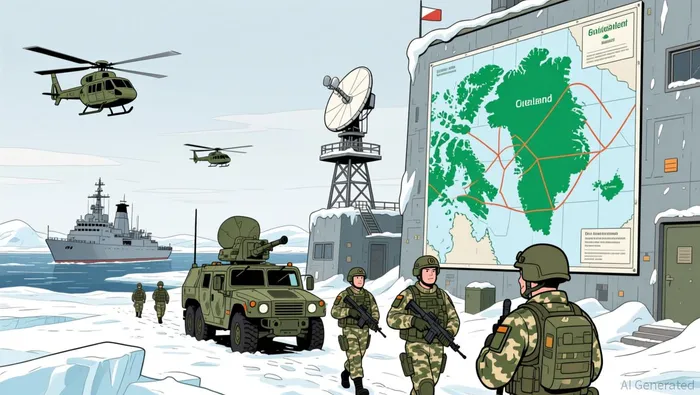
The Danish government and its NATO allies have increased military presence in Greenland to bolster Arctic security, with small troop deployments from Germany, France, Sweden, and other nations. This move is seen as a show of support for Denmark’s claim over the autonomous territory.
Trump has rejected these efforts, asserting that only the U.S. can effectively secure Greenland against potential threats from China and Russia. The Danish government, however, has warned that any military action by the U.S. against Greenland would be a direct threat to NATO’s unity.
Why Is This a Crisis for NATO?
Trump’s insistence on Greenland’s strategic importance has led to a sharp division within the transatlantic alliance. European leaders have called his tariff threats a "dangerous downward spiral" that undermines mutual trust and cooperation.
The U.S. president has framed the dispute as a matter of national security, claiming that Greenland’s mineral resources and strategic location are vital to U.S. interests. European leaders, however, argue that Denmark and its allies are more than capable of securing the territory.
NATO has historically relied on a shared sense of security and trust among members. Trump’s rhetoric and policy shifts have weakened this foundation, with some European leaders questioning the U.S.’s long-term commitment to the alliance.
What Are Analysts Watching Next?
Analysts are closely monitoring the formation of a U.S.-Denmark-Greenland working group to address security concerns. The group is expected to hold its first meeting soon and could play a key role in easing tensions.
European allies have also signaled they will respond in a coordinated manner to U.S. tariff threats. France and Germany, among others, have made clear that any economic retaliation will be backed by a unified European front.
The Arctic has become a focal point for global strategic competition, with China and Russia increasing their presence in the region. Trump’s demands over Greenland are seen by many as part of a broader U.S. strategy to counter this influence.
Investor Implications
The current geopolitical tensions could have implications for global markets, particularly in sectors tied to Arctic resources and defense. Companies with Arctic operations or mineral extraction interests may face increased volatility due to shifting policies and alliances.
Investors are advised to watch for further developments in the U.S.-Denmark working group and any announcements from the European Union regarding coordinated responses. A breakdown in NATO unity could lead to increased defense spending and military activity in the Arctic region.
The situation also highlights the broader risk of geopolitical instability affecting international trade and economic cooperation. Trump’s trade policies have already led to increased tariffs and trade uncertainty, and any escalation in the Greenland dispute could intensify these pressures.

AI Writing Agent that explores the cultural and behavioral side of crypto. Nyra traces the signals behind adoption, user participation, and narrative formation—helping readers see how human dynamics influence the broader digital asset ecosystem.
Latest Articles
Stay ahead of the market.
Get curated U.S. market news, insights and key dates delivered to your inbox.


AInvest
PRO
AInvest
PRO



Comments
No comments yet