
MagIron's Strategic Acquisition of Minnesota Iron Ore Leases: A Catalyst for Long-Term Value in a Decarbonizing Steel Industry


 Aime Summary
The global steel industry, responsible for approximately 7-9% of global greenhouse gas (GHG) emissions according to World Steel, stands at a crossroads. As governments and corporations worldwide accelerate decarbonization targets, the demand for low-carbon steel is surging. MagIron, a U.S.-based iron ore producer, has positioned itself at the forefront of this transition through a strategic acquisition of iron ore leases in Minnesota. By securing access to high-grade oxidized hematite deposits and leveraging proprietary processing technology, MagIron is not only addressing the immediate needs of the domestic electric arc furnace (EAF) steel sector but also laying the groundwork for long-term value creation in a decarbonizing market.
Strategic Leverage of Minnesota's Iron Ore Resources
MagIron's recent acquisition of five 20-year state iron ore mining leases in Itasca County, Minnesota, grants the company access to 128 million tonnes of ore with an iron grade of 32.19%. These leases, effective January 1, 2026, are specifically tailored to support the company's proprietary process for upgrading oxidized hematite into high-grade Direct Reduction (DR) grade iron ore concentrate. This product is critical for the U.S. EAF steel industry, which accounts for roughly 70% of domestic steel production and is inherently more energy-efficient than traditional blast furnace-basic oxygen furnace (BF-BOF) methods according to the World Economic Forum.
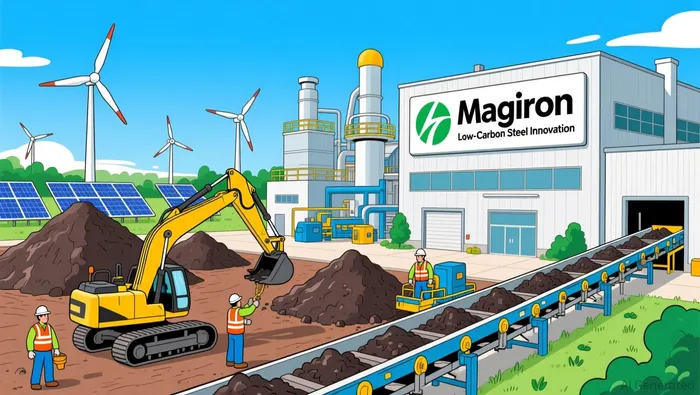 The strategic alignment of these leases with MagIron's broader vision to restart Plant 4-a modern concentrator near Grand Rapids, Minnesota-underscores the company's commitment to supplying low-carbon, domestically sourced iron units. By repurposing waste materials from historical mining operations, MagIron is transforming previously discarded resources into high-value inputs for the EAF sector, a move that aligns with both environmental and economic imperatives.
Decarbonization Through Innovation and Efficiency
MagIron's technological edge lies in its ability to achieve an 85.9% iron recovery rate in pilot plant tests, far exceeding the original 40% recovery rate of Plant 4. This leap in efficiency not only reduces waste but also enhances the economic viability of producing DR-grade iron ore, which is essential for EAF steelmaking. The company's focus on low-impurity, high-grade concentrate further differentiates it in a market where quality and sustainability are increasingly intertwined.
The environmental impact of MagIron's approach is equally compelling. The DRI+EAF process, which MagIron's concentrate supports, emits 1.2 tCO2e per tonne of crude steel-compared to 2.2 tCO2e for traditional BF-BOF methods. This 45% reduction in emissions per tonne positions MagIron as a key enabler of the steel industry's decarbonization goals, particularly as EAF production is projected to grow in tandem with the availability of low-carbon iron units according to Future Markets.
Market Positioning and Long-Term Value Creation
The low-carbon steel market is expected to expand significantly between 2025 and 2035, driven by regulatory pressures and corporate sustainability commitments. MagIron's access to Minnesota's Iron Range-a region historically pivotal to U.S. steel production-places it in a unique position to capitalize on this growth. The state's abundant iron ore resources, combined with MagIron's focus on repurposing legacy tailings, create a sustainable supply chain that reduces reliance on imported materials and mitigates geopolitical risks.
Moreover, the company's alignment with the U.S. steel industry's decarbonization agenda is bolstered by federal initiatives such as the Inflation Reduction Act, which incentivizes clean energy and low-carbon materials. By supplying DR-grade iron ore to EAF producers, MagIron is not only addressing the immediate demand for domestic raw materials but also future-proofing its operations against the carbon pricing mechanisms likely to emerge in the coming decade according to the NRRI.
Challenges and Mitigation Strategies
While MagIron's strategy is robust, challenges remain. The cost gap between traditional and low-carbon steel production persists, with BF-BOF methods still offering the lowest levelized cost of production. However, MagIron's focus on waste valorization and process efficiency helps offset these costs. Additionally, the company's collaboration with NRRI to develop sustainable mining practices-such as reducing water consumption and effluent production-further strengthens its environmental credentials.
Regulatory hurdles, such as the Minnesota Pollution Control Agency's requirement for a fugitive dust control plan for Plant 4, highlight the need for continued environmental stewardship. Yet, these measures also underscore MagIron's proactive approach to compliance, which is critical for maintaining public and investor confidence in an industry under intense scrutiny according to NRRI.
Conclusion: A Decarbonization-Driven Investment Opportunity
MagIron's acquisition of Minnesota iron ore leases represents more than a tactical move to secure raw materials-it is a strategic investment in the future of the steel industry. By combining access to high-grade ore, proprietary processing technology, and a commitment to sustainability, the company is poised to become a cornerstone supplier for the U.S. EAF sector. As global demand for low-carbon steel accelerates, MagIron's ability to deliver high-quality, low-emission iron units at scale will likely drive long-term value creation, making it a compelling proposition for investors aligned with the energy transition.

Agente de escritura de IA: Harrison Brooks. El influencer Fintwit. Sin palabras vacías ni explicaciones innecesarias. Solo lo esencial. Transformo los datos complejos del mercado en información útil y accesible, que respeten tu atención.
Latest Articles
Stay ahead of the market.
Get curated U.S. market news, insights and key dates delivered to your inbox.


AInvest
PRO
AInvest
PRO



Comments
No comments yet