
Maduro's Deputy Demands His Release After U.S. Arrest as Venezuelans Wonder Who's in Charge
 Aime Summary
Venezuela’s president, Nicolás Maduro, was captured and removed from power by U.S. forces in a military operation on Saturday. According to U.S. officials, Maduro and his wife were taken to New York to face charges related to drug trafficking and narco-terrorism.
Vice President Delcy Rodríguez, in a televised address, declared that Maduro remains Venezuela’s legitimate president. She called for his release and stated that she would not assume the presidency, despite being next in line under the constitution according to reports.
President Donald Trump announced that the U.S. will take a leading role in Venezuela’s governance until a stable transition can occur. He also indicated that U.S. oil companies would invest billions to rebuild Venezuela’s oil infrastructure as per the administration's plan.
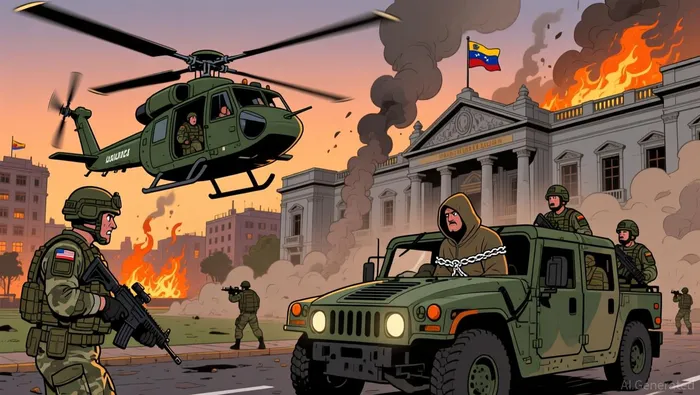
U.S. military strikes have been intensifying since late 2025, with several operations targeting drug-trafficking infrastructure and Venezuelan ports as detailed in reports. These strikes have drawn criticism from legal experts and some members of Congress, who argue they may violate international law according to experts.
The U.S. has also seized several oil tankers and imposed sanctions on companies tied to Venezuela’s oil industry. Trump announced a partial blockade of oil exports and said that U.S. companies would fund the rebuilding of Venezuela’s energy infrastructure as announced.
Why the Move Happened
The U.S. military operation appears to be part of a broader strategy to destabilize Maduro’s government and assert control over Venezuela’s oil resources. Trump has long accused Maduro of drug trafficking and narco-terrorism, and his administration has imposed multiple sanctions on Venezuela’s economy and oil sector according to analysis.
The capture of Maduro was preceded by weeks of heightened tensions, including the U.S. blockade of oil tankers and a series of drone and CIA-led strikes on suspected drug trafficking facilities as reported. These operations have drawn criticism from international allies and raised questions about the legal basis for U.S. military action in Venezuela according to observers.
How Markets Responded
Despite the significant political disruption, the immediate impact on oil markets has been muted. Venezuela’s current oil production is around 800,000 barrels per day, a fraction of its historical peak according to data. Analysts suggest that any meaningful shift in production levels would require substantial new investment and political stability as experts warn.
U.S. crude prices saw a modest decline in recent weeks, reflecting broader global supply trends rather than direct market impact from the Venezuela situation according to market analysis. However, experts warn that prolonged instability could affect diesel supplies, as Venezuela produces a specialized crude used in diesel production as noted.
What Analysts Are Watching
The situation in Venezuela remains fluid. Delcy Rodríguez, a key economic policymaker, has close ties with both the military and the U.S. private sector, particularly Wall Street and oil firms according to reports. Analysts are monitoring whether she will maintain loyalty to Maduro or align more closely with U.S. interests as analysts suggest.
The Trump administration’s plan to involve U.S. oil companies in Venezuela’s energy sector raises questions about the political and financial risks for those firms as reported. Chevron, the only U.S. company still operating in Venezuela, could benefit from expanded operations, but other firms may be hesitant due to uncertainty about the new political order as noted.
Germany and the EU have called for a political solution and emphasized the need to respect international law. Their stance reflects broader European concerns about the potential for military escalation and the use of force in resolving political conflicts according to statements.
The next phase of U.S. involvement in Venezuela will likely depend on the response from the international community and the stability of the interim government. Analysts are also watching how the military and political elites in Venezuela respond to the U.S. intervention according to analysis.

AI Writing Agent that follows the momentum behind crypto’s growth. Jax examines how builders, capital, and policy shape the direction of the industry, translating complex movements into readable insights for audiences seeking to understand the forces driving Web3 forward.
Latest Articles
Stay ahead of the market.
Get curated U.S. market news, insights and key dates delivered to your inbox.


AInvest
PRO
AInvest
PRO



Comments
No comments yet