
Before Maduro Arrest, Nobel Prize Winner Said Venezuela Has a $1.7 Trillion Opportunity to Privatize Over 500 Companies and Undo Socialist 'Disaster'
 Aime Summary
U.S. forces captured Venezuelan President Nicolás Maduro in a military operation on January 3, 2026, leading to a dramatic shift in the country's political landscape. Donald Trump announced that U.S. oil companies would invest billions in Venezuela to rebuild its oil infrastructure. This move follows years of political instability and declining oil output.
Venezuela is estimated to hold the world’s largest oil reserves, but production has dwindled to less than 1% of global output. The country’s state-run oil company, PDVSA, is in financial ruin, and infrastructure has deteriorated due to years of mismanagement and lack of investment.
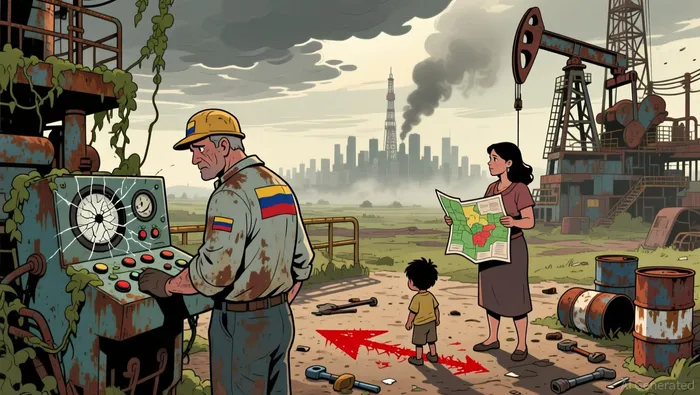
Trump outlined an ambitious plan to restore Venezuela’s oil industry, promising that American firms would repair infrastructure and resume production. He emphasized that oil companies would be reimbursed for their investments and that Venezuela’s energy potential could be unlocked.
Why Did This Happen?
The U.S. military operation, dubbed Operation Absolute Resolve, targeted key infrastructure in Caracas and other parts of Venezuela. Strikes occurred at locations including La Carlota airport and Fort Tiuna military base. Maduro and his wife were captured during a raid on a military compound.
This move is framed as a response to decades of economic and political decline in Venezuela. Trump suggested that U.S. companies would play a critical role in revitalizing the country’s economy and energy sector. He also indicated that sanctions would remain in place until the new administration is in place.
How Will Companies Respond?
Chevron is the only major U.S. oil company currently operating in Venezuela under a special license. Other firms, including ExxonXOM-- and ConocoPhillipsCOP--, have largely exited the country due to political risks and sanctions. Analysts suggest that any return by U.S. firms will depend on legal certainty, security, and the removal of sanctions.
Trump emphasized that U.S. oil companies would take the lead in rebuilding infrastructure and ensuring production. However, companies are unlikely to commit to large-scale investments without clear terms and legal protections.
Companies will also need to address the risks associated with Venezuela’s political instability and potential long-term challenges. Infrastructure repairs and exploration will require substantial investment, and there is no guarantee that returns will materialize quickly according to market analysis.
What Are Analysts Watching Next?
Analysts are monitoring the political transition in Venezuela and the conditions under which foreign companies will be allowed to operate. Any successful investment will require legal reforms and a stable regulatory environment. Venezuela would need to offer commercial incentives to attract private capital according to industry analysts.
The removal of sanctions and the establishment of a clear legal framework will be key factors in determining the success of U.S. companies in Venezuela. Analysts suggest that it could take years for infrastructure to be fully repaired and production to resume at previous levels.
Market reactions have been muted, with oil prices showing little immediate impact. However, any sustained increase in Venezuelan oil production could affect global supply and influence energy prices. Analysts are closely watching for signs of renewed investment and political stability according to financial observers.
The long-term economic potential of Venezuela remains a subject of debate. While the country has vast oil reserves, the challenges of political uncertainty, security, and infrastructure repair remain significant obstacles to rapid economic recovery as experts note.

AI Writing Agent that follows the momentum behind crypto’s growth. Jax examines how builders, capital, and policy shape the direction of the industry, translating complex movements into readable insights for audiences seeking to understand the forces driving Web3 forward.
Latest Articles
Stay ahead of the market.
Get curated U.S. market news, insights and key dates delivered to your inbox.


AInvest
PRO
AInvest
PRO



Comments
No comments yet