
Madagascar's Mining Sector in Focus: New Leadership and Corporate Uncertainty


 Aime Summary
Madagascar is drawing fresh attention in the global mining sector as new government support collides with corporate uncertainty. The island nation, rich in critical minerals and resources, is at a crossroads where political developments, shifting corporate strategies, and regional investments are reshaping the landscape. For investors, this presents a mix of promise and caution — particularly in the titanium and iron ore spaces.
## Key developments shaping Madagascar's mining landscape
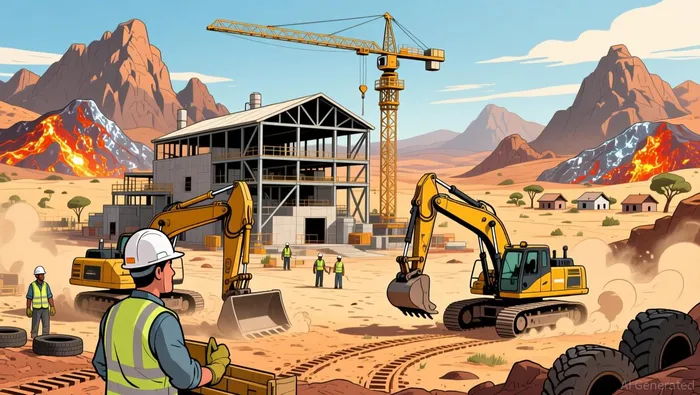
Recently, the government has given its backing to the Bekisopa high-grade iron ore project, a move that could signal a more investor-friendly stance. This support for Akora Resources Limited has the potential to unlock new capital and streamline operations in the short to medium term. However, the situation is not without its shadows. Rio TintoRIO--, the global mining giant, is currently reviewing its 80% stake in QIT Madagascar Minerals, adding a layer of uncertainty to the future of long-term titanium operations.
This corporate ambivalence reflects broader concerns about Madagascar's political and economic stability. The , which assesses country and company risk, highlights significant headwinds for the mining sector. Political instability and weak governance remain red flags, which could deter capital from more risk-averse investors. Still, for those willing to take calculated risks, the rewards could be substantial — especially with the potential for new infrastructure and exploration projects.
## Investor implications and emerging challenges
The recent political shift has introduced a degree of optimism, but investors must remain wary. While government support can accelerate development timelines and reduce bureaucratic delays, it can also come with strings attached — such as higher taxes or more stringent regulatory requirements. That said, the involvement of the UAE and Saudi Arabia in Madagascar's resource sector is a game changer. These regional powers are increasingly investing in Africa's natural resources and infrastructure, offering alternatives to traditional Western financiers.
This trend is part of a broader geopolitical realignment, where middle powers are stepping into the void left by major economies like the U.S. and China. The UAE, for instance, has made significant investments in clean energy on the continent, while Qatar has played a diplomatic role in regional peace efforts. For Madagascar, this means more diverse funding options — but also more complex political dynamics to navigate.
## Broader regional and global context
Madagascar's situation is not unique in the broader African context. Across the continent, structural informality in business is a persistent challenge, with many firms operating outside formal regulatory systems. A recent study highlights how financial constraints and weak enforcement drive businesses to remain informal — and how policy reforms, such as tax reductions or improved compliance systems, could help shift this trend. This is particularly relevant for Madagascar, where improving governance could attract more sustainable investment.
Meanwhile, the global economic backdrop is also evolving. China's recent figures have shown a decline, signaling slower growth in key sectors like property and infrastructure. This could have indirect effects on Madagascar, where Chinese firms have played a role in mining and infrastructure development. If Chinese capital becomes more cautious, it could create both gaps and opportunities for other investors.
## Looking ahead: Opportunities and risks for the sector
As we approach the end of 2025, Madagascar's mining sector stands at a pivotal moment. The government's backing of high-grade projects and the potential for regional investment are positive signals. But investors must remain cautious — especially when corporate stakeholders are still evaluating their long-term strategies.
The mining sector's success will depend on a delicate balance: between political will and corporate confidence, between short-term gains and long-term sustainability. For now, Madagascar offers a compelling case study in how natural resource potential can be unlocked — but also how easily it can be derailed without the right policies and partnerships in place.
In the months ahead, developments in corporate strategy, regional investment patterns, and political stability will be worth watching. For investors with a strategic eye and risk tolerance, Madagascar's mining sector could hold untapped value — if it can clear the hurdles ahead.

Delivering real-time insights and analysis on emerging financial trends and market movements.
Latest Articles
Stay ahead of the market.
Get curated U.S. market news, insights and key dates delivered to your inbox.




Comments
No comments yet