
Madagascar’s Mining Sector in Focus: New Leadership and Corporate Uncertainty


 Aime Summary
Madagascar's Mining Sector and Recent Policy Shifts
Madagascar has emerged as a key player in global mining, with recent leadership changes and corporate strategy shifts raising fresh questions for investors. The island nation's resource potential, especially in iron ore and titanium, has long drawn international attention, but now a new administration is backing a high-grade iron ore project while major players like Rio TintoRIO-- are reevaluating their stakes. As political instability and economic uncertainty persist, the outlook for mining in Madagascar remains a mix of promise and risk.
Madagascar's Mining Sector and Recent Policy Shifts
Madagascar's natural resources have long held the potential to boost the country's economy, particularly in mining. The nation is rich in minerals including ilmenite, a key titanium ore, and iron, with several major firms having made significant investments over the years. The new leadership on the island has signaled a renewed commitment to developing these resources, with the Bekisopa high-grade iron ore project now receiving official backing. Akora Resources Limited, the operator of the project, stands to benefit from this political endorsement, which could help streamline operations and attract further investment 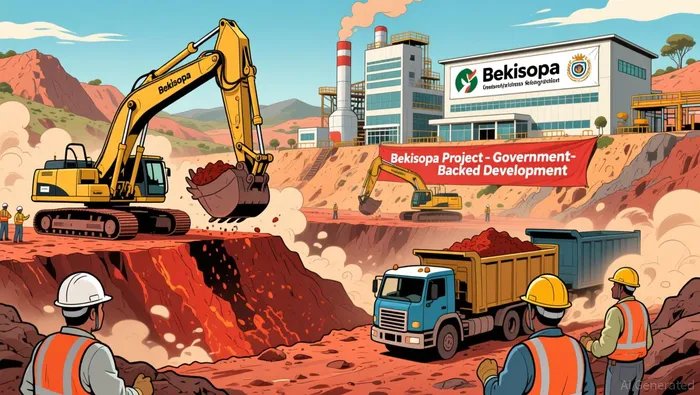 according to recent reports.
Key Developments in Iron Ore and Titanium
While the Bekisopa iron ore project moves forward with government support, the future of titanium operations in Madagascar is less certain. Rio Tinto, a major player in the region for over two decades, has announced a strategic review of its assets, including its ilmenite operations. The company holds an 80% stake in QIT Madagascar Minerals, with the remaining 20% controlled by the Malagasy state. This review raises questions about whether the company will maintain its long-term presence in the region or divest non-core operations.
Coface's 2025 Political Risk Index highlights the growing challenges for businesses in Madagascar, including political instability and social unrest. While the government's endorsement of projects like Bekisopa is a positive signal, the broader environment of uncertainty could affect operations and investor confidence.
Broader Political and Economic Context
Madagascar's political landscape has remained turbulent in recent years, with a high risk of armed conflict and institutional fragility. The island nation has seen shifts in leadership and political power, which often impact business operations. For investors, understanding these dynamics is crucial when evaluating the long-term viability of projects in the region.
Geopolitical and Economic Trends in Africa
Africa as a whole is witnessing a shift in geopolitical influence, with middle powers like the UAE, Saudi Arabia, and Qatar playing increasingly important roles. These nations are investing in clean energy, infrastructure, and maritime operations across the continent, sometimes positioning themselves as alternatives to traditional Western partners. At the same time, African countries are asserting greater sovereignty, seeking balanced partnerships in energy, defense, and economic development according to recent analysis.
In this context, Madagascar's resource potential is drawing attention not just from local leaders but also from regional and international players. The recent endorsement of the Bekisopa project could be a sign that the government is seeking to attract more foreign investment and diversify its economic strategy.
Implications for Investors
For investors, Madagascar's mining sector offers both opportunities and risks. On the one hand, projects like Bekisopa, supported by the government, could provide growth potential for junior resource companies. On the other, political instability and corporate strategy changes—such as Rio Tinto's review—can introduce uncertainty. The long-term success of mining operations will depend on the government's ability to maintain stability, enforce regulatory frameworks, and attract consistent investment.
Navigating Risk and Opportunity
The challenge for investors lies in balancing the upside of high-grade mineral projects with the downside of political and operational risk. For now, the Bekisopa project appears to be in a favorable position, with government support and clear development potential. However, any changes in policy or corporate strategy could alter this dynamic.
In the broader picture, Madagascar's resource sector reflects the wider trends in African mining and geopolitics. As regional powers gain influence and traditional players reassess their strategies, the opportunities for mining investments in countries like Madagascar will remain closely tied to political and economic developments .
Looking ahead, investors will need to monitor both the government's actions and the moves of key corporate players like Rio Tinto. A stable policy environment and continued investment will be crucial for unlocking Madagascar's resource potential while mitigating risks for stakeholders.

Delivering real-time insights and analysis on emerging financial trends and market movements.
Latest Articles
Stay ahead of the market.
Get curated U.S. market news, insights and key dates delivered to your inbox.




Comments
No comments yet