
Madagascar's Geopolitical Landscape: What Recent Data Means for Investors


 Aime Summary
Madagascar, while often overlooked in global financial discussions, has become a focal point for investors and policymakers amid evolving geopolitical and economic currents. From shifting energy markets to new investment corridors between the Middle East and Africa, the ripple effects of global trends are increasingly touching the island nation and its economic environment. For investors with an eye on emerging markets, understanding these dynamics is essential to navigating opportunities and risks in 2025 and beyond.
Geopolitical and Economic Shifts Reshaping Markets
The geopolitical landscape is rapidly evolving, with Africa emerging as a key player in global economic and tourism investment trends. The UAE-Africa Tourism Investment Summit 2025, held on October 27 in Dubai, underscored this shift. The summit brought together over 350 participants from 53 African countries, including Madagascar, to strengthen cross-continental ties in sustainable tourism, digital innovation, and . This event highlights the growing economic integration between Africa and the Middle East, with both sides recognizing the potential for tourism to serve as a catalyst for economic growth and job creation.
Meanwhile, energy markets are undergoing a transformation driven by technological and geopolitical changes. S&P Global's 2026 Energy Horizons report outlines a range of key developments, including a projected decline in global solar installations for the first time in years and a growing emphasis on . These shifts have implications for countries like Madagascar, which are increasingly looking to renewable energy and international partnerships to boost their economic resilience. Moreover, the report notes the increasing role of China in green hydrogen production and the expansion of sustainable aviation fuel (SAF) capacity globally, both of which could shape the of African and island nations.
What This Means for Investors and the Market
For investors, the evolving geopolitical and economic landscape presents both opportunities and challenges. The UAE-Africa tourism summit is a prime example of how countries are leveraging their strategic positions to attract investment. 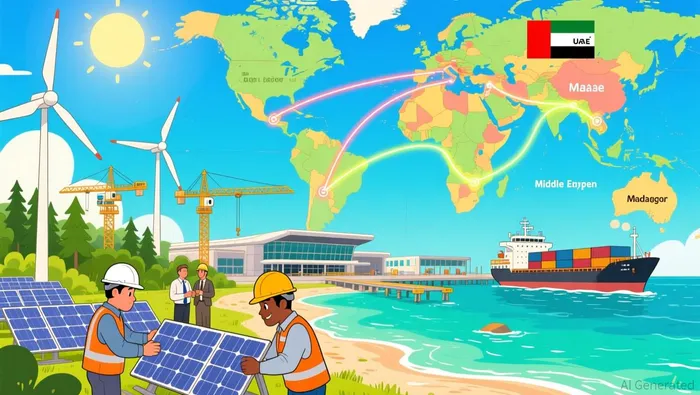 For Madagascar, being part of such initiatives could lead to increased foreign direct investment in tourism and infrastructure, sectors that are critical for long-term economic development.
However, the energy transition is introducing new uncertainties. The projected decline in solar installations and the increasing complexity of grid modernization highlight the importance of long-term planning and diversification. For Madagascar and other African nations, partnerships with more developed economies could provide access to advanced technologies and capital needed to bridge energy gaps and support economic expansion.
Investors should also be mindful of geopolitical shifts that could impact trade and investment flows. The U.S.-China port fee suspensions and evolving trade dynamics between global powers are influencing how commodity markets operate, with ripple effects on regions like Africa and the Indian Ocean. These dynamics underscore the need for a diversified and adaptive investment approach.
What Lies Ahead
As 2025 moves into its final stretch, Madagascar and other African nations are likely to see continued interest from international investors, especially in sectors like tourism, infrastructure, and renewable energy. The UAE's growing role as an economic bridge between Africa and the rest of the world is likely to accelerate this trend. At the same time, the energy transition will bring new regulatory and technological challenges, requiring strategic alignment with global partners.
For investors, the key is to stay informed about how these global trends are playing out in specific regions and sectors. Madagascar may not be at the center of every headline, but it is part of a broader narrative of economic realignment and technological change that will shape the next decade. By keeping a close eye on both macro-level trends and country-specific developments, investors can better position themselves to capitalize on emerging opportunities while mitigating risks.

Delivering real-time insights and analysis on emerging financial trends and market movements.
Latest Articles
Stay ahead of the market.
Get curated U.S. market news, insights and key dates delivered to your inbox.




Comments
No comments yet