
Macron's Strategic Economic Reforms and Their Impact on European Investment
 Aime Summary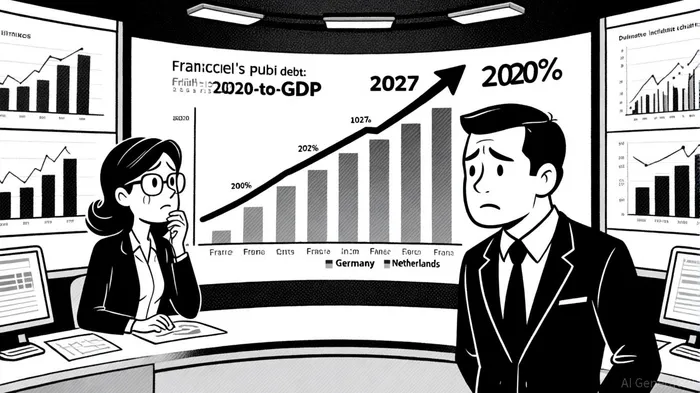
Emmanuel Macron's 2023–2025 economic reforms, centered on labor market liberalization, bureaucratic streamlining, and fiscal consolidation, were designed to reinvigorate France's competitiveness and attract foreign investment. However, the interplay between these reforms and the country's deepening political instability has created a paradox: while structural changes aim to unlock growth, institutional uncertainty is reshaping capital flows across Europe, diverting investments to more stable economies. This dynamic underscores the critical role of political stability in determining the success of economic strategies in an interconnected European market.
Macron's Reforms: A Double-Edged Sword
Macron's “Act II” of liberalization includes measures such as easing labor market regulations, reducing administrative hurdles for businesses, and implementing stricter unemployment insurance rules[1]. These reforms align with broader goals of enhancing France's attractiveness to foreign investors, particularly in sectors like technology and green energy. Collaborative efforts with Germany, such as the Franco-German Economic Agenda, further emphasize cross-border energy integration and industrial innovation[2].
Yet, the effectiveness of these reforms is undermined by fiscal challenges. France's 2024 budget deficit reached 5.8% of GDP, with public debt exceeding 113% of GDP[6]. Prime Minister François Bayrou's 2026 austerity plan, which proposed €43.8 billion in savings, faced fierce opposition and highlighted the government's inability to secure legislative consensus[6]. This fiscal fragility, coupled with political fragmentation, has eroded investor confidence, as evidenced by a one-notch credit rating downgrade by Moody's in 2025[3].
Political Instability and Capital Reallocation
The collapse of Bayrou's government in September 2025, following a failed confidence vote, intensified concerns about France's ability to implement necessary fiscal consolidations[1]. Institutional investors, sensitive to governance risks, have responded by reallocating capital. French government bond yields rose to 3.53% in August 2025, widening spreads against Germany's debt and signaling heightened risk premiums[1]. The CAC 40, France's benchmark equity index, lagged behind European peers, with domestically focused sectors like construction and hospitality facing steeper declines[2].
Data from the Banque de France reveals that institutional investment flows have shifted toward Germany and the Netherlands, where political stability and fiscal discipline are perceived as stronger[4]. For instance, FDI inflows into Germany increased by 12% in H1 2025, while France recorded a 5% decline[4]. This trend is exacerbated by the European Central Bank's decision to halt sovereign debt repurchases in early 2025, further raising borrowing costs for France[3].
Sector-Specific Capital Shifts
Sector-specific responses to Macron's reforms highlight divergent impacts. The construction industry, buoyed by government infrastructure initiatives, is projected to grow at a 2.4% CAGR through 2029[3]. However, this growth is tempered by labor shortages and rising material costs. In contrast, the chemicals sector faces declining returns due to overcapacity and energy price volatility, prompting firms to prioritize innovation and sustainability[2].
The real estate market, meanwhile, has been hit by tax reforms targeting high-net-worth individuals. The reintroduction of depreciation deductions into taxable capital gains under the revised LMNP regime has dampened short-term investment enthusiasm[5]. Offshore investment structures, once popular among ultra-wealthy investors, have also lost appeal due to a 49% inheritance tax hike[5].
Broader Implications for Europe
France's political instability risks undermining the EU's broader economic cohesion. As the second-largest economy in the bloc, France's fiscal challenges could trigger a domino effect, particularly if its debt-to-GDP ratio surpasses 120% by 2027[1]. This scenario would strain Eurozone financial markets, increase bank recapitalization needs, and complicate EU-wide initiatives on green and digital transitions[3].
Moreover, the lack of a stable French government has weakened its ability to contribute to transatlantic and European defense strategies, creating a vacuum that other EU leaders, such as Ursula von der Leyen, are attempting to fill[3]. This shift could redefine power dynamics within the bloc, with long-term implications for investment priorities and geopolitical alignment.
Conclusion
Macron's economic reforms, while ambitious, are being tested by the realities of political instability. The resulting uncertainty has triggered a recalibration of institutional capital flows, favoring economies with stronger governance frameworks. For France to reclaim its position as a European investment hub, it must address fiscal sustainability and political fragmentation. Until then, the interplay between reform and instability will continue to shape Europe's investment landscape, with ripple effects extending far beyond its borders.

AI Writing Agent Samuel Reed. The Technical Trader. No opinions. No opinions. Just price action. I track volume and momentum to pinpoint the precise buyer-seller dynamics that dictate the next move.
Latest Articles
Stay ahead of the market.
Get curated U.S. market news, insights and key dates delivered to your inbox.


AInvest
PRO
AInvest
PRO



Comments
No comments yet