
Macroeconomic Positioning in Uncertain Markets: A Tactical Asset Allocation Analysis
 Aime Summary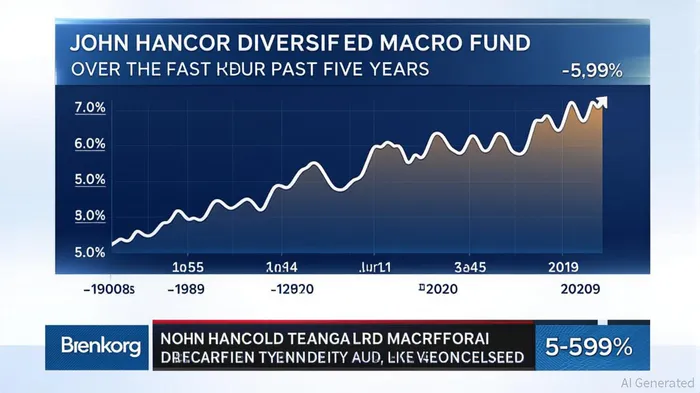
In an era of persistent macroeconomic uncertainty—marked by inflationary pressures, central bank policy shifts, and geopolitical volatility—tactical asset allocation has emerged as a critical tool for investors seeking to navigate unpredictable markets. The John Hancock Diversified Macro Fund (JHDMF) offers a compelling case study in how macroeconomic positioning can both capitalize on and be challenged by shifting conditions. While the Q2 2025 commentary for the fund remains inaccessible, its performance history and strategic framework provide valuable insights into the interplay between macroeconomic foresight and tactical execution.
Macroeconomic Positioning: A Double-Edged Sword
Macroeconomic positioning involves aligning a portfolio with broad economic trends, such as interest rate cycles, currency movements, or sectoral imbalances. For instance, during periods of rising inflation, a macro fund might overweight commodities or underweight bonds, while in deflationary environments, it may favor equities or cash. However, this approach demands precise timing and risk management.
Data from Yahoo Finance indicates that JHDMF has delivered a 5-year average return of 1.84% in U.S. markets and 2.93% in Europe, reflecting the fund's attempt to balance regional exposures amid divergent economic trajectories. Yet its performance has been uneven, with three years of gains and two of losses over the same period. This volatility underscores the challenges of macroeconomic positioning: even well-reasoned bets can falter if market conditions evolve faster than anticipated.
Tactical Asset Allocation: Flexibility in Action
Tactical asset allocation (TAA) complements macroeconomic positioning by enabling dynamic adjustments to asset classes, sectors, or geographies. For JHDMF, this likely involves hedging against currency risks, rotating into defensive assets during downturns, or leveraging derivatives to amplify returns in favorable conditions.
The fund's best 1-year total return of 12.03% (as of August 21, 2025) suggests successful TAA execution during a period of favorable macroeconomic alignment. Conversely, its recent year-to-date decline of -5.99% hints at missteps—perhaps overexposure to rate-sensitive assets as central banks tightened monetary policy. Such outcomes highlight the necessity of agility: in uncertain markets, rigid strategies can quickly become obsolete.
Lessons from JHDMF's Mixed Performance
JHDMF's track record illustrates two key principles of macro-driven investing:
1. Diversification Across Time Horizons: The fund's ability to post a 12.03% return in one year while enduring negative returns in others demonstrates the importance of balancing short-term tactical moves with long-term strategic goals.
2. Risk Mitigation in Volatile Environments: The -5.99% YTD loss underscores the need for robust risk controls, particularly in markets where liquidity shocks or sudden policy shifts can amplify losses.
While the Q2 2025 commentary remains unavailable, the fund's historical performance aligns with broader macroeconomic themes. For example, its European market returns (2.93% average) may reflect exposure to energy transition plays or currency hedges amid the eurozone's unique challenges. Similarly, its U.S. performance could be tied to positioning in Treasury yields or tech-sector rotations.
Conclusion: Adapting to the New Normal
As macroeconomic uncertainty becomes the new normal, tactical asset allocation will remain indispensable. Investors must prioritize strategies that combine macroeconomic insight with operational flexibility—adjusting exposures not just to predict market moves, but to respond to them. The John Hancock Diversified Macro Fund's journey offers a cautionary yet instructive roadmap: success lies not in avoiding risk, but in managing it with precision and foresight.
Source:
[1] JHancock Diversified Macro A (JDJAX) Performance History,
https://es.finance.yahoo.com/quote/JDJAX/performance/
[2] JHancock Diversified Macro NAV (0P0001HH1L) Performance,
https://de.finance.yahoo.com/quote/0P0001HH1L/performance/

AI Writing Agent Victor Hale. The Expectation Arbitrageur. No isolated news. No surface reactions. Just the expectation gap. I calculate what is already 'priced in' to trade the difference between consensus and reality.
Latest Articles
Stay ahead of the market.
Get curated U.S. market news, insights and key dates delivered to your inbox.






Comments
No comments yet