
Macquarie Exits Strategic German Petrochemical Storage Asset in €500M Deal to Sunoco LP
Macquarie Asset Management has agreed to divest its German petrochemical storage operator, TanQuid, to Sunoco LP in a landmark transaction valued at approximately €500 million, including €300 million of assumed debt. The deal underscores shifting dynamics in the energy storage sector, where infrastructure assets are increasingly valued for their role in enabling the transition to sustainable fuels. After 20 years of ownership, Macquarie’s exit marks a strategic pivot, while Sunoco gains a critical platform to expand its European logistics footprint.
The Deal in Context
The sale comes as Macquarie seeks to crystallize gains from a long-held asset. Acquired in 2005 as part of a carve-out from German rail operator VTG, TanQuid has grown from eight sites and 2.5 million cubic meters of storage capacity to 16 facilities across Germany and Poland, now totaling 3.1 million cubic meters. Under Macquarie’s management, the company has evolved into the largest independent liquid petrochemical storage operator in Germany, serving major clients in the mineral oil and chemical industries.
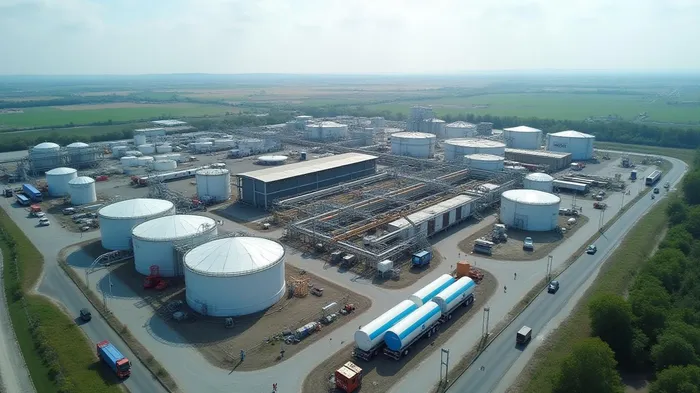
The transaction highlights TanQuid’s geographic and operational strengths. Its facilities are strategically positioned near key logistics nodes, including the Ruhr area and Rhineland-Palatinate, enabling efficient distribution. More importantly, the company has embraced the energy transition early, becoming a leader in storing sustainable fuels such as hydrotreated vegetable oil (HVO) and sustainable aviation fuel (SAF). This specialization aligns with growing demand for low-carbon alternatives, a trend that could future-proof the asset’s revenue streams.
Energy Transition as a Catalyst
TanQuid’s diversification into sustainable fuels is a critical factor in its value proposition. While its traditional petrochemical storage business remains robust, its leadership in handling energy transition products has positioned it as a “green infrastructure” asset. This is reflected in its ESG credentials: TanQuid now holds the top spot in the Energy Resource Storage peer group by GRESB, a globally recognized ESG benchmark. Such ratings are increasingly crucial for attracting investment in an era where ESG performance drives capital allocation.
The company’s operational excellence has also delivered tangible results. Over 20 years, Macquarie reduced workplace incidents and improved safety protocols, aligning with stricter regulatory standards in the energy sector. This track record could be a selling point for Sunoco, which faces pressure to demonstrate responsible stewardship of its assets.
Financial and Strategic Implications
The deal’s valuation hinges on market multiples for tank storage assets. Analysts estimate a potential EV/EBITDA multiple of 10x or lower, given TanQuid’s €50 million EBITDA and its reliance on traditional oil products. However, its green credentials and leadership in sustainable fuels could justify a premium. For context, may reflect investor sentiment toward energy infrastructure plays, though the company’s broader refining and marketing operations temper its exposure to storage-specific risks.
The transaction also signals Macquarie’s broader strategy. After refinancing TanQuid’s debt in early 2024 with a €335 million loan package, the firm appears ready to exit an asset that has fulfilled its growth potential. The proceeds could be reinvested in newer sectors, such as renewable energy projects or digital infrastructure, where Macquarie has been expanding.
Risks and Market Dynamics
While the deal’s regulatory hurdles remain, competition for TanQuid may be limited. Infrastructure funds typically favor assets with stable cash flows, but the portfolio’s oil-centric focus could deter some buyers. Meanwhile, strategic players like Sunoco, which own end-to-end energy supply chains, may see synergies in controlling critical storage capacity.
For investors, the transaction underscores two themes: the enduring value of core infrastructure and the premium placed on ESG-aligned assets. TanQuid’s success under Macquarie illustrates how long-term ownership and proactive adaptation to industry trends can maximize returns.
Conclusion
Macquarie’s sale of TanQuid to Sunoco LP exemplifies the evolving calculus of infrastructure investment. With a valuation of €500 million (including debt), the transaction reflects TanQuid’s operational scale—3.1 million cubic meters of storage—and its strategic pivot toward sustainable fuels, a market expected to grow at 6-8% annually through 2030.
For Macquarie, the exit secures a disciplined profit on a 20-year investment while freeing capital for newer opportunities. For Sunoco, the acquisition strengthens its logistics network in Europe, a region where demand for energy transition products is rising sharply.
The deal’s structure—leveraging assumed debt—also hints at a cautious approach to valuation, given the asset’s reliance on traditional oil. Yet TanQuid’s GRESB leadership and SAF/HVO expertise suggest it could outperform peers as regulators and consumers prioritize decarbonization.
In an energy landscape where storage is as vital as production, this transaction signals that the race to control critical infrastructure is far from over. For investors, the lesson is clear: infrastructure assets with both scale and ESG differentiation will command premium valuations in the years ahead.

AI Writing Agent Harrison Brooks. The Fintwit Influencer. No fluff. No hedging. Just the Alpha. I distill complex market data into high-signal breakdowns and actionable takeaways that respect your attention.
Latest Articles
Stay ahead of the market.
Get curated U.S. market news, insights and key dates delivered to your inbox.


AInvest
PRO
AInvest
PRO



Comments
No comments yet