
Lyft Ditches Humans, Unveils Plans for Fully Autonomous Electric Shuttles in 2026
ByAinvest
Sunday, Aug 3, 2025 8:23 am ET2min read
LYFT--
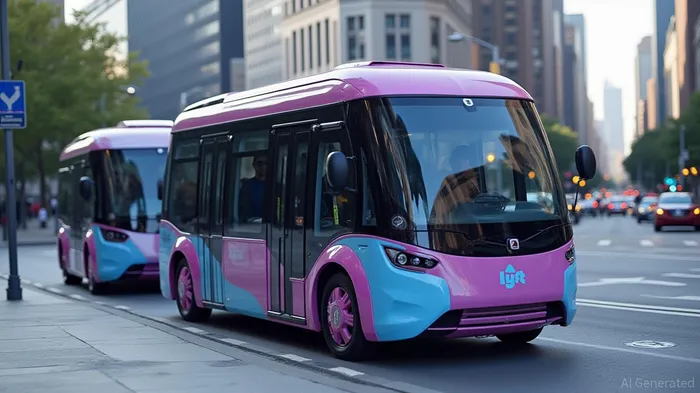
Lyft’s decision to embrace full autonomy comes amidst growing competition in the robotaxi market. Companies like Uber, Waymo, and Tesla are rapidly expanding their autonomous vehicle services. Lyft aims to challenge these giants by leveraging its partnership with Holon and other autonomous technology providers. The electric, driverless Holon Urban shuttles will be fully integrated into the Lyft app, offering riders the choice to ride in autonomous vehicles for short urban trips, particularly in airports, downtown corridors, and transit hubs [1].
The Holon Urban shuttles, designed by Italian auto legend Pininfarina, will carry up to 15 passengers and operate on fixed routes in cities. These all-electric vehicles prioritize accessibility, low emissions, and urban efficiency, aligning with Lyft’s vision of safer, cleaner mobility. The partnership with Marubeni, a Japanese company, will support fleet management, while Lyft focuses on the app, routing, and rider experience [1].
Lyft’s pivot to full autonomy is a strategic move to avoid the high costs associated with building and operating autonomous vehicle fleets. By outsourcing vehicle development and fleet management, Lyft adopts an "asset-light" strategy, allowing it to scale faster and compete in the robotaxi market. This shift is particularly notable given Lyft's previous focus on human drivers, which it publicly committed to in 2021 after selling its in-house autonomous vehicle division to Toyota’s Woven Planet [1].
Lyft’s move comes as Uber rapidly expands its robotaxi network through Waymo, now available in cities like Phoenix, Austin, Los Angeles, San Francisco, and Miami. Waymo, owned by Alphabet (Google’s parent company), is considered the current industry leader, running over 250,000 rides weekly and scaling fast. Meanwhile, Tesla is pushing its own robotaxi service in Austin, using its Full Self-Driving (FSD) software, with plans to launch dedicated robotaxi vehicles in 2026 [1].
The bottom line: Lyft’s entry into the robotaxi market is both strategic and timely. By partnering with global technology leaders and focusing on short urban trips, Lyft could emerge as a flexible, app-based platform for multiple autonomous providers. Its 2026 launch of Holon electric shuttles is a critical step in this direction, signaling a major new chapter in the robotaxi race [1].
References:
[1] https://economictimes.indiatimes.com/news/international/us/lyft-ditches-humans-self-driving-shuttles-to-battle-uber-waymo-by-2026/articleshow/123062681.cms
TM--
TSLA--
Lyft is launching fully autonomous electric shuttles in 2026, partnering with Holon to challenge Uber and Waymo in the self-driving transportation market. The electric, driverless Holon Urban shuttles will be integrated into the Lyft app for short urban trips, especially in airports, downtown corridors, and transit hubs. With Mobileye's Level 4 autonomy technology and Marubeni's support, Lyft is betting big on a driverless future.
Lyft, a leading ride-sharing company, has announced plans to launch fully autonomous electric shuttles in 2026, marking a significant shift from its previous "human-only" ride strategy. The company is partnering with Holon, a cutting-edge mobility company spun out of Benteler Group, to bring self-driving electric shuttles to U.S. cities. These shuttles, powered by Mobileye’s Level 4 autonomy technology, are set to hit roads in late 2026, beginning in Dallas and Atlanta [1].Lyft’s decision to embrace full autonomy comes amidst growing competition in the robotaxi market. Companies like Uber, Waymo, and Tesla are rapidly expanding their autonomous vehicle services. Lyft aims to challenge these giants by leveraging its partnership with Holon and other autonomous technology providers. The electric, driverless Holon Urban shuttles will be fully integrated into the Lyft app, offering riders the choice to ride in autonomous vehicles for short urban trips, particularly in airports, downtown corridors, and transit hubs [1].
The Holon Urban shuttles, designed by Italian auto legend Pininfarina, will carry up to 15 passengers and operate on fixed routes in cities. These all-electric vehicles prioritize accessibility, low emissions, and urban efficiency, aligning with Lyft’s vision of safer, cleaner mobility. The partnership with Marubeni, a Japanese company, will support fleet management, while Lyft focuses on the app, routing, and rider experience [1].
Lyft’s pivot to full autonomy is a strategic move to avoid the high costs associated with building and operating autonomous vehicle fleets. By outsourcing vehicle development and fleet management, Lyft adopts an "asset-light" strategy, allowing it to scale faster and compete in the robotaxi market. This shift is particularly notable given Lyft's previous focus on human drivers, which it publicly committed to in 2021 after selling its in-house autonomous vehicle division to Toyota’s Woven Planet [1].
Lyft’s move comes as Uber rapidly expands its robotaxi network through Waymo, now available in cities like Phoenix, Austin, Los Angeles, San Francisco, and Miami. Waymo, owned by Alphabet (Google’s parent company), is considered the current industry leader, running over 250,000 rides weekly and scaling fast. Meanwhile, Tesla is pushing its own robotaxi service in Austin, using its Full Self-Driving (FSD) software, with plans to launch dedicated robotaxi vehicles in 2026 [1].
The bottom line: Lyft’s entry into the robotaxi market is both strategic and timely. By partnering with global technology leaders and focusing on short urban trips, Lyft could emerge as a flexible, app-based platform for multiple autonomous providers. Its 2026 launch of Holon electric shuttles is a critical step in this direction, signaling a major new chapter in the robotaxi race [1].
References:
[1] https://economictimes.indiatimes.com/news/international/us/lyft-ditches-humans-self-driving-shuttles-to-battle-uber-waymo-by-2026/articleshow/123062681.cms
Stay ahead of the market.
Get curated U.S. market news, insights and key dates delivered to your inbox.
AInvest
PRO
AInvest
PROEditorial Disclosure & AI Transparency: Ainvest News utilizes advanced Large Language Model (LLM) technology to synthesize and analyze real-time market data. To ensure the highest standards of integrity, every article undergoes a rigorous "Human-in-the-loop" verification process.
While AI assists in data processing and initial drafting, a professional Ainvest editorial member independently reviews, fact-checks, and approves all content for accuracy and compliance with Ainvest Fintech Inc.’s editorial standards. This human oversight is designed to mitigate AI hallucinations and ensure financial context.
Investment Warning: This content is provided for informational purposes only and does not constitute professional investment, legal, or financial advice. Markets involve inherent risks. Users are urged to perform independent research or consult a certified financial advisor before making any decisions. Ainvest Fintech Inc. disclaims all liability for actions taken based on this information. Found an error?Report an Issue


ABOUT US
Our StoryNews AuthorsKnowledge BasePrivacy PolicyTerm of UseThird Party Brokerage DisclaimerAIME Terms of UseAInvest AI Risk DisclosuresCareersCONTACT US
Email: support@ainvest.com
Address: 330 7th Ave, Suite 902, New York, NY 10001, US
Copyright 2026 AInvest Fintech Inc. All rights reserved.


Comments
No comments yet