
Lycoming Engine Production and Market Implications: Navigating Aerospace Supply Chain Resilience in 2025


 Aime Summary
The aerospace sector's struggle with supply chain disruptions has reached a critical inflection point in 2025, with Lycoming Engines serving as both a microcosm and a bellwether of broader industry challenges. As the manufacturer of piston engines critical to general aviation, . Yet, amid these challenges, emerging strategies and industry-wide resilience efforts are beginning to take shape, offering a glimpse of stabilization by 2026. For investors, understanding Lycoming's role in this evolving landscape-and the sector's path to recovery-is essential to assessing long-term value.
Lycoming's Production Woes and the Ripple Effect
Lycoming's 2025 production status remains a focal point of frustration for customers. ,
a timeline exacerbated by supplier delays, workforce shortages, and pandemic-era disruptions. These delays have forced operators to seek alternatives, such as independent overhaul services,
to keep their aircraft operational. The company's efforts to ramp up production are constrained by
, underscoring the fragility of its supply chain.
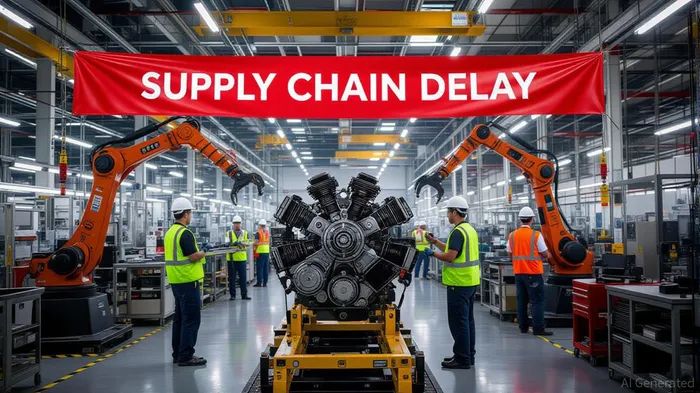
The implications extend beyond Lycoming. The Aircraft Piston Engines Market, which Lycoming dominates,
according to market intelligence. However, this growth hinges on resolving supply chain bottlenecks. For instance,
titanium shortages-a material critical to engine components-pose geopolitical risks, while narrowbody aircraft production remains constrained by engine availability. These challenges are not unique to Lycoming but reflect a sector-wide struggle to balance demand with constrained capacity.
Industry-Wide Resilience: Progress and Persistent Pain Points
Despite these hurdles, the aerospace sector is showing signs of stabilization.
A 2025 Aerospace Supply Chain Resilience Report notes , though financial constraints and workforce shortages persist. Innovations such as digital tools for predictive maintenance and inventory optimization are
gaining traction, while the use of used serviceable materials (USM) and parts manufacturer approvals (PMA) is
alleviating pressure on original equipment manufacturers.
Collaborative strategies are also emerging. GE Aerospace's , for example,
according to industry analysis, illustrating the potential of coordinated supply chain management. Similarly, coalitions like the one formed by BoeingBA--, Airbus, and GE to combat unauthorized parts in the supply chain
signal a shift toward collective problem-solving. These efforts, while nascent, suggest that the industry is adapting to volatility through diversification and digital transformation.
Lycoming's Indirect Contributions and Strategic Gaps
While Lycoming has not publicly detailed specific 2025 strategies to address its supply chain challenges, its role in the sector's resilience is indirect but significant. The company's engines,
certified by the European Union Aviation Safety Agency, underpin general aviation's reliability and safety. Moreover, its participation in initiatives like the (PAFI) to transition to unleaded fuels positions it to influence long-term sustainability trends.
However, Lycoming's direct strategies remain opaque. Unlike peers such as GE AerospaceGE--, which has
to expand engine component production, Lycoming has not announced comparable capital expenditures or partnerships. This gap raises questions about its ability to scale production and meet the Aircraft Piston Engines Market's projected growth. For investors, this ambiguity
underscores the need to monitor Lycoming's alignment with industry resilience trends, such as workforce development and digital tool adoption.
Market Implications and Investment Outlook
The aerospace sector's path to recovery hinges on
three key factors: supply chain diversification, workforce expansion, and technological modernization. For Lycoming, success will depend on its ability to integrate these elements into its operations. While the company's current focus on unleaded fuels is commendable, it must also address immediate production bottlenecks to retain market share.
Investors should also consider the broader economic stakes. The U.S. aerospace industry, which
,
according to industry analysis. Resolving these issues could unlock significant value, particularly for companies that adapt quickly. Lycoming's position in the piston engine market-
projected to grow steadily through 2033-positions it to benefit from this recovery, provided it can navigate its current challenges.
Conclusion
Lycoming's 2025 production struggles reflect the aerospace sector's broader supply chain vulnerabilities, but they also highlight the potential for resilience-driven growth. While the company's direct strategies remain unclear, industry-wide trends-such as digital tools, collaborative partnerships, and USM adoption-offer a roadmap for recovery. For investors, the key takeaway is that Lycoming's long-term success will depend not only on its own adaptability but also on the sector's collective ability to stabilize its supply chains. As 2026 approaches, the focus will shift from survival to strategic reinvention-a transition that could redefine the industry's trajectory.

Stay ahead of the market.
Get curated U.S. market news, insights and key dates delivered to your inbox.




Comments
No comments yet