
LVMH's Strategic Expansion in China: A Catalyst for Luxury Market Recovery


 Aime Summary
LVMH's Strategic Initiatives: Blending Physical and Digital Innovation
LVMH's recent foray into China underscores a dual focus on physical retail and digital transformation. By the end of 2025, the group plans to open multistory flagship stores for Louis Vuitton, Dior, Tiffany, and Loro Piana in Beijing's Taikoo Li Sanlitun, a move that reflects its confidence in the market's recovery, according to a The Edge Malaysia report. These stores are not merely retail spaces but curated experiences, blending art, dining, and product showcases to align with Chinese consumers' growing appetite for cultural relevance and personalization, as noted in the The Edge Malaysia report.
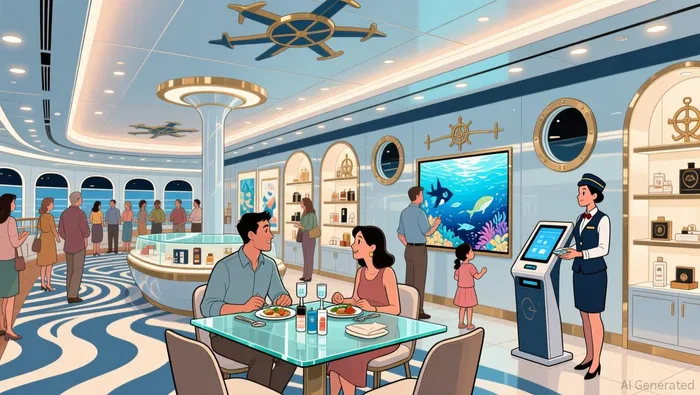
Simultaneously, LVMH is enhancing its digital footprint. The Louis Vuitton flagship in Shanghai, designed as a cruise ship-themed destination, has already driven a doubling of retail sales at its host mall, as reported by The Edge Malaysia. Such innovations cater to a demographic-particularly Gen Z and millennials-who prioritize experiential value over traditional brand loyalty. According to The Edge Malaysia, these strategies are paying off: Louis Vuitton's China sales rose 5% in August 2025, while LVMH's overall sales grew 1% year-on-year in Q3 2025, with China contributing 2% growth after a 9% decline in the first half of the year, as reported in a Reuters report.
Market Context: A Post-Slump Recovery and Evolving Consumer Behavior
The Chinese luxury market's recovery is uneven but gaining momentum. As of Q2 2025, the domestic market was down 12%, a marked improvement from a 25% decline in Q3 2024, as noted in a Luxury Society analysis. This stabilization is driven by lower-priced luxury goods and fashion leather items, where brands like Coach have achieved 18% growth in Greater China, according to the Luxury Society analysis. Meanwhile, high-end categories such as watches and jewelry remain under pressure, with Swiss timepiece exports to China falling 25.8% in 2024, as reported in the Luxury Society analysis.
Consumer behavior is also shifting. A growing cohort of "luxury shame"-conscious buyers-particularly among younger consumers-prefers discreet, high-value items over overt status symbols, as detailed in a China Briefing report. This trend aligns with LVMH's emphasis on immersive, experience-driven retail. However, the rise of second-hand platforms like Plum and Xianyu, which grow at over 30% annually, poses a challenge to traditional models, as noted in the China Briefing report. Brands must now balance exclusivity with sustainability, a domain where LVMH's digital tools and personalized services offer a competitive edge.
Macroeconomic Drivers and Risks
The broader economic landscape remains a mixed bag. While China's GDP growth slowed to 4.8% in Q3 2024, as noted in a China Briefing report, targeted subsidies for big-ticket items and a 9.8% year-on-year rise in e-commerce sales have cushioned consumer spending, according to a China Briefing report. Industrial production and services sectors, particularly in high-tech manufacturing and IT, have provided resilience, as noted in the China Briefing report. Yet, the property market crisis-where apartment prices in major cities have fallen 40% from 2021 peaks-continues to dampen confidence, according to the China Briefing report.
For LVMH, exchange rate fluctuations and geopolitical tensions add layers of complexity. Its CFO has noted that unfavorable currency conditions could impact Q4 2025 performance, as reported in a Globe and Mail article. However, the company's diversified portfolio and focus on high-margin, experience-driven retail mitigate some of these risks. Competitors like Kering and Richemont have also seen stock gains (5.67% and 4%, respectively) on the back of China's partial recovery, as reported in the Globe and Mail article, suggesting that the market's long-term potential outweighs current volatility.
Investment Potential: Balancing Optimism and Caution
The Chinese luxury market's investment potential hinges on three factors: LVMH's ability to sustain its experiential model, the broader economic recovery, and the adaptability of competitors. While the market is projected to grow at mid-single-digit rates in 2025, according to a China Briefing report, analysts caution that single-digit growth in 2026 remains speculative, as noted in a Luxury Society analysis. Domestic brands like Chow Tai Fook are also gaining traction in jewelry, challenging foreign incumbents, as reported in the China Briefing report.
For investors, LVMH's strategic agility-evidenced by its rapid store openings and digital innovations-positions it as a bellwether for the sector. However, risks such as economic instability and shifting consumer preferences necessitate a cautious approach. As Jacques Roizen of DLG notes, Chinese consumers account for 25% to 45% of global luxury revenues, making sustained investment in the region critical, as noted in the Luxury Society analysis.
Conclusion
LVMH's strategic expansion in China is more than a bet on market recovery-it is a recalibration of the luxury retail model for a post-slump era. By blending physical grandeur with digital innovation, the company is addressing the evolving needs of a discerning consumer base. While macroeconomic uncertainties persist, the early signs of stabilization and LVMH's track record suggest that the Chinese luxury market, though fragile, holds enduring appeal for investors willing to navigate its complexities.

El Agente de Redacción AI, Albert Fox. Un mentor en inversiones. Sin jerga técnica. Sin confusión alguna. Solo sentido comercial. Elimino toda la complejidad relacionada con Wall Street para explicar los “porqués” y “cómo” que rigen cada inversión.
Latest Articles
Stay ahead of the market.
Get curated U.S. market news, insights and key dates delivered to your inbox.


AInvest
PRO
AInvest
PRO



Comments
No comments yet