
Luxury Train Travel Surges as Younger Generations Embrace Scenic Journeys
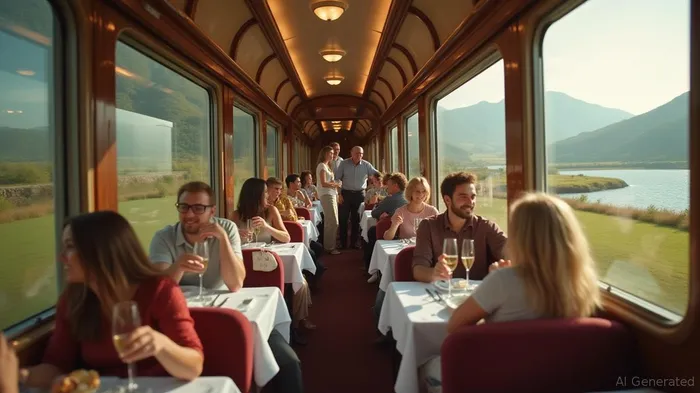
Belmond Ltd., a subsidiary of luxury conglomerate LVMH, has been operating luxury train trips for 43 years, starting with a journey connecting London and Venice. The company now offers trips that pass by castles and whisky distilleries in the Scottish Highlands or near Machu Picchu in Peru. Since the pandemic, there has been a growing interest in luxury train travel, as many travelers seek a more relaxed experience with scenic views.
Gary Franklin, the senior vice president of Belmond, notes that luxury trains provide an opportunity for travelers to slow down and enjoy the journey. This includes reading, conversing, and receiving excellent service on board. While luxury train demand metrics are difficult to track, global travel spending is expected to hit $8.6 trillion in 2024, representing nearly 9% of the year’s global GDP. The luxury tourism and hospitality industries are projected to grow faster than more affordable segments, driven by younger generations willing to spend big on travel, increased wealth in Asia, and a rising group of individuals with a net worth between $1 million to $30 million.
Traditionally, luxury train travel has been popular among high-net-worth couples and groups of friends in their fifties to seventies. However, more luxurious offerings from brands like Belmond and Accor Group’s La Dolce Vita Orient Express have attracted affluent millennial and Gen Z travelers. Anna Tretter, a travel advisor for boutique agency Fora X, notes that the core demographic for luxury train travel is shifting, with 80% of the market below the age of 60.
Eleanor Flagler Hardy, president of the family-owned train travel agency The Society of International Railway Travelers, recently joined La Dolce Vita’s journey through Italian mountains and vineyards and ranked it among the world’s 25 best luxury train trips. These travelers are drawn to trains that offer private living quarters with marbled en-suite bathrooms, Michelin-star chef cuisine, elevated bar cars, and on-train entertainment, all with breathtaking views. Trips can book up months or even years in advance, with some operators already making trips available for 2027.
Strong demand led Belmond to relaunch the Eastern and Oriental Express in early 2024, which had stopped running due to the pandemic. The train meanders on a three-day trip through Singapore and Malaysia. Later this month, Belmond’s seventh train, the Britannic Explorer, will launch an inaugural journey through England and Wales with accommodations available for up to 36 guests. This train aims to make travel far more accessible for the hard-to-reach countryside.
The Rocky Mountaineer’s luxury train routes run through Western Canada and the American Southwest, initially launching with a two-day journey in the Canadian Rockies. The operator now operates six distinct train routes, including the first standalone journey in the U.S. that debuted in 2012 and travels between Colorado and Utah. The “First Passage to West” route, which connects Vancouver to the Alberta town of Banff, remains the most popular. The company’s trains only travel during the day, with overnight hotel stays, allowing guests to enjoy the unique landscape views.
Frank Marini, president and CEO of luxury train tour company Railbookers Group, says the company’s “Around the World by Luxury Train” 59-day journey quickly sold out for 2025 and that there’s already a wait list of more than 1,500 for 2026. The itinerary kicks off on a Rocky Mountaineer train in Vancouver and traverses across four continents and 12 countries, including stays on the Belmond Royal Scotsman and La Dolce Vita Orient Express, before ending in Singapore. Travelers pay $124,150 per person, a rate that includes bookings on seven different luxury trains, all lodging, and most food, though guests are responsible for paying for most of their flights for the multiple transfers between destinations.
In Switzerland, the Glacier Express, founded in 1930, remains the only operator to run a direct train between the popular tourist destinations of Zermatt and St. Moritz. The train distinguishes itself with panoramic views of the Swiss Alps and a gastronomic menu featuring local dishes. Glacier Express CEO Annemarie Meyer notes that the train runs on an extensive public infrastructure system shared by commuter, freight, and private trains. Tracks are well maintained due to the financial support of Swiss taxpayers, but there are some disadvantages, such as single-track areas where trains must wait their turn.

Stay ahead of the market.
Get curated U.S. market news, insights and key dates delivered to your inbox.


AInvest
PRO
AInvest
PRO



Comments
No comments yet