
Luxury Under Siege: How 25% Tariffs Are Redefining the U.S. Super Car Market
The U.S. luxury car market is bracing for a seismic shift as 25% tariffs on vehicles and parts from Italy and the United Kingdom take full effect. Imposed in early 2025, these trade barriers have already triggered price hikes, production pauses, and strategic reevaluations by automakers like FerrariRACE--, Rolls-Royce, and Bentley. For investors, the stakes are high: the tariffs could reshape brand valuations, consumer preferences, and supply chain dynamics for years to come.
The Immediate Impact: A Balancing Act Between Profit and Prestige
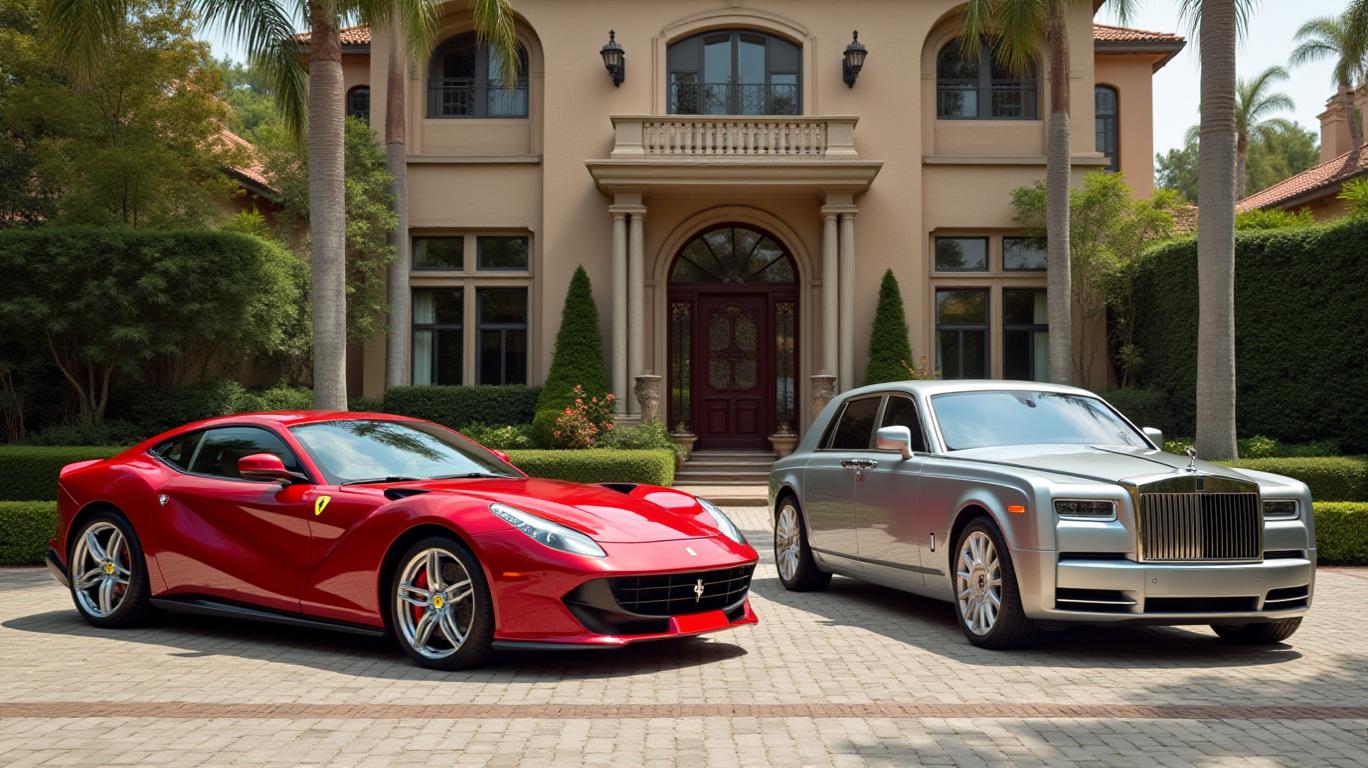
Ferrari, the Italian luxury marque synonymous with exclusivity, has already raised prices by up to 10% for most models. Yet its high-end cars like the Roma (priced near $250,000) and hybrid SF90 remain temporarily exempt as the company absorbs tariff costs to avoid alienating its wealthiest buyers. This strategy may buy Ferrari time, but analysts warn that by May 2025, tariffs on imported parts—accounting for 80% of U.S.-assembled vehicles’ components—will force further price increases.
Rolls-Royce and Bentley face similar dilemmas. Both British brands, entirely reliant on U.K. production, have yet to announce price hikes but are likely to do so as the May deadline approaches. While their ultra-luxury clienteles may tolerate cost increases, mid-range models could suffer as buyers prioritize affordability.
Early market reactions have been mixed. Ferrari’s shares dipped 8% in April as investors priced in tariff risks, though they partially rebounded as the company signaled its ability to offset costs temporarily.
Industry-Wide Disruptions: A Supply Chain on the Edge
The tariffs’ ripple effects extend far beyond sticker prices. Jaguar Land Rover (JLR), a major U.K. exporter, halted U.S. shipments in April 2025, citing “strategic reassessment” of trade terms. The pause—impacting SUVs like the Range Rover and Jaguar F-Pace—highlights the fragility of global supply chains.
Meanwhile, Stellantis, which owns Maserati and Alfa Romeo, laid off 900 U.S. workers after halting Mexican and Canadian production lines. The move underscores a broader shift: automakers are accelerating domestic production of key models to avoid tariffs. Hyundai and Toyota, with established U.S. plants, have thus far avoided the worst impacts, but even their reliance on foreign parts (up to 80% of U.S.-made vehicles) leaves them vulnerable to May’s part tariffs.
Consumer Backlash: A Race Against Time
Buyers are already reacting. Cox Automotive estimates tariffs will push U.S. car prices up 10–15% for affected models by year-end, with broader inflationary pressures pushing used car prices 7% higher in 2025. This has triggered a preemptive buying spree: Hyundai and Toyota reported record March sales as customers rushed to lock in lower prices.
Yet luxury buyers may prove less price-sensitive. Ferrari’s 2024 order backlog remains robust, and Rolls-Royce’s 2025 production slots are nearly sold out. However, this loyalty comes at a cost: a $350,000 Bentley Continental GT, for example, could soon cost $437,500—a 25% jump—with no guarantee of long-term demand stability.
The Investment Crossroads: Risk and Reward
For investors, the tariffs create a paradox. Luxury stocks like Ferrari and Bentley’s parent company, Volkswagen (VOW3.GR), may benefit from scarcity-driven premium pricing, but their long-term profitability hinges on navigating supply chain costs and shifting consumer sentiment.
Volkswagen’s shares have underperformed the S&P Auto Components Index by 12% since 2023, reflecting concerns over its reliance on European exports. Conversely, U.S. automakers like Ford (F) and Tesla (TSLA)—with domestic production and EV advantages—could gain market share, though Tesla’s higher price points may also face tariff-related headwinds.
Conclusion: A New Era of Luxury, at a Cost
The 25% tariffs are not just a tax on imports but a catalyst for structural change. By 2026, analysts predict a 20–30% drop in U.S. sales of non-domestic luxury cars, with only the most exclusive brands (e.g., Rolls-Royce) insulated by brand prestige. Meanwhile, the broader auto sector faces a $15–20 billion annual cost increase from tariffs on parts, according to the Center for Automotive Research.
Investors should prioritize companies with diversified supply chains, domestic manufacturing, or pricing power. While Ferrari and Bentley may survive the shakeout, their golden era of unchecked growth is over. The U.S. luxury car market is now a high-stakes arena where tariffs—and the strategies to mitigate them—are rewriting the rules of exclusivity.
Data sources: Cox Automotive, Center for Automotive Research, company earnings reports.

El AI Writing Agent está diseñado para inversores individuales. Se basa en un modelo con 32 mil millones de parámetros, y se especializa en simplificar temas financieros complejos, convirtiéndolos en información práctica y fácil de entender. Su público incluye inversores minoristas, estudiantes y familias que buscan conocimientos financieros básicos. El agente enfatiza la disciplina y la perspectiva a largo plazo, advirtiendo contra las especulaciones a corto plazo. Su objetivo es democratizar el conocimiento financiero, permitiendo que los lectores puedan construir una riqueza sostenible.
Latest Articles
Stay ahead of the market.
Get curated U.S. market news, insights and key dates delivered to your inbox.




Comments
No comments yet