
Luxury Real Estate in Miami: A New Era of Demand Driven by Tech Wealth
 Aime Summary
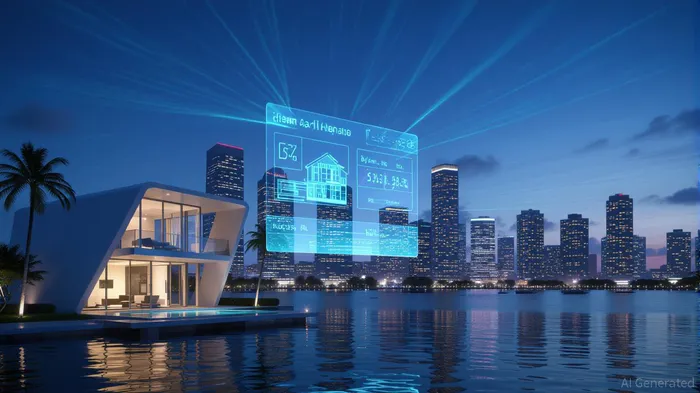
Miami has long been a beacon for high-net-worth individuals seeking sun, sophistication, and strategic investment opportunities. But in 2025, the city's luxury real estate market is undergoing a seismic shift—one driven not just by traditional wealth, but by the explosive influx of capital from tech founders and the transformative power of artificial intelligence. This convergence is redefining what it means to invest in prime U.S. real estate, creating a landscape where innovation and affluence collide to shape a future-proof asset class.
The Tech Wealth Tsunami
Miami's real estate market is no longer just a playground for retirees or vacationers. It has become a magnet for tech moguls, hedge fund managers, and corporate relocations, all drawn by Florida's tax-free environment and the city's global connectivity. In 2025, ultra-luxury sales have surged, with 17 properties exceeding $20 million in transactions—more than double the 2024 figure. Four of these sales surpassed $50 million, a testament to the deep pockets of investors seeking both privacy and prestige.
The driving force? Tech founders and entrepreneurs fleeing high-tax states like New York and California. These individuals are not merely purchasing properties; they are building ecosystems. Citadel's $1 billion office tower in Miami, for instance, is emblematic of a broader trend where corporate relocations amplify demand for luxury residences. Meanwhile, international buyers—particularly from Colombia and Argentina—account for 32% of all international closed sales in South Florida, often transacting in cash. This liquidity insulates the market from traditional financing constraints, ensuring resilience even as broader real estate sectors cool.
AI-Driven Innovation: The New Foundation of Value
Artificial intelligence is no longer a buzzword in Miami's luxury real estate—it is the backbone of modern investment strategy. Developers and agents are leveraging AI to predict market trends, optimize pricing, and personalize client experiences. Predictive analytics tools now analyze demographic shifts, macroeconomic indicators, and even social media sentiment to forecast which neighborhoods will appreciate fastest. For example, AI-driven models have identified Coconut Grove and Brickell as high-growth corridors, where new developments are being designed with wellness-focused architecture and AI-integrated smart home systems.
Smart home technology is becoming a non-negotiable feature for high-end buyers. By 2025, 30% of new luxury properties in Miami include IoT-enabled systems for energy efficiency, security, and automation. These features are not just selling points; they are value multipliers. A 7,000-square-foot smart home in Coral Gables, for instance, commands a 15% premium over a similarly sized traditional property.
Virtual and augmented reality are also reshaping the buying process. Properties with VR tours sell 31% faster and at 9% higher prices than those without, a critical edge in a competitive market. Meanwhile, blockchain is streamlining transactions through smart contracts, reducing costs and increasing transparency. By 2025, 30% of Miami's luxury real estate deals are expected to use blockchain, a trend that aligns with the tech-savvy preferences of its new elite.
Strategic Implications for Investors
For long-term investors, Miami's luxury market offers a unique intersection of tangible assets and technological agility. The city's tax advantages, combined with AI-driven efficiency, create a compelling case for diversification. Consider the following strategies:
- Target Ultra-Luxury Segments: With ultra-luxury sales defying broader market cooling, investors should focus on properties priced above $10 million. These assets benefit from limited inventory and high demand, particularly from international buyers who often pay in cash.
- Leverage Predictive Analytics: Use AI tools to identify under-the-radar neighborhoods poised for growth. For example, areas near the upcoming Miami Worldcenter development are expected to see a 12% annual appreciation rate through 2030.
- Adopt Tech-Integrated Developments: Partner with developers who incorporate smart home systems and blockchain-based transactions. These features enhance both tenant appeal and resale value.
- Monitor Corporate Relocations: Track companies like Citadel and hedge funds relocating to Miami. These movements create a ripple effect, boosting demand for both commercial and residential real estate.
The Road Ahead
Miami's luxury real estate market is no longer a passive asset—it is an active participant in the tech-driven economy. While challenges like interest rate fluctuations and regulatory scrutiny persist, the city's fundamentals remain robust. Its tax-free environment, international connectivity, and innovation-centric culture position it as a safe haven for investors seeking both growth and stability.
For those willing to navigate the complexities of a rapidly evolving market, Miami offers a rare opportunity: a blend of traditional wealth, cutting-edge technology, and a forward-looking demographic. As tech founders continue to reshape the city's skyline—and its economy—investors who align their strategies with these trends will find themselves at the forefront of a new era in U.S. real estate.
In the end, Miami is more than a destination. It is a blueprint for the future of luxury living—and the capital flows are just beginning.

Stay ahead of the market.
Get curated U.S. market news, insights and key dates delivered to your inbox.






Comments
No comments yet