
Luxury's New Playbook: Can Luca de Meo's Automotive Turnaround Magic Revive Kering's Declining Giants?
The luxury sector, once a bastion of steady growth, now faces a reckoning. Kering's appointment of Luca de Meo—a turnaround specialist best known for reviving SEAT and steering Renault's electric transformation—as its first external CEO since 1967, signals a bold bet on leadership-driven reinvention. But can strategies honed in the automotive industry translate to a luxury market grappling with post-pandemic shifts, debt overhang, and creative stagnation? Let's dissect the stakes.
The De Meo Turnaround Playbook: Lessons from the Automotive Sector
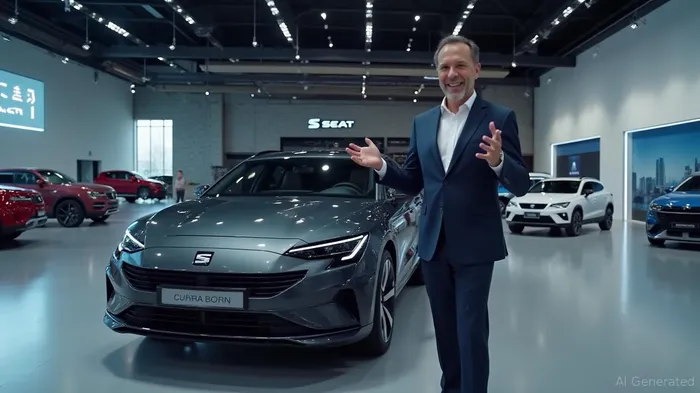
De Meo's legacy is built on three pillars: brand revitalization, product-driven innovation, and operational discipline. At SEAT, he resurrected the Spanish automaker from near-irrelevance by launching the Cupra sub-brand—a high-performance line that became a cult hit—while slashing costs and accelerating product cycles. His tenure at Renault saw a 20% share price surge within 18 months through aggressive EV partnerships (e.g., the Geely joint venture) and a 15% reduction in fixed costs.
Crucially, de Meo's approach blends visionary leadership with hands-on execution. He prioritizes mid-level managers as change agents, fosters collaboration over confrontation, and uses data-driven decisions to align brands with market trends. For instance, at SEAT, he shifted focus from bulk production to niche, design-led models like the electric Cupra Born, which captured a 2% share of Europe's EV market in 2024.
Kering's Crisis: A House Built on Gucci's Unsteady Foundation
Kering's challenges are systemic. Gucci, its cash cow, has seen sales plummet for six straight quarters, with a 25% drop in early 2024. The brand's missteps are manifold:
- Creative Whiplash: The departure of Alessandro Michele left a void. His successor, Sabato De Sarno, launched muted designs that clashed with consumers' craving for boldness. Competitors like Hermès and Dior capitalized on this by balancing timeless elegance with modernity.
- Debt Overhang: Kering's €10.5 billion debt—half its market cap—stems from post-pandemic splurges on Creed, Valentino, and prime real estate. With free cash flow down 30%, the firm risks credit downgrades if EBITDA doesn't rebound.
- Brand Erosion: Gucci's focus on Gen Z backfired as this cohort cut discretionary spending, while older buyers turned to “investment pieces” like Hermès' Birkin bags. Saint Laurent, once a stable performer, now trails Dior in growth, with sales down 14% in 2023.
Can Automotive Strategies Work in Luxury?
De Meo's formula faces unique hurdles in the luxury sector:
Strengths to Leverage:
- Brand Revival: Gucci needs a Cupra-like repositioning—perhaps a new sub-brand targeting emerging markets or a high-performance “Gucci Sport” line.
- Operational Efficiency: Cutting €500 million in costs by 2026 (as promised) could stabilize margins, but execution requires navigating Kering's complex portfolio without alienating heritage brands like Bottega Veneta.
- Partnerships: De Meo's track record in alliances (e.g., Renault-Geely) could help Kering access Asian markets, where Gucci's sales dropped 10% in 2024 despite China's rebound.
Risks and Constraints:
- Creative Control: Luxury's success hinges on artistic vision, not just strategy. De Meo's outsider status may clash with Gucci's design-centric culture.
- Debt Drag: Reducing leverage requires selling non-core assets (e.g., real estate stakes) but risks diluting brand equity if flagship stores are offloaded.
- Consumer Shifts: The luxury market's post-pandemic “great rotation” favors timeless, heritage-driven brands (Hermès' 18% sales growth in 2023) over trend-driven ones like Gucci.
Investment Implications: Navigating the Luxury Rubble
For investors, Kering presents a high-risk, high-reward scenario:
- Monitor Turnaround Milestones: Track Gucci's sales recovery (aiming for stabilization by mid-2025), cost cuts, and debt reduction. A rebound in Asia-Pacific (35% of Gucci's revenue) would be a key signal.
- Sector Rotation: Consider diversifying into luxury peers with stronger fundamentals. LVMH's diversified portfolio and Hermès' focus on timeless products offer safer bets.
- Wait-and-See on Kering: While de Meo's track record is compelling, luxury's longer creative cycles mean results could lag. A 12–18 month hold period is advisable.
Final Analysis: A Roll of the Dice
De Meo's appointment is a gamble—a CEO known for automotive turnarounds now faces a luxury market where brand mystique and creativity are as vital as operational rigor. If he can reposition Gucci as a blend of heritage and modernity while slashing debt, Kering could regain its footing. But with macroeconomic headwinds and a crowded luxury landscape, investors should temper optimism with caution. The verdict hinges on whether de Meo's “Cupra moment” can translate to Milan's fashion houses.
Actionable Insight: Hold Kering (KER.PA) for now, but pair it with long positions in LVMH (MC.PA) or Hermès (HRMS.PA) to hedge against sector volatility. A rebound in Gucci's sales or a debt reduction plan by Q4 2025 could mark a buying opportunity.
Investment decisions should consider personal risk tolerance and diversification. Past performance is no guarantee of future results.

Stay ahead of the market.
Get curated U.S. market news, insights and key dates delivered to your inbox.


AInvest
PRO
AInvest
PRO



Comments
No comments yet