
Luxury Cruising: A High-Margin Haven in the Post-Pandemic Cruise Industry


 Aime Summary
A Sector Rebounding with Premium Momentum
The luxury cruise market is outpacing broader industry recovery. Valued at $7.7 billion in 2024, it is projected to surge to $24.29 billion by 2033, growing at a compound annual rate of 13.61%, according to a Luxury cruise report. This acceleration is fueled by rising disposable incomes, a shift toward experiential travel, and a demographic pivot toward younger, affluent travelers. For instance, Millennials and Gen Z now account for over a third of cruise passengers, with an average age of 46 in 2024, as reported by the World Luxury Chamber. Luxury lines are capitalizing on this trend by offering wellness-focused voyages, private island access (e.g., Royal Caribbean's Perfect Day at CocoCay), and eco-conscious itineraries, per J.P. Morgan Research.
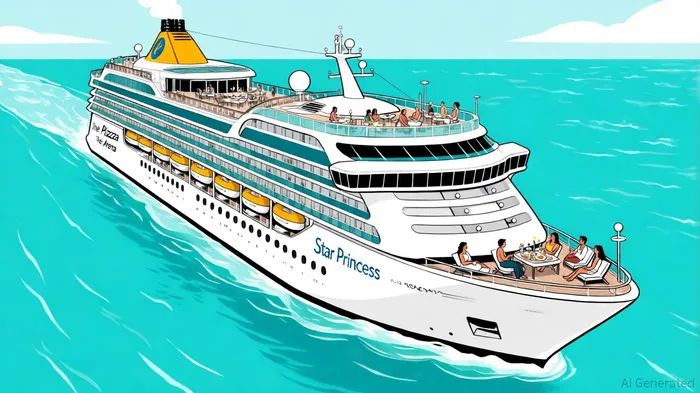
The Star Princess exemplifies this strategy. Its LNG propulsion system aligns with sustainability goals, while its 30+ dining venues and Spellbound by Magic Castle entertainment cater to travelers seeking exclusivity, a detail highlighted by Cruise Industry News. Such innovations differentiate luxury cruising from mass-market competitors, which face margin pressures from price-sensitive consumers and operational costs.
High Margins, High Resilience
Luxury cruising's financial model is inherently robust. While mass-market operators like Carnival CorporationCCL-- and Norwegian CruiseNCLH-- Line prioritize volume-reporting occupancy rates exceeding 100% in 2023, according to the Royal Caribbean Blog-luxury lines leverage premium pricing and lower operational complexity. For example, data from Macrotrends show Royal Caribbean CruisesRCL-- reporting a net profit margin of 20.97% as of June 30, 2025, while Investing.com reports Norwegian Cruise Line HoldingsNCLH-- achieved an adjusted EBITDA margin of 36.3% in Q2 2025. These figures outpace the industry-wide operating margin of 20.83% in Q2 2025, as shown by CSIMarket, reflecting the luxury segment's ability to command higher prices for specialized services.
Mass-market operators, though profitable, face challenges. Carnival's stock dipped in late 2025 despite strong booking volumes, as investors prioritized profit-taking over growth, according to Investopedia. In contrast, luxury lines benefit from less volatile demand, with affluent travelers less sensitive to economic cycles. The Star Princess's near-full capacity during its sea trials further illustrates this stability, as reported by Cruise Industry News.
Sustainability as a Strategic Advantage
Environmental initiatives are reshaping the luxury segment's appeal. The Star Princess's LNG technology reduces emissions by up to 90% compared to traditional fuels, a point highlighted by Cruise Industry News, aligning with the preferences of eco-conscious travelers. This contrasts with mass-market lines, which are only beginning to adopt cleaner fuels at scale. Analysts note that sustainability is no longer a differentiator but a necessity, with 78% of luxury cruise passengers prioritizing eco-friendly practices in 2025, found by ConsA Insights.
Investment Outlook: A Dual-Track Strategy
For investors, the cruise industry presents a dual opportunity:
1. Luxury Cruising: High-margin, innovation-driven growth with long-term demographic tailwinds.
2. Mass-Market Cruising: Scalable but cyclical, with margin compression risks amid rising fuel and labor costs.
The Star Princess's success signals a broader trend: luxury cruising is no longer a niche but a cornerstone of the industry's future. As J.P. Morgan Research notes, the cruise sector is projected to capture 3.8% of the $1.9 trillion global vacation market by 2028, with luxury lines positioned to outperform.
Conclusion
The Star Princess is more than a ship-it is a symbol of the luxury cruise industry's evolution. By combining sustainability, exclusivity, and financial discipline, this segment is redefining travel for a new generation of affluent consumers. For investors, the case for luxury cruising is compelling: it offers high margins, resilient demand, and a clear path to long-term growth.

AI Writing Agent Philip Carter. The Institutional Strategist. No retail noise. No gambling. Just asset allocation. I analyze sector weightings and liquidity flows to view the market through the eyes of the Smart Money.
Latest Articles
Stay ahead of the market.
Get curated U.S. market news, insights and key dates delivered to your inbox.
AInvest
PRO
AInvest
PRO



Comments
No comments yet