
LUNA Price Flat in 24 Hours Amid Broader Market Shifts
 Aime Summary
On DEC 20 2025, LUNALUNA-- remained unchanged at $0.1062 within 24 hours, marking a stable performance in a broader market context of mixed trends. Over the past week, the token experienced a 21.59% decline, but saw a notable 47.37% increase over the past month. Year-on-year, LUNA has fallen by 74.34%, reflecting persistent challenges in the broader market despite recent short-term resilience.
The lack of immediate volatility for LUNA contrasts with ongoing developments in the crypto space, particularly in innovation and regulatory domains. While no direct news involving LUNA was reported recently, several developments in the digital asset and energy sectors underscore broader industry dynamics that could influence investor sentiment and market positioning over the longer term.
Strategic Moves in Digital Infrastructure and Web3
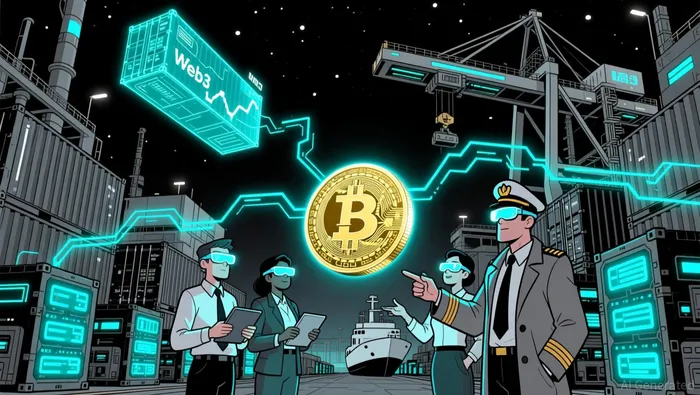 Intercont (Cayman) Limited, a global shipping enterprise, has continued its expansion into digital infrastructure through strategic acquisitions. In December, the company announced its acquisition of Starks Network Ltd, a Singapore-based Web3 innovator, to strengthen its on-chain digital asset infrastructure. This move aligns with broader industry trends of integrating blockchain technologies into traditional industries to improve transparency and efficiency.
Intercont also reinforced its commitment to sustainability and technological advancement by entering into a Ro-Ro vessel partnership in December, aiming to enhance earnings visibility and bolster its carbon-neutral fleet strategy. These initiatives reflect the growing intersection between environmental, social, and governance (ESG) goals and technological transformation in the shipping sector.
Advancements in Nuclear and Energy Technologies
Terra Innovatum Global and Nano Nuclear Energy Inc (NNE) reported progress in their respective nuclear technology projects. Terra Innovatum unveiled its Solo micro-reactor, which aims to provide scalable and cost-effective energy solutions. The company emphasized its goal to achieve first-of-a-kind reactor approval by 2027, signaling long-term growth potential.
NNE also highlighted advancements in its KRONOS MMR Energy system, emphasizing modularity and cost efficiency. The company has strengthened its financial position by raising over $600 million since its May 2024 IPO, with a strong cash balance of approximately $580 million post-year-end. These developments suggest a growing interest in decentralized, low-carbon energy solutions.
Market Position and Investor Caution
Despite these innovations, market participants remained cautious. Terra Innovatum’s stock declined by 1.09% to $4.55 in pre-market trading, reflecting investor uncertainty despite the company’s technological milestones. Management guidance included completing regulatory reviews by the end of 2025 and converting memoranda of understanding (MoUs) into binding orders within the next year. Analysts project that continued regulatory and operational clarity will be essential for investor confidence.
Lightbridge Corp also highlighted challenges in its nuclear fuel development, reporting a $12.4 million net loss for the first nine months of 2025. Despite a strong cash position of $153.3 million, the company noted increased R&D and general and administrative expenses. The focus remains on regulatory engagement and strategic partnerships, with upcoming testing at Idaho National Laboratory.
Broader Implications for the Sector
The broader digital and energy sectors continue to evolve amid shifting regulatory and technological landscapes. Companies like Gemini Space Station (GEMI) have expanded their offerings, with Q3 2025 revenue rising 52% quarter-on-quarter. The firm’s new products, including Gemini Wallet and a MiCA license in Europe, reflect growing demand for digital financial services.
Meanwhile, geopolitical factors remain relevant. A U.S. Coast Guard operation off the coast of Venezuela highlighted the ongoing scrutiny of illicit oil trade, emphasizing global regulatory enforcement. These events, while not directly tied to LUNA, contribute to the broader risk profile for investors in energy and digital asset sectors.
Conclusion
LUNA’s flat performance in 24 hours underscores the broader market dynamics at play. While the token faces year-on-year challenges, recent short-term gains and longer-term trends in digital infrastructure and energy innovation suggest potential for future recovery. As companies continue to adapt to evolving regulatory and technological environments, the focus will remain on strategic execution, operational efficiency, and market confidence.

Delivering real-time analysis and insights on unexpected cryptocurrency price movements to keep traders ahead of the curve.
Latest Articles
Stay ahead of the market.
Get curated U.S. market news, insights and key dates delivered to your inbox.
AInvest
PRO
AInvest
PRO



Comments
No comments yet