
LUNA Falls as Tennessee Pushes Controversial Immigration Enforcement Bills
 Aime Summary
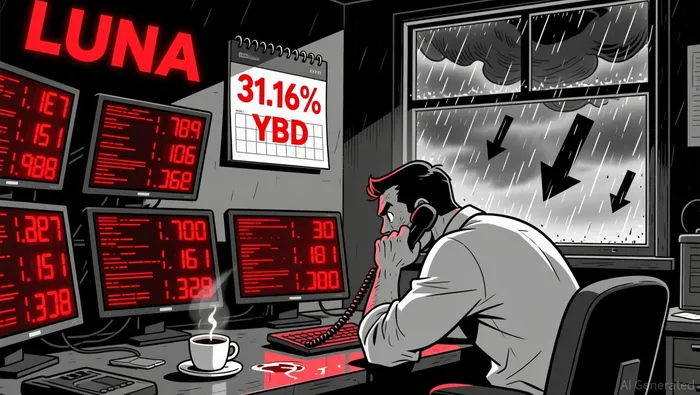
On FEB 5 2026, LUNA dropped by 0.15% within 24 hours to reach $0.0658, marking a 1.06% decline over the past week and month, and a 31.16% drop year-to-date. This continued downward trend coincided with a significant policy development in Tennessee that has sparked nationwide debate on immigration enforcement and civil liberties.
Tennessee Proposes Aggressive Immigration Legislation
Tennessee’s legislature has introduced a series of bills that would dramatically expand the role of state and local officials in immigration enforcement. The proposals, influenced by Trump adviser Stephen Miller, aim to turn a range of public officials—including teachers, judges, and law enforcement—into enforcers of federal immigration law. The legislation criminalizes the failure to report undocumented individuals and makes it a state offense for someone with a final deportation order to remain in the state.
Under the proposed measures, Tennessee would also expand the authority of its immigration enforcement division by exempting enforcement records from public disclosure laws, effectively shielding them from scrutiny. The legislation further criminalizes the release of identifying information about officers involved in immigration enforcement, subjecting those who do so to felony charges and potential removal from office.
Controversial Education and Law Enforcement Provisions
A particularly contentious proposal would require public schools to verify the immigration status of K-12 students and charge tuition for those without legal residency. This directly challenges the 1982 U.S. Supreme Court ruling in Plyler v. Doe, which affirmed the right of undocumented children to a free public education. The bill’s proponents argue it will reduce taxpayer burdens, but critics claim it is an unconstitutional overreach.
The legislation also mandates cooperation between local law enforcement and ICE, potentially limiting the ability of local officials to independently act against federal immigration agents. It further allows the Tennessee attorney general to withhold state funding—including shared sales tax revenue—from municipalities that fail to comply with the laws. With Tennessee lacking a state income tax, this is a significant financial lever.
Broader Economic and Legal Implications
The proposed laws could have ripple effects on the state’s economy and labor market. For example, the requirement for E-Verify use by state contractors and for proof of lawful status in licensed professions such as teaching and nursing could limit workforce participation. Additionally, the legislation could create legal uncertainty for out-of-state drivers, with Tennessee state troopers potentially checking the immigration status of commercial truckers and other non-residents.
 The bills also threaten to complicate federal-state relations, especially in light of the Trump administration's push to restrict access to commercial driver’s licenses (CDLs) for undocumented immigrants in states like California. If a chain of Southern states adopts similar laws, it could create a patchwork of immigration enforcement policies that complicate cross-state travel and commerce.
Political and Legal Backlash
Critics, including Democratic lawmakers and civil rights advocates, argue that the legislation is a political maneuver rather than a practical solution to systemic immigration challenges. They point to unaddressed issues like rural hospital closures, healthcare access, and grocery taxes as more pressing priorities for state resources.
Legal scholars and advocacy groups warn that the proposals risk violating constitutional protections for privacy, education, and due process. The Tennessee Immigrant and Refugee Rights Coalition has criticized the bills as enabling a “secret police” system with little public oversight.
Conclusion
As Tennessee moves forward with this aggressive legislative agenda, the financial market remains sensitive to developments in policy and legal environments that could affect broader economic participation and labor dynamics. The continued decline in LUNA’s price may reflect broader concerns over regulatory uncertainty and systemic legal challenges, particularly in sectors tied to digital identity and transaction verification.
For now, the bills await further legislative debate and, potentially, judicial review. If passed, they could set a precedent for other states seeking to assert greater control over immigration enforcement and reshape the role of local officials in the process.

Delivering real-time analysis and insights on unexpected cryptocurrency price movements to keep traders ahead of the curve.
Latest Articles
Stay ahead of the market.
Get curated U.S. market news, insights and key dates delivered to your inbox.


AInvest
PRO
AInvest
PRO



Comments
No comments yet