
LUNA Up 10.1% as Creator Do Kwon Sentenced for Terra Collapse
 Aime Summary
On DEC 13 2025, LUNA rose by 10.1% within 24 hours to reach $0.196, reflecting renewed attention on the token following the sentencing of its founder, Do Kwon, to 15 years in prison for his role in the $40 billion TerraLUNA-- ecosystem collapse.
Legal Consequences for Terra’s Collapse
Do Kwon, the founder of Terraform Labs, was sentenced to 15 years in a U.S. federal prison for orchestrating what prosecutors called a fraudulent scheme that led to the 2022 Terra and LUNA crash. The collapse, which saw the algorithmic stablecoin TerraUSD (UST) lose its peg to the U.S. dollar, wiped out approximately $40 billion in market value and devastated millions of investors globally.
The sentencing was influenced heavily by 315 victim impact letters submitted to the court. These letters detailed the profound personal and financial toll of the crash, including accounts of bankruptcy, health deterioration, and even suicides. U.S. District Judge Paul Engelmayer emphasized the human cost of the fraud, noting that while crypto investments carry risk, investors were not informed of the deceptive practices underlying the Terra ecosystem.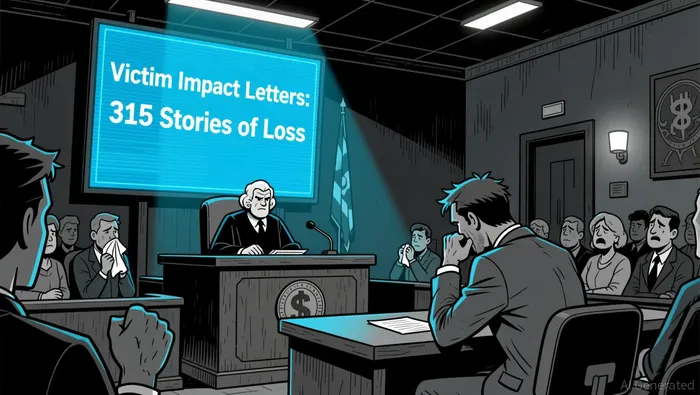
Investor Impact and Sentencing Considerations
Among the victim letters, one anonymous investor described how a $500,000 loss erased a family’s retirement savings and financial security. Another, Anita Youabian, shared how the stress of a $200,000 loss worsened her chronic health condition. Nicholas, a former Terra investor who lost $62,000, recounted how the collapse led to the end of his marriage and a return to living with his parents.
The judge personally reviewed all 315 letters and cited them as a key factor in the sentencing. Engelmayer stressed that the victims had not consented to fraudulent practices and that the scale of the losses—ranging from thousands to millions of dollars—justified a significant prison term. While not all victims called for the maximum sentence, many emphasized the need for accountability and restitution.
Legal Strategy and Judicial Process
Kwon’s legal team chose not to request a postponement to review the victim impact letters in full. The decision was seen as a strategic move to keep the proceedings focused on procedural accuracy rather than emotional testimony. Crypto attorney Ariel Givner noted that the judge’s actions were standard in such high-profile cases, emphasizing the importance of a clear judicial record rather than an extended emotional debate.
The U.S. Department of Justice has previously outlined how Terraform Labs misrepresented the stability of UST and the unrealistic yields offered through Anchor ProtocolANC--. The collapse of UST triggered a death spiral with LUNA, leading to the broader crypto market losses and regulatory scrutiny.
Broader Implications for the Crypto Industry
The sentencing marks a pivotal moment in the regulation of cryptocurrency and decentralized finance. By holding Kwon accountable for deliberate misrepresentation, the court has sent a signal to the industry that fraudulent practices will not be tolerated. This case also underscores the need for greater transparency and due diligence in crypto projects, especially those involving algorithmic stablecoins and high-yield protocols.
As the market continues to evolve, the Terra collapse serves as a cautionary tale for investors and developers alike. Regulators worldwide are increasingly scrutinizing projects for compliance and investor protection, reflecting a broader shift toward accountability in the crypto space.

Delivering real-time analysis and insights on unexpected cryptocurrency price movements to keep traders ahead of the curve.
Latest Articles
Stay ahead of the market.
Get curated U.S. market news, insights and key dates delivered to your inbox.






Comments
No comments yet