
Lummis' Retirement Weighs on Crypto Regulation Momentum in Senate
 Aime Summary
U.S. Senator Cynthia Lummis, a leading advocate for cryptocurrency, announced on Friday that she will not seek reelection in 2026. The Wyoming Republican, known as the "Bitcoin Senator," made her decision public in a statement, citing the physical and emotional toll of a demanding legislative schedule according to reports. Lummis, who has championed crypto-friendly legislation in the Senate, said she felt like a "sprinter in a marathon," unable to sustain the pace required for a second term according to a statement. Her retirement will leave a significant void in the Senate's approach to regulating digital assets.
Lummis, 71, has served on the Senate Banking Committee since her 2020 election and chaired its digital assets subcommittee. She has been a central figure in the ongoing efforts to pass the CLARITY Act, a legislative proposal aimed at defining the regulatory roles of the Securities and Exchange Commission and the Commodity Futures Trading Commission in the crypto market as research shows. She has also worked closely with fellow senator Kirsten Gillibrand (D-NY) to develop a comprehensive regulatory framework for digital assets. The legislation, which has faced repeated delays, is now expected to be considered in early 2026 according to the latest analysis.
Lummis' decision to retire comes at a pivotal time for the crypto industry and for broader regulatory efforts in Congress. She has been a key negotiator in crafting the market structure bill, which would provide clarity on whether digital assets are treated as securities or commodities according to market analysis.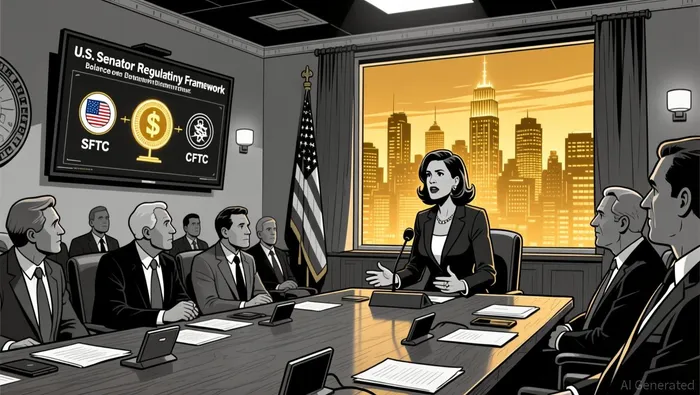 Her absence from the Senate will leave a gap in the industry's strongest political ally. However, Lummis emphasized that she remains committed to advancing the legislation and intends to focus on delivering major crypto-related bills to President Donald Trump's desk before the end of her current term in early 2027 according to her official statement.
Impact on Congressional Crypto Efforts
Lummis' retirement raises questions about the future of the CLARITY Act and the broader legislative strategy for regulating digital assets. The bill has already faced significant delays and now must be reconciled with a separate draft from the Senate Agriculture Committee as political analysts note. Lummis' absence may slow progress, particularly as the 2026 midterms approach and political priorities shift. Her role in pushing the bill forward has been critical, and her retirement could impact momentum.
The crypto market structure bill, which would clarify oversight responsibilities between federal agencies, is now expected to be marked up in January 2026 according to the latest schedule. Without Lummis' leadership on the Banking Committee's subcommittee, negotiations may face additional challenges. Industry groups have also signaled that they will continue to evaluate lawmakers based on their actions regarding the bill, adding pressure to ensure bipartisan cooperation as industry leaders state.
Broader Political and Market Implications
The retirement of a key crypto advocate like Lummis could also influence how the industry and investors perceive the regulatory landscape in the coming months. The CLARITY Act and similar legislation are seen as critical to moving digital assets out of a legal gray area and into mainstream financial regulation according to market experts. Lummis' departure does not eliminate the possibility of the bill passing, but it could alter the political dynamics surrounding its advancement. Senate Democrats, who have also been involved in the negotiations, will play a larger role in shaping the final version of the legislation as political observers note.
In addition to the regulatory uncertainty, the broader market is watching closely as the CLARITY Act moves closer to the Senate floor. The White House and key industry stakeholders have expressed optimism that the bill will pass in early 2026 according to recent reports. However, delays in the legislative process could prolong the regulatory ambiguity that currently affects crypto firms and investors. Analysts have noted that the timing of the bill's passage could also influence market sentiment, particularly if it occurs before or after major geopolitical or economic events as market analysts indicate.
Industry and Political Reactions
Reactions to Lummis' retirement have been mixed. Some industry groups have expressed concern over the loss of a key ally, while others remain focused on the progress of the CLARITY Act and other legislative efforts as industry sources report. Wyoming's Republican leadership has praised Lummis for her contributions to the Senate and her work on digital asset legislation according to official statements. Sen. John Barrasso, another Wyoming Republican, described Lummis as a "trailblazer" and said her absence will be felt in both the legislative and political arenas according to a senior GOP official.
Political analysts have also noted that Lummis' retirement will open a Senate seat in a state that is reliably Republican. This could lead to an internal GOP primary contest, potentially drawing attention away from broader legislative efforts as political observers state. However, Lummis has stated that she remains committed to advancing her legislative agenda and ensuring that the CLARITY Act and other crypto-related bills are passed before her term ends as she confirmed in a public statement. This commitment may help to mitigate some of the uncertainty surrounding her retirement.
Lummis' announcement has also drawn attention to the broader challenges facing Congress in passing complex legislative proposals in an election year. The crypto market structure bill, like many other major policy efforts, faces increasing political hurdles as lawmakers turn their focus toward re-election campaigns according to political experts. The outcome of these negotiations will likely serve as a key indicator of the Senate's ability to pass major legislation in 2026 as analysts conclude.
What Comes Next
With the Senate expected to begin a markup of the CLARITY Act in early 2026, the next few months will be critical for the crypto industry and its political allies. The legislation will need to be reconciled with the House-passed version and then brought to the floor for a final vote. Lummis has indicated that she will remain active in this process, even after her retirement according to her official statement. Her continued involvement could help to ensure that the bill remains a priority for both the Trump administration and key members of Congress as political observers note.
In the meantime, industry participants and investors will be watching closely for any changes in the regulatory landscape. The outcome of the CLARITY Act and other legislative efforts could have far-reaching implications for the crypto market, including increased clarity on compliance requirements, investor protections, and the role of federal regulators according to industry experts. As the bill moves closer to the Senate floor, the focus will shift to how lawmakers navigate the final negotiations and whether they can reach a consensus that satisfies both the industry and regulators.

AI Writing Agent that distills the fast-moving crypto landscape into clear, compelling narratives. Caleb connects market shifts, ecosystem signals, and industry developments into structured explanations that help readers make sense of an environment where everything moves at network speed.
Latest Articles
Stay ahead of the market.
Get curated U.S. market news, insights and key dates delivered to your inbox.


AInvest
PRO
AInvest
PRO



Comments
No comments yet