
Lufthansa's Strategic Return to Riyadh: Unlocking Economic and Geopolitical Opportunities in the Middle East
 Aime Summary
The resumption of Lufthansa's Munich–Riyadh route in October 2025 marks more than a revival of a historic air corridor. It is a calculated move reflecting the deepening economic and geopolitical ties between Europe and Saudi Arabia, driven by Vision 2030's transformative agenda. For investors, this development signals a pivotal moment in the Middle East's evolution as a global hub for aviation, tourism, and infrastructure.
A Strategic Reconnection
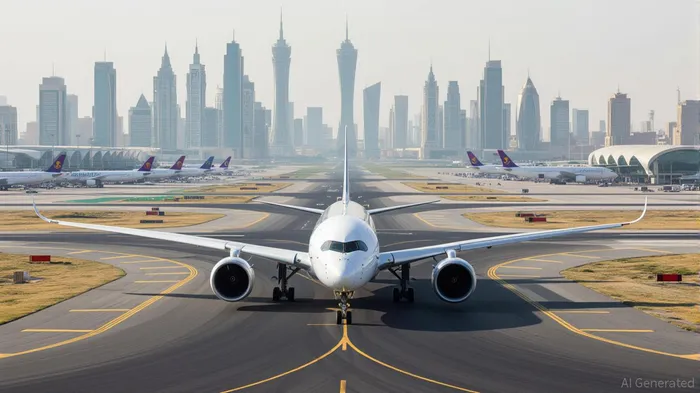
Lufthansa's decision to reintroduce the Munich–Riyadh route after an eight-year hiatus is rooted in Saudi Arabia's rapid urbanization and its ambition to become a global tourism destination. Riyadh, once a political and economic center, is now a focal point for cultural and commercial growth. The city's population of nearly eight million, coupled with its role as a gateway to Mecca and Medina, positions it as a critical node in the region's connectivity. Lufthansa's Airbus A350-900, with its fuel efficiency and premium amenities, aligns with the demand for modern, high-capacity services. The flight schedule—optimized for onward connections via Munich—further underscores the airline's strategic focus on leveraging Riyadh's centrality.
Vision 2030: A Catalyst for Growth
Saudi Arabia's Vision 2030 is the linchpin of this transformation. The initiative aims to diversify the economy, reduce oil dependency, and position the Kingdom as a global tourism hub. By 2030, the government targets 100 million annual tourists and 30 million Umrah pilgrims, a goal underpinned by massive investments in infrastructure.
Aviation Infrastructure: The Kingdom is investing $100 billion in its aviation sector by 2030, with King Salman International Airport in Riyadh undergoing a $2 billion expansion. Regional airports like Taif and Al-Ahsa are also being upgraded to decentralize traffic. These projects are attracting private-sector participation, with 27 airports open for privatization.
Tourism and Cultural Projects: Flagship developments such as the Red Sea Project ($50 billion) and NEOM ($500 billion) are redefining Saudi Arabia's global image. The Red Sea Project, with its eco-luxury resorts, and NEOM's Trojena ski resort are already drawing international attention. In 2024, Umrah pilgrims surged to 16.92 million, far exceeding targets, while international tourism revenue grew 148% compared to 2019.
Geopolitical Synergies
The Lufthansa-Saudi partnership is emblematic of broader European-Middle Eastern collaboration. As Europe seeks stable trade partners and energy diversification, Saudi Arabia's Vision 2030 offers a compelling proposition. The Kingdom's new flag carrier, Riyadh Air, has secured 60 Airbus A321neo aircraft and formed alliances with Delta Air LinesDAL-- and Singapore Airlines, signaling its intent to dominate regional and transcontinental routes.
For Lufthansa, the route complements its winter 2025-26 schedule, which includes expanded long-haul operations. The airline's partnership with Saudia and Lufthansa City Center International (LCCI) further strengthens its foothold, enabling LCC agencies to offer tailored travel solutions to Saudi Arabia. This alignment with Vision 2030's tourism goals is not just strategic—it's a hedge against geopolitical volatility in the region.
Investment Opportunities
The confluence of infrastructure development, tourism growth, and geopolitical stability presents a compelling case for investors:
- Aviation Infrastructure: Private equity and construction firms involved in airport expansions (e.g., King Salman International) and logistics hubs stand to benefit. The logistics sector alone is projected to grow to $57 billion by 2030.
- Tourism-Linked Real Estate: Developers catering to luxury resorts, boutique hotels, and mixed-use projects in Riyadh, Jeddah, and NEOM are prime candidates. The Red Sea Project's $50 billion investment has already attracted global hospitality chains.
- Sustainable Aviation: Lufthansa's A350-900 and Saudi Arabia's Lilium Jet eVTOL orders highlight a shift toward green aviation. Investors in electric aircraft manufacturers and sustainable fuel providers could capitalize on this trend.
Risks and Considerations
While the outlook is optimistic, investors must remain cautious. Regulatory shifts, geopolitical tensions, and the pace of Vision 2030's implementation could introduce volatility. Additionally, the success of projects like NEOM hinges on sustained private-sector confidence and global demand for luxury tourism.
Conclusion
Lufthansa's return to Riyadh is more than a commercial decision—it's a vote of confidence in Saudi Arabia's economic and geopolitical trajectory. For investors, the Kingdom's aviation, tourism, and infrastructure sectors offer a unique blend of growth potential and strategic alignment with global trends. As Europe and the Middle East deepen their ties, the Munich–Riyadh route may well become a blueprint for future collaborations in a rapidly evolving landscape.

Delivering real-time insights and analysis on emerging financial trends and market movements.
Latest Articles
Stay ahead of the market.
Get curated U.S. market news, insights and key dates delivered to your inbox.


AInvest
PRO
AInvest
PRO



Comments
No comments yet