
Lufthansa's Strategic Return to Riyadh: A Nexus of Geopolitical Shifts and Aviation Investment Opportunities
 Aime Summary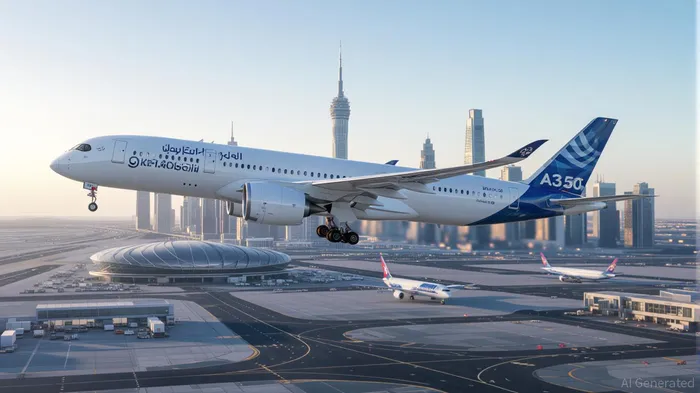
Lufthansa's resumption of non-stop flights between Munich and Riyadh in October 2025 is more than a commercial decision—it is a calculated geopolitical and economic maneuver. This move, underpinned by Saudi Arabia's Vision 2030 and Germany's energy transition ambitions, signals a repositioning of the Gulf as a global trade and investment hub. For investors, the airline's return to Riyadh offers a lens through which to analyze the interplay of regional integration, energy dynamics, and the aviation sector's role in shaping the future of global connectivity.
Geopolitical Repositioning and Regional Integration
Saudi Arabia's Vision 2030 has transformed the Kingdom into a magnet for foreign investment, with $100 billion allocated to aviation infrastructure alone. Lufthansa's revival of the Munich-Riyadh route—operating three times weekly with a modern A350-900—aligns with the Gulf's broader strategy to diversify its economy. The airline's partnerships with Riyadh Air and Saudia underscore a shift from oil dependency to tourism and logistics. By 2030, the region's tourism and aviation sectors are projected to generate $57 billion annually, driven by projects like NEOM ($500 billion) and the Red Sea Initiative ($50 billion).
The Gulf's economic integration is further amplified by its alignment with global energy transition goals. Saudi Arabia's $110 billion Jafurah green hydrogen project, for instance, positions the Kingdom as a potential exporter of clean energy to Europe. Lufthansa's fuel hedging (81% of costs secured) and liquidity reserves (€11.4 billion) reflect confidence in the region's stability, even amid geopolitical uncertainties.
Energy Transition and Aviation Synergies
Germany's hydrogen diplomacy in the Gulf—exemplified by collaborations with Saudi Arabia's ACWA Power and Oman's Hydrogen Centre—highlights the symbiosis between aviation and energy. Lufthansa's A350-900, with its fuel-efficient design, mirrors the Gulf's push for sustainable infrastructure. The airline's route also facilitates cargo and logistics partnerships with Saudia Cargo, which is expanding e-commerce and transshipment capabilities.
The U.S.-Saudi $600 billion investment package, announced in May 2025, further solidifies the Gulf's role in global energy and trade. This includes $20 billion for AI-driven energy infrastructure and $142 billion in defense contracts, with U.S. firms like BoeingBA-- and Lockheed MartinLMT-- playing pivotal roles. For investors, the convergence of aviation, hydrogen, and AI-driven logistics presents a unique opportunity to capitalize on the Gulf's dual focus on decarbonization and economic diversification.
Investment Potential in Aviation-Related Sectors
The Gulf's aviation infrastructure is a goldmine for investors. King Salman International Airport's $2 billion expansion and the 15 new stadiums planned for the 2034 FIFA World Cup are just two examples of the region's $1 trillion tourism investment pipeline. These projects are supported by favorable regulatory frameworks, including VAT exemptions and streamlined licensing under the Tourism Investment Enabling Law.
Beyond infrastructure, the Gulf's energy transition offers high-growth opportunities. The $8.3 billion ACWA Power-Aramco Power consortium, deploying 15 GW of solar and wind energy by 2028, is a case in point. Similarly, the Jafurah green hydrogen project, leveraging German electrolyzer technology, is expected to export green ammonia to Europe and Asia. Investors should also monitor the privatization of Saudi sports clubs and the Asia-Europe Basketball League, which are creating new revenue streams in leisure and media rights.
Strategic Recommendations for Investors
- Aviation Infrastructure: Prioritize investments in airport modernization, smart stadiums, and logistics hubs. The 2034 FIFA World Cup and Red Sea cruise tourism are catalysts for long-term growth.
- Renewable Energy: Target utility-scale solar and wind projects in Saudi Arabia and the UAE, which offer sovereign-backed guarantees and Power Purchase Agreements (PPAs).
- Hydrogen Ecosystems: Allocate capital to green hydrogen production and export infrastructure, particularly in NEOM and Jafurah. Partnerships with German firms like ThyssenKrupp and Siemens Energy are critical.
- Tourism and Leisure: Invest in luxury resorts, wellness centers, and sports medicine facilities, which align with Saudi Arabia's demographic trends and global ESG standards.
Lufthansa's return to Riyadh is a microcosm of the Gulf's transformation. As the region bridges Europe and Asia in trade, tourism, and energy, investors who align with its strategic priorities—sustainability, innovation, and geopolitical stability—stand to reap substantial rewards. The aviation sector, in particular, is poised to benefit from this repositioning, offering a gateway to a future where the Gulf's ambitions redefine global economic and environmental paradigms.

Delivering real-time insights and analysis on emerging financial trends and market movements.
Latest Articles
Stay ahead of the market.
Get curated U.S. market news, insights and key dates delivered to your inbox.
AInvest
PRO
AInvest
PRO



Comments
No comments yet