
Lufthansa's Strategic Re-entry into the Riyadh-Munich Corridor: A Catalyst for Airline Earnings Amid Middle East's Economic Renaissance
 Aime Summary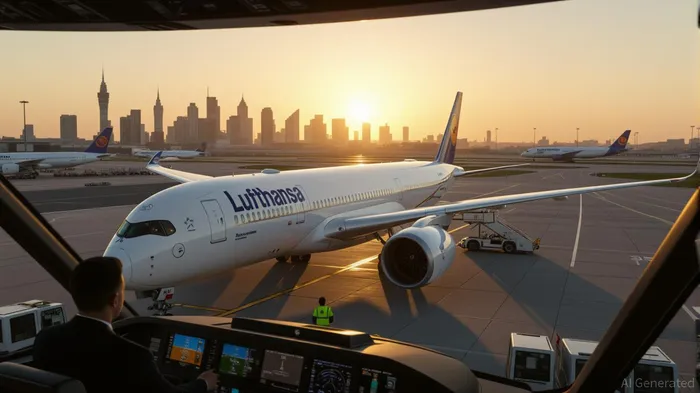
The resumption of Lufthansa's nonstop flights between Riyadh and Munich, set to launch on October 26, 2025, is more than a commercial decision—it is a calculated bet on the Middle East's transformation under Saudi Arabia's Vision 2030. This move, operating three times weekly with a modern A350-900 aircraft, reflects a broader shift in global trade, tourism, and diplomatic engagement, positioning the airline to capitalize on a region poised for sustained growth. For investors, the corridor represents a unique intersection of geopolitical momentum and economic diversification, offering long-term upside in an industry still recovering from pandemic-era disruptions.
Geopolitical and Economic Tailwinds: Why the Riyadh-Munich Route Matters
Saudi Arabia's economic ascent is no longer a distant promise but a present reality. Between 2023 and 2025, the Kingdom's non-oil GDP grew by 4.2%, driven by a 14% surge in tourism spending to SR256 billion ($68.26 billion) in 2024 alone. The government's aggressive reduction of hotel operation fees (70% since 2019) and streamlined licensing processes have catalyzed a hospitality boom, with 362,000 hotel keys projected by 2030. Lufthansa's return to Riyadh aligns with this trajectory, tapping into a market where religious tourism (Umrah and Hajj) and leisure travel are expanding in tandem.
The geopolitical calculus is equally compelling. Saudi Arabia's Vision 2030 has repositioned the Kingdom as a global hub for events like Expo 2030 and the FIFA Men's World Cup 2034, both of which will require robust international connectivity. Lufthansa's direct route to Munich—a key European hub—ensures seamless access to the airline's global network, including transatlantic and Mediterranean destinations. This strategic positioning is critical as Europe seeks to diversify trade and diplomatic ties with the Middle East, a region now accounting for 22 weekly Lufthansa flights to Saudi cities like Dammam and Jeddah.
Data-Driven Insights: The Economic Case for Lufthansa's Move
Lufthansa's decision is underpinned by hard data. The airline's A350-900, with 293 seats, is a fuel-efficient choice for a route that will serve both business and leisure travelers. With Saudia (Saudi Arabia's flag carrier) already operating direct flights to Munich, Lufthansa's nonstop service fills a gap in premium connectivity, offering Allegris enhancements that elevate the customer experience. This differentiation is crucial in a market where Saudi travelers are increasingly prioritizing comfort and convenience.
The economic rationale extends beyond passenger revenue. Saudi Arabia's logistics sector, which handled 1.2 million tonnes of cargo in 2024 (a 34% year-on-year increase), is a growing asset. Lufthansa's expanded presence in the region could facilitate cargo partnerships, particularly with Saudia Cargo, which has invested in e-commerce and transshipment capabilities. For investors, this diversification into freight and logistics offers a buffer against passenger demand volatility.
Risk Mitigation and Long-Term Earnings Potential
While the geopolitical and economic outlook is bullish, Lufthansa's strategy includes prudent risk management. The airline has hedged 81% of its fuel costs and diversified its fleet renewal plans to avoid exposure to potential U.S. tariffs on aircraft. Its liquidity position of €11.4 billion as of March 2025 provides flexibility to navigate uncertainties, including the 2026 U.S. election cycle, where trade policy shifts could impact transatlantic aviation.
For investors, the key question is whether Lufthansa can sustain its earnings recovery. The airline's adjusted EBIT loss of €722 million in Q1 2025, while a 15% improvement over 2024, underscores the need for disciplined cost management. However, its logistics and MRO (Maintenance, Repair, and Overhaul) segments—contributing €223 million in adjusted EBIT—offer a stable revenue stream. These segments, less sensitive to cyclical demand, could become a cornerstone of Lufthansa's long-term profitability.
Investment Thesis: A Strategic Bet on Global Connectivity
Lufthansa's re-entry into the Riyadh-Munich corridor is a microcosm of the airline's broader strategy: leveraging emerging markets to offset saturated European routes. With Saudi Arabia targeting 150 million annual visits by 2030 and the global aviation sector projected to grow at 4.3% annually through 2030, the airline is well-positioned to capture a share of this expansion.
For investors, the route's success hinges on three factors:
1. Tourism Growth: Saudi Arabia's 8% projected tourism sector growth in 2025 will drive demand for premium air travel.
2. Diplomatic Momentum: Strengthening EU-Saudi ties, including trade agreements and cultural exchanges, will sustain long-term traffic.
3. Operational Efficiency: Lufthansa's focus on fuel hedging, digitalization, and fleet modernization will determine its ability to convert demand into profits.
Conclusion: A High-Conviction Play in a Resilient Sector
Lufthansa's Riyadh-Munich route is not just a flight—it's a signal of the airline's confidence in the Middle East's economic renaissance. For investors, this move represents a high-conviction opportunity in a sector poised for recovery. While short-term risks persist, the alignment with Saudi Arabia's Vision 2030, coupled with Lufthansa's strategic agility, suggests a compelling long-term upside. As global connectivity rebounds, airlines that adapt to shifting geopolitical and economic currents—like Lufthansa—are likely to outperform.
In an era of uncertainty, the Riyadh-Munich corridor offers a rare blend of macroeconomic momentum and operational clarity. For those willing to look beyond the noise, Lufthansa's re-entry is a testament to the power of strategic foresight in aviation's next chapter.

Delivering real-time insights and analysis on emerging financial trends and market movements.
Latest Articles
Stay ahead of the market.
Get curated U.S. market news, insights and key dates delivered to your inbox.


AInvest
PRO
AInvest
PRO



Comments
No comments yet