
Lufthansa's St. Louis Expansion: A Catalyst for Airline Valuation and Regional Economic Growth


 Aime Summary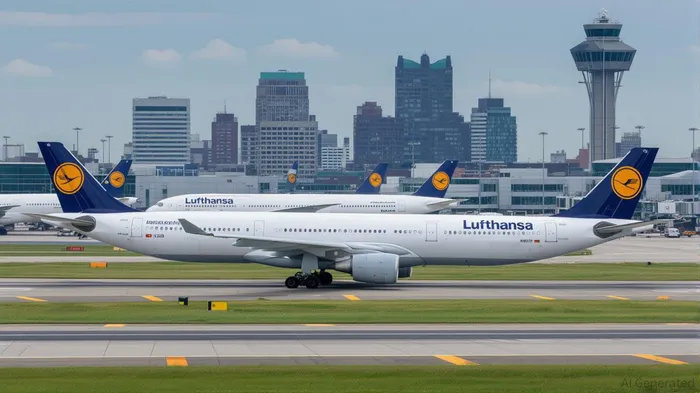
Lufthansa's 2025 decision to expand its St. . It is a strategic bet on the resilience of transatlantic travel and a signal of confidence in the St. Louis region's economic potential. For investors, this move offers a dual opportunity: to capitalize on Lufthansa's stock valuation amid a recovering airline sector and to position for the economic multiplier effects of enhanced connectivity in a Midwestern hub poised for growth.
Airline Valuation: A Strategic Bet on Transatlantic Demand
Lufthansa's route expansion follows a decade of cautious post-pandemic recovery in the airline industry. . This route, launched in 2022, has already proven its viability, . . Midwest's underserved international market.
For investors, this aligns with broader trends. Airline stocks, including Lufthansa (DE:LHA), have historically traded at discounts to intrinsic value during economic downturns but rebound sharply during recovery phases. With oil prices stabilizing and global travel demand rebounding, Lufthansa's stock appears undervalued relative to its peers, , .
Economic Multiplier: St. Louis as a Gateway to Growth
The St. Louis region, , is a powerhouse of industrial and logistical strength. , hospitality, and retail sectors. The route's success has already spurred infrastructure investments, . . These projects not only support the airport's capacity but also enhance the region's appeal for logistics and manufacturing firms.
The multiplier effect is particularly pronounced in consumer discretionary sectors. , . Local businesses like Parker's Table and Technical Productions, Inc., have already reported increased demand for event services and retail offerings during major conventions.
: Diversifying into Regional Infrastructure and Consumer Discretionary Equities
The St. Louis expansion highlights two compelling investment themes:
1. Infrastructure Equities, , , which owns industrial real estate in the area.
2. Consumer Discretionary Sectors: Hotels (e.g., Marriott International, NYSE:MAR), airlines (e.g., Lufthansa), and regional retailers (e.g., Dick's Sporting GoodsDKS--, .
Conclusion: A Win-Win for Investors and the Region
Lufthansa's St. Louis-Frankfurt route is a microcosm of a broader recovery in global travel and regional economic development. For investors, the airline's strategic expansion offers exposure to a rebounding sector while also amplifying the potential of St. Louis's infrastructure and consumer discretionary markets. As the region solidifies its role as a transatlantic gateway, a diversified portfolio incorporating Lufthansa's stock and regional equities could yield robust returns in the coming years.
Investment Recommendation, such as Granite ConstructionGVA-- and PrologisPLD--, to capitalize on the St. Louis expansion's long-term growth potential.

Delivering real-time insights and analysis on emerging financial trends and market movements.
Latest Articles
Stay ahead of the market.
Get curated U.S. market news, insights and key dates delivered to your inbox.


AInvest
PRO
AInvest
PRO



Comments
No comments yet