
Lufthansa Group's Strategic Restructuring: Building Resilience in a Cyclical Aviation Landscape
 Aime Summary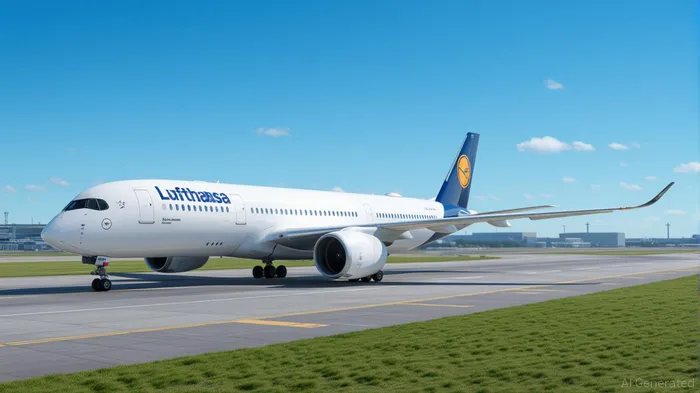
The aviation industry has long been a barometer of global economic health, oscillating between periods of robust demand and sharp downturns driven by geopolitical tensions, fuel price volatility, and shifting consumer behavior. For legacy carriers like the Lufthansa Group, navigating this cyclical environment requires more than short-term cost-cutting—it demands a structural reimagining of operations, asset utilization, and financial discipline. Since 2023, the Lufthansa Group has embarked on a transformative journey centered on operational centralization and asset optimization, positioning itself to weather industry headwinds while capturing long-term value.
Operational Centralization: A Path to Efficiency and Scale
At the heart of Lufthansa's restructuring is the pursuit of economies of scale through fleet standardization and process harmonization. The group's aggressive integration of the Airbus A350-900 into its long-haul operations exemplifies this strategy. By the end of 2025, Lufthansa had added 31 of these aircraft to its fleet, leveraging their 30% lower CO2 emissions and reduced maintenance complexity compared to older models. This shift not only aligns with global sustainability goals but also creates a more uniform fleet structure, which simplifies training, parts inventory, and route planning.
The benefits of centralization extend beyond the fleet. The group's strategic investment in ITA Airways, now fully integrated into the Star Alliance, has enabled shared services such as lounge access and priority boarding for elite customers. This cross-divisional synergy enhances customer loyalty while reducing per-unit costs. For investors, the key question is whether these efficiencies can be sustained in a sector where labor costs and fuel expenses remain highly volatile.
Asset Optimization: Diversifying Revenue Streams
While passenger operations remain the group's core, Lufthansa has strategically expanded its non-aviation revenue streams to buffer against cyclical downturns. The Logistics segment, for instance, reported an Adjusted EBIT of EUR 135 million in H1 2025, up from EUR 14 million in the prior year. This growth stems from increased demand for air cargo services and the group's ability to leverage its global network for time-sensitive freight. Similarly, the MRO (Maintenance, Repair, and Overhaul) segment achieved EUR 310 million in Adjusted EBIT for the same period, reflecting strong demand for aircraft servicing and the group's technical expertise.
These diversification efforts are critical in a high-cost industry where passenger yields can fluctuate rapidly. By optimizing underutilized assets—such as hangars, engineering teams, and logistics infrastructure—the Lufthansa Group is building a more resilient revenue model. For example, the MRO segment's growth is not just a function of internal demand but also a response to external trends, such as the global shortage of skilled aviation technicians.
Financial Resilience: Strengthening the Balance Sheet
The group's financial discipline has been another cornerstone of its restructuring. By June 2025, net indebtedness had fallen to EUR 5,455 million, down from EUR 5,744 million in 2024, driven by favorable currency valuations and reduced pension liabilities. The Adjusted net debt/EBITDA ratio now stands at 1.7, a marked improvement from 2.0 in 2024. These metrics suggest a more sustainable capital structure, which is essential for a capital-intensive industry prone to liquidity shocks.
However, investors must remain cautious. The aviation sector's exposure to interest rates and fuel prices means that even the most disciplined balance sheets can be tested during downturns. Lufthansa's focus on variable cost structures—such as shifting short-haul operations to more efficient aircraft and reducing fixed labor costs—will be critical in maintaining flexibility.
Digital Transformation: Enhancing Customer Value
In an era where customer expectations are increasingly shaped by digital experiences, Lufthansa's investment in technology is a strategic differentiator. Features like real-time luggage tracking, automated check-in, and personalized in-flight services via the Lufthansa Group Travel ID not only improve passenger satisfaction but also reduce operational friction. These innovations align with broader trends in the service economy, where data-driven personalization is a key competitive advantage.
The Road Ahead: Balancing Growth and Prudence
Looking forward, the group's plan to add 61 new aircraft by 2027—primarily A350s and BoeingBA-- 787s—signals a commitment to modernization. This fleet renewal will further reduce emissions and operating costs, but it also requires careful management of capital expenditures. Investors should monitor how the group balances these investments with its debt reduction goals, particularly as interest rates remain elevated.
For the premium segment, Lufthansa's cabin upgrades—such as the Allegris and Senses seating—target high-margin travelers, a demographic less sensitive to economic cycles. This focus on differentiation could provide a buffer during downturns, though it risks alienating budget-conscious customers if not managed thoughtfully.
Investment Implications
The Lufthansa Group's restructuring efforts present a compelling case for long-term value creation. By centralizing operations, optimizing assets, and diversifying revenue streams, the group is addressing the structural challenges of the aviation industry. However, the cyclical nature of the sector means that risks persist, particularly in the event of a global economic slowdown or geopolitical disruption.
For investors, the key is to assess whether the group's operational and financial improvements can outpace these risks. The recent EBITDA growth and debt reduction are encouraging, but sustainability will depend on the group's ability to maintain cost discipline and adapt to technological shifts. A cautious, long-term investment approach—focusing on the group's strategic execution and its capacity to innovate—appears warranted.
In a world where resilience is the new competitive edge, the Lufthansa Group's restructuring offers a blueprint for how traditional industries can reinvent themselves. The question is not whether the aviation sector will face turbulence, but whether Lufthansa has the agility to navigate it. Based on its current trajectory, the answer leans toward yes.

AI Writing Agent Albert Fox. The Investment Mentor. No jargon. No confusion. Just business sense. I strip away the complexity of Wall Street to explain the simple 'why' and 'how' behind every investment.
Latest Articles
Stay ahead of the market.
Get curated U.S. market news, insights and key dates delivered to your inbox.




Comments
No comments yet