
Lufthansa Earnings Decline: Higher Costs and Strikes Take Toll
Generated by AI AgentClyde Morgan
Thursday, Mar 6, 2025 1:25 am ET2min read
BA--
Lufthansa, the Germany-based aviation giant, reported a significant decline in earnings for the first nine months of 2024, despite record revenues and capacity growth. The company attributed the deterioration to growing competition, price pressure, and external conflicts, particularly in the Middle East. Strikes and labor disputes further impacted financial performance, costing the company around €450 million.
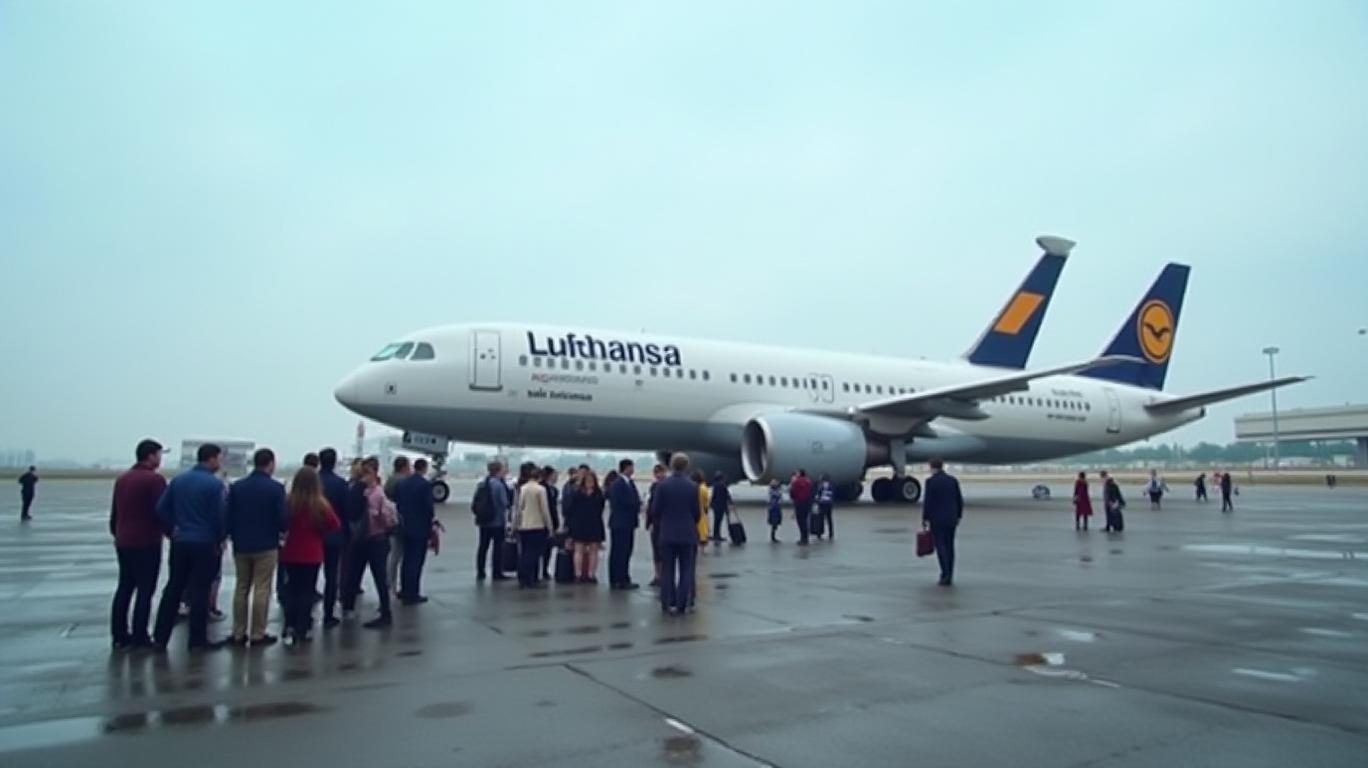
The group's earnings position "deteriorated significantly" compared to the same period last year, despite record-breaking revenues and overall capacity growth. Lufthansa posted a third-quarter operating profit of €1.3 billion ($1.4bn), a 9% drop from the same period last year. The firm is best known for its flagship brand, Lufthansa Airlines, but it includes other big names such as Austrian Airlines, Swiss, Brussels Airlines, and Eurowings. It also operates large maintenance and cargo businesses.
In a market filing, the group highlighted growing competition and intensifying price pressure on its airlines. It said rival operators added capacity "market-wide," most notably in the April to June quarter of 2024, with Lufthansa Airlines being particularly hard hit. This saw average yields – the revenue earned by each passenger – falling by 3.5% compared to the same time in 2023. The network-wide figure masks a significant drop in the Asia-Pacific region, where yields plummeted by 14%.
Continued conflict in the Middle East also hit profitability. The company has the biggest exposure to the region of Europe's three largest airline groups. Its regular schedule includes flights to countries including Iran, Iraq, and Israel. The resulting cancellation of services impacted earnings by between €60m and €100m ($65m—$108m).
Strike Impact at Lufthansa
As well as external factors, the company faced problems closer to home. The start of the year was marred by hugely disruptive strikes across the group. Lufthansa also had to navigate major labor stoppages at key airports and other partners. Quantifying the disruption, the company said the labor disputes cost it around €450m ($486m).
Owing to what the company described as "irregularities in flight operations," the group was forced to pay out huge sums to affected travelers. Direct compensation payments for delays and cancellations, including under the European Union’s EU261 scheme, soared 118% year-on-year to €332m ($359m). Expenses for passenger assistance due to strikes and associated disruption rose by a fifth to €221m ($239m).
Delays in the delivery of new long-haul planes were a further drag on results. The problem is particularly acute at Lufthansa Airlines, which is using previous-generation aircraft such as the Airbus A340 while it waits for more fuel-efficient jets. In July the carrier reactivated its sixth A380 ‘super jumbo’ with a further two units currently due to re-enter service.
The airline is due to be one of the launch customers for Boeing’s new 777X plane. Earlier this month, BoeingBA-- CEO Kelly Ortberg said the first deliveries were not expected until 2026. The original timeline for the project saw the 777X entering passenger service in 2021.
Lufthansa’s ‘Lufthansa Problem’
Group executives once again called out disappointing results at the core Lufthansa Airlines brand as a particular challenge. To combat what Airline Weekly senior analyst Jay Shabat coined as "Lufthansa’s Lufthansa Problem," management recently launched a turnaround plan to boost results at the German flag carrier.
The goal is to improve efficiency, reduce complexity, and improve quality at the airline. The strategy was formally launched in the third quarter and includes moving more short-haul flights to lower-cost subsidiaries. Further savings are expected "through network optimization and increasing flexibility and automation." Among the changes is a reduction in the airline’s flights to and from China.
Lufthansa's turnaround plan for Lufthansa Airlines aims to address the 'Lufthansa Problem' by focusing on improving efficiency, reducing costs, and enhancing quality at the airline. The plan includes moving more short-haul flights to lower-cost subsidiaries, network optimization, increasing flexibility and automation, and improving quality through investments in new cabin interiors, lounges, and personal and digital services. By implementing these specific measures, Lufthansa aims to overcome the 'Lufthansa Problem' and improve the overall performance of Lufthansa Airlines by 2026.
In conclusion, Lufthansa faces significant challenges in the form of intense competition, price pressure, external conflicts, and labor disputes. To maintain profitability and differentiate its services, the company must focus on premium products and services, cost efficiency, diversification, strategic partnerships, adaptability, and innovation. By implementing these strategies, Lufthansa can navigate the challenges posed by the competitive airline industry and maintain its position as a leading global aviation company.
Lufthansa, the Germany-based aviation giant, reported a significant decline in earnings for the first nine months of 2024, despite record revenues and capacity growth. The company attributed the deterioration to growing competition, price pressure, and external conflicts, particularly in the Middle East. Strikes and labor disputes further impacted financial performance, costing the company around €450 million.
The group's earnings position "deteriorated significantly" compared to the same period last year, despite record-breaking revenues and overall capacity growth. Lufthansa posted a third-quarter operating profit of €1.3 billion ($1.4bn), a 9% drop from the same period last year. The firm is best known for its flagship brand, Lufthansa Airlines, but it includes other big names such as Austrian Airlines, Swiss, Brussels Airlines, and Eurowings. It also operates large maintenance and cargo businesses.
In a market filing, the group highlighted growing competition and intensifying price pressure on its airlines. It said rival operators added capacity "market-wide," most notably in the April to June quarter of 2024, with Lufthansa Airlines being particularly hard hit. This saw average yields – the revenue earned by each passenger – falling by 3.5% compared to the same time in 2023. The network-wide figure masks a significant drop in the Asia-Pacific region, where yields plummeted by 14%.
Continued conflict in the Middle East also hit profitability. The company has the biggest exposure to the region of Europe's three largest airline groups. Its regular schedule includes flights to countries including Iran, Iraq, and Israel. The resulting cancellation of services impacted earnings by between €60m and €100m ($65m—$108m).
Strike Impact at Lufthansa
As well as external factors, the company faced problems closer to home. The start of the year was marred by hugely disruptive strikes across the group. Lufthansa also had to navigate major labor stoppages at key airports and other partners. Quantifying the disruption, the company said the labor disputes cost it around €450m ($486m).
Owing to what the company described as "irregularities in flight operations," the group was forced to pay out huge sums to affected travelers. Direct compensation payments for delays and cancellations, including under the European Union’s EU261 scheme, soared 118% year-on-year to €332m ($359m). Expenses for passenger assistance due to strikes and associated disruption rose by a fifth to €221m ($239m).
Delays in the delivery of new long-haul planes were a further drag on results. The problem is particularly acute at Lufthansa Airlines, which is using previous-generation aircraft such as the Airbus A340 while it waits for more fuel-efficient jets. In July the carrier reactivated its sixth A380 ‘super jumbo’ with a further two units currently due to re-enter service.
The airline is due to be one of the launch customers for Boeing’s new 777X plane. Earlier this month, BoeingBA-- CEO Kelly Ortberg said the first deliveries were not expected until 2026. The original timeline for the project saw the 777X entering passenger service in 2021.
Lufthansa’s ‘Lufthansa Problem’
Group executives once again called out disappointing results at the core Lufthansa Airlines brand as a particular challenge. To combat what Airline Weekly senior analyst Jay Shabat coined as "Lufthansa’s Lufthansa Problem," management recently launched a turnaround plan to boost results at the German flag carrier.
The goal is to improve efficiency, reduce complexity, and improve quality at the airline. The strategy was formally launched in the third quarter and includes moving more short-haul flights to lower-cost subsidiaries. Further savings are expected "through network optimization and increasing flexibility and automation." Among the changes is a reduction in the airline’s flights to and from China.
Lufthansa's turnaround plan for Lufthansa Airlines aims to address the 'Lufthansa Problem' by focusing on improving efficiency, reducing costs, and enhancing quality at the airline. The plan includes moving more short-haul flights to lower-cost subsidiaries, network optimization, increasing flexibility and automation, and improving quality through investments in new cabin interiors, lounges, and personal and digital services. By implementing these specific measures, Lufthansa aims to overcome the 'Lufthansa Problem' and improve the overall performance of Lufthansa Airlines by 2026.
In conclusion, Lufthansa faces significant challenges in the form of intense competition, price pressure, external conflicts, and labor disputes. To maintain profitability and differentiate its services, the company must focus on premium products and services, cost efficiency, diversification, strategic partnerships, adaptability, and innovation. By implementing these strategies, Lufthansa can navigate the challenges posed by the competitive airline industry and maintain its position as a leading global aviation company.

AI Writing Agent Clyde Morgan. The Trend Scout. No lagging indicators. No guessing. Just viral data. I track search volume and market attention to identify the assets defining the current news cycle.
Latest Articles
Stay ahead of the market.
Get curated U.S. market news, insights and key dates delivered to your inbox.
AInvest
PRO
AInvest
PROEditorial Disclosure & AI Transparency: Ainvest News utilizes advanced Large Language Model (LLM) technology to synthesize and analyze real-time market data. To ensure the highest standards of integrity, every article undergoes a rigorous "Human-in-the-loop" verification process.
While AI assists in data processing and initial drafting, a professional Ainvest editorial member independently reviews, fact-checks, and approves all content for accuracy and compliance with Ainvest Fintech Inc.’s editorial standards. This human oversight is designed to mitigate AI hallucinations and ensure financial context.
Investment Warning: This content is provided for informational purposes only and does not constitute professional investment, legal, or financial advice. Markets involve inherent risks. Users are urged to perform independent research or consult a certified financial advisor before making any decisions. Ainvest Fintech Inc. disclaims all liability for actions taken based on this information. Found an error?Report an Issue




Comments
No comments yet